April 6, 2026
Zool Festival/Rishi-Sufi culture
Zool Festival:
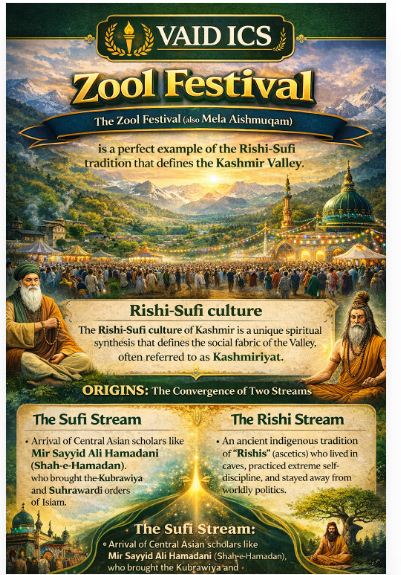
The Zool Festival (also known as the Mela Aishmuqam) is a perfect example of the Rishi-Sufi tradition that defines the Kashmir Valley.
Key Facts: The Zool Festival of Aishmuqam:
Cultural & Religious Significance:
- The Saint: Commemorates Baba Zain-ud-Din Wali (15th century), one of the “four pillars” of the Rishi order.
- The Lineage: He was a primary disciple of Sheikh Noor-ud-Din Wali (Nund Rishi), who founded the Rishi order, blending Islamic Sufism with local ascetic traditions.
- Symbolism: The “Zool” (illumination) represents the victory of light over darkness and good over evil. It specifically recalls the saint clearing a demon or snakes from the Aishmuqam cave through spiritual power.
- Communal Harmony: Typical of the Kashmiriyat ethos, the shrine and festival attract devotees from multiple faiths (Muslims, Hindus, and Sikhs).
Rituals and Traditions:
- The Procession: Thousands of devotees carry wooden torches called mashals or phrov.
- The Ascent: A “river of fire” moves up the 100-step staircase to the hilltop shrine located in Anantnag, overlooking the road to Pahalgam.
- Purification: Local residents observe a three-day vegetarian fast (refraining from meat) before the festival as a mark of respect and spiritual cleansing.
Socio-Economic Linkages:
- Agricultural Marker: The festival serves as a traditional herald of spring. It signals the end of the harsh Himalayan winter and tells farmers it is time to begin sowing paddy.
- Shab-e-Doum: The event coincides with the second night of prayers following the main Urs (death anniversary) of the saint.
About Rishi-Sufi culture:
The Rishi-Sufi culture of Kashmir is a unique spiritual synthesis that defines the social fabric of the Valley, often referred to as Kashmiriyat. It represents a harmonious blending of Islamic Sufi traditions with indigenous Hindu-Buddhist asceticism (specifically Kashmiri Shaivism).
Origins: The Convergence of Two Streams:
The movement took root in the 14th and 15th centuries. It wasn’t a sudden change but a gradual fusion of two distinct spiritual paths:
- The Sufi Stream: Arrival of Central Asian scholars like Mir Sayyid Ali Hamadani (Shah-e-Hamadan), who brought the Kubrawiya and Suhrawardi orders of Islam.
- The Rishi Stream: An ancient indigenous tradition of “Rishis” (ascetics) who lived in caves, practiced extreme self-discipline, and stayed away from worldly politics.
The Founder: Sheikh Noor-ud-Din Wali (Nund Rishi):
The bridge between these two was Nund Rishi (1377–1440). He is the patron saint of Kashmir, often called Alamdar-e-Kashmir (Flag-bearer of Kashmir) or Sheikh-ul-Alam.
- He was deeply influenced by the Shaivite mystic poetess Lalleshwari (Lall Ded).
- He translated Islamic monotheism into the local Kashmiri language through poetic verses known as Shruks.
Core Philosophy & Characteristics:
The Rishi order is distinct from other Sufi orders (like Chisti or Qadri) due to its localized practices:
- Universalism: They believed that the path to God is through the service of humanity, regardless of religion. This is why their shrines (Ziarats) are visited by Muslims, Hindus, and Sikhs alike.
- Non-Violence & Vegetarianism: Many Kashmiri Rishis, including Nund Rishi, advocated for Ahinsa. They famously abstained from meat and refused to harm even insects.
- Environmental Stewardship: They had a deep love for nature. Nund Rishi famously said, “Ann poshi teli yeli wann poshi” (Food will last as long as the forests last).
- Asceticism (Tark-e-Dunya): Unlike the Central Asian Sufis who often engaged with royalty, the Rishis preferred a simple life of poverty, manual labor (planting trees, digging wells), and meditation.
The “Four Pillars” of the Rishi Order:
Nund Rishi had four primary disciples who spread this culture across different parts of the Valley:
- Baba Bam-ud-Din Wali
- Baba Zain-ud-Din Wali (Associated with the Zool Festival at Aishmuqam).
- Baba Latif-ud-Din Wali
- Baba Nasir-ud-Din Wali

October 17, 2025
October 16, 2025
October 6, 2025
September 24, 2025

