December 18, 2025
What is Table Top Red Road Markings?
Why in News ? In a landmark step towards eco-sensitive infrastructure development, the National Highways Authority of India (NHAI) has introduced India’s first wildlife-safe road on a stretch of National Highway 45 (NH-45) in Madhya Pradesh. The initiative aims to reduce animal-vehicle collisions while ensuring smooth road connectivity through forest corridors.

Location of India’s First Wildlife-Safe Highway
The wildlife-safe road is located on the 11.96-kilometre Hiran Sindoor section of NH-45, which connects Bhopal and Jabalpur.
Situated around 60 kilometres from Jabalpur, the highway passes through a dense forest corridor flanked by the Nauradehi Wildlife Sanctuary and the Veerangana Durgavati Tiger Reserve.
This region is home to tigers, deer, sambar, jackals, and other wildlife, making it a critical ecological zone where frequent animal crossings have historically led to accidents and fatalities.
What Are Table Top Red Road Markings?
- The most distinctive feature of this project is the introduction of ‘table-top red road markings’, a first in India.
- Unlike conventional speed breakers, these markings consist of slightly raised, chequered red surfaces laid across the road.
- The design creates a table-top effect that naturally encourages drivers to slow down without sudden braking.
- The bright red colour was deliberately chosen for its high visibility compared to traditional white or yellow markings, serving as a visual warning that motorists are entering a wildlife-sensitive zone.
- Nearly the entire 12-kilometre forest stretch has been covered with these markings to ensure consistent speed moderation.
About Green Highways Initiative:
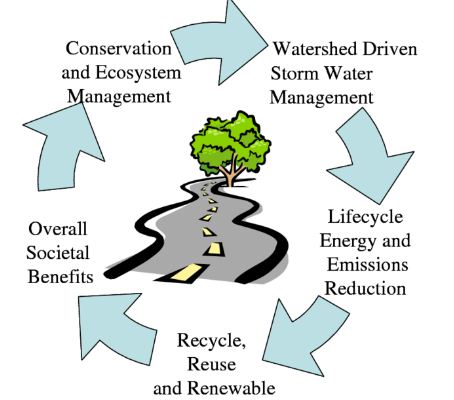
The Green Highways (Plantation, Transplantation, Beautification & Maintenance) Policy, launched by the Indian government in 2015, is a major initiative designed to balance rapid infrastructure growth with environmental sustainability.
As of late 2025, the project has evolved from simple tree-planting into a sophisticated “Green Corridor” mission involving cutting-edge technology and circular economy practices.
Key Objectives:
The initiative focuses on three core pillars: Ecology, Economy, and Employment.
- Environmental Impact: To reduce air pollution and dust by creating “natural sinks” and to minimize soil erosion on highway embankments.
- Safety: To reduce the glare from headlights of oncoming vehicles using median shrubs and to provide shade during extreme summers.
- Inclusive Growth: To provide “dignified employment” to local rural communities, including farmers and Self-Help Groups (SHGs), for the maintenance of these green belts.
2025 Progress and Innovations
In the current 2025-26 fiscal year, the mission has reached several significant milestones:
- The 45 Million Milestone: The National Highways Authority of India (NHAI) has successfully planted over 45 million (4.5 crore) trees and transplanted 70,000 mature trees across the national network.
- Waste-to-Wealth Technology: Under the leadership of Nitin Gadkari, the ministry has begun utilizing 80 lakh tonnes of plastic waste and steel slag (industrial waste) in road construction to create “green pavements.”
- Wildlife-Safe Roads: In December 2025, India launched its first wildlife-safe road on NH-45 in Madhya Pradesh, featuring 25 dedicated animal underpasses and “table-top red markings” to guide animals safely through tiger reserves.
- Digital Monitoring: Every tree is now tracked using ISRO’s Bhuvan and GAGAN satellite systems. Geo-tagging ensures that contractors are held accountable for the 90% survival rate required by their contracts.
Financial & Operational Model
The initiative is self-sustaining through a unique funding mechanism:
- Dedicated Fund: 1% of the total project cost of every highway is set aside specifically for plantation and maintenance.
- Turnkey Contracts: NGOs, private companies, and government agencies are awarded “Green Contracts” where they are responsible for the health of the plants for a period of 5 years.
- Revenue Sharing: Plantation agencies have the rights to the “usufructs” (the fruits and dried fuel wood) from the trees they maintain, creating a local micro-economy.

October 17, 2025
October 16, 2025
October 6, 2025
September 24, 2025

