February 6, 2026
What is Rat Hole Mining?
Why in the News? Mass Fatality: This is the deadliest mining accident in Meghalaya since 2012. It follows a pattern of high-fatality incidents, such as the 2018 Ksan mine tragedy where 15 miners were trapped for months.
- Total Ban Violation: Despite a 2014 ban by the National Green Tribunal (NGT) (upheld by the Supreme Court), illegal “rat-hole” mining continues to thrive under the radar.
- 2026 Legal Developments: Just one day before the blast, the Justice (Retd) B.P. Katakey Committee had submitted its 34th report to the Meghalaya High Court, warning of widespread illegal extraction in this exact district and demanding personal accountability from district officials.
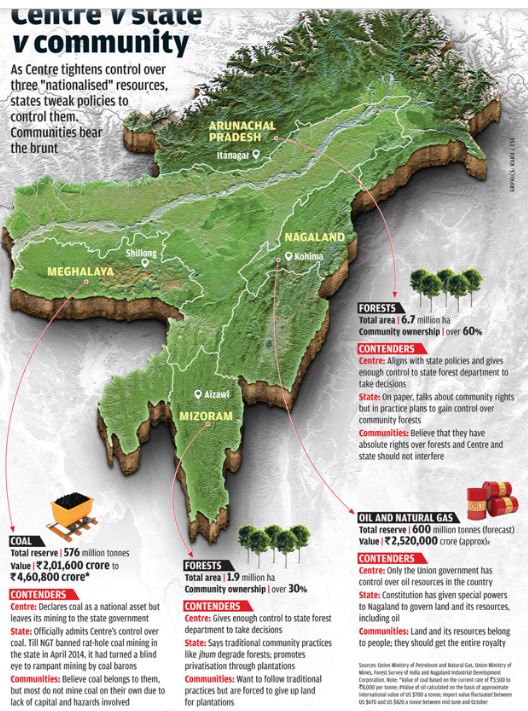
What is Rat-Hole Mining?
This is a primitive and hazardous method used to extract coal from thin seams found in Meghalaya. It involves two main techniques:
- Side-cutting: Narrow tunnels (3–4 feet high) are dug into the hill slopes.
- Box-cutting: A vertical pit (up to 400 feet deep) is dug, followed by horizontal “rat-hole” tunnels to reach the coal.
The Hazard: The tunnels are too small for structural support or ventilation. During the monsoon, they flood easily; in the dry season (as seen now), the use of unscientific explosives like dynamite leads to fatal blasts.
The Legal Timeline:
- April 2014: NGT issues a blanket ban on rat-hole mining and coal transportation, citing environmental damage (acidification of rivers) and safety risks.
- July 2019: The Supreme Court upholds the ban but allows coal mining under regulated and scientific procedures with environmental safeguards.
- 2022-2026: Courts established the Justice Katakey Committee to monitor restoration. However, activists allege that “loyalist” owners, backed by political influence, continue to operate with impunity.
Socio-Economic Drivers:
- Migrant Labor: Most victims are from neighboring Assam.
- High Risk, High Reward: While the work is deadly, daily wages can be as high as ₹2,000, which is significantly higher than other manual labor jobs in the region.
- Alternative Livelihoods: The state has struggled to provide alternative income for the thousands of families who were economically dependent on coal before the 2014 ban.

Gist of daily Article /The Hindu 17oct 2025
October 17, 2025
Daily Gist of the Hindu/Indian Express : 16 Oct 2025
October 16, 2025
Daily Gist of The Hindu/Indian Express: 6 Oct 2025
October 6, 2025
Daily Gist of Article /The Hindu /Indian Express: 24 Sep 2025
September 24, 2025

