January 20, 2026
What is Guillain-Barré Syndrome (GBS)?
Why in News ? Recent reports from Madhya Pradesh (Neemuch district) indicate multiple cases and deaths linked to Guillain-Barré Syndrome (GBS), prompting public health response and outbreak investigation.
What is Guillain-Barré Syndrome (GBS)?
- GBS is an autoimmune disorderwhere the immune system attacks peripheral nerves, causing muscle weakness and, in severe cases, paralysis.
- It is rare, affecting 1–2 per 100,000 people annually.
- It is more common in adults and males.
- It is often triggered by viral or bacterial infections, especially Campylobacter jejuni(a cause of gastroenteritis), influenza, Epstein-Barr virus, Zika virus, or, in rare cases, vaccinations.
- Its Symptoms:
- Early signs:Tingling, weakness in legs spreading to the upper body, pins-and-needles sensation, back pain.
- Severe cases:Paralysis, breathing difficulties, loss of speech, vision problems.
- Complications:Can affect the autonomic nervous system, leading to irregular heartbeat, blood pressure fluctuations, and potential respiratory failure.
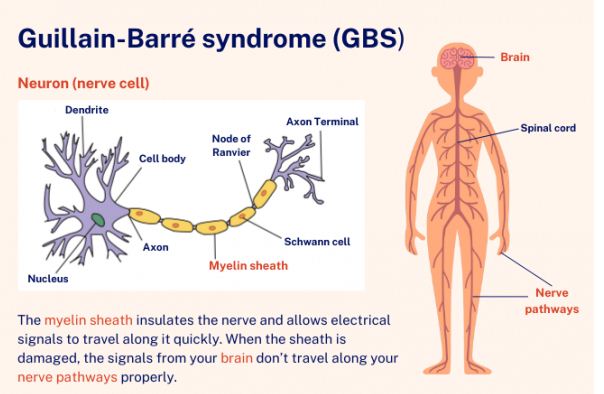
Treatment and Recovery:
- No definitive cure, but treatments include:
- Plasma Exchange (Plasmapheresis):Removes harmful antibodies attacking nerves.
- Intravenous Immunoglobulin (IVIG) Therapy:Injects healthy antibodies to counteract immune attacks.
- Supportive care:Some patients require ventilator support, physical therapy, and months to years of rehabilitation.

Citizenship (Amendment) Rules, 2026
May 19, 2026
Gist of daily Article /The Hindu 17oct 2025
October 17, 2025
Daily Gist of the Hindu/Indian Express : 16 Oct 2025
October 16, 2025
Daily Gist of The Hindu/Indian Express: 6 Oct 2025
October 6, 2025

