May 26, 2026
What is Ensitrelvir? What are Betacoronaviruses?
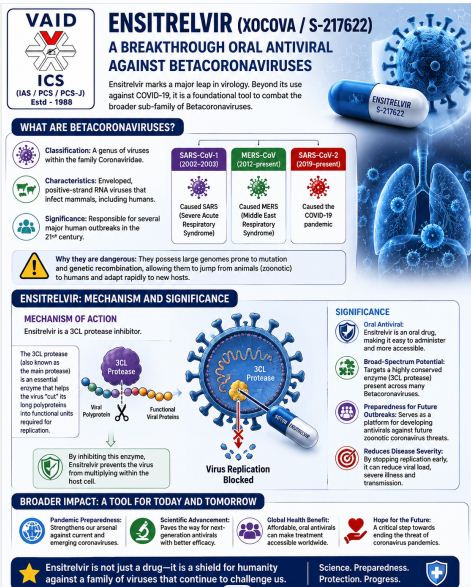
The development of Ensitrelvir (also known as Xocova/S-217622) represents a significant milestone in virology. Beyond its immediate use as an oral antiviral against COVID-19, it serves as a foundational tool for addressing the broader sub-family of Betacoronaviruses.
What are Betacoronaviruses?
-
Classification: A genus of viruses within the family Coronaviridae.
-
Characteristics: Enveloped, positive-strand RNA viruses that infect mammals, including humans.
-
Significance: Betacoronaviruses are responsible for several major human outbreaks in the 21st century:
-
SARS-CoV-1 (2002–2003): Caused SARS (Severe Acute Respiratory Syndrome).
-
MERS-CoV (2012–present): Caused MERS (Middle East Respiratory Syndrome).
-
SARS-CoV-2 (2019–present): Caused the COVID-19 pandemic.
-
-
Why they are dangerous: They possess large genomes prone to mutation and genetic recombination, allowing them to jump from animals (zoonotic) to humans and adapt rapidly to new hosts.
Ensitrelvir: Mechanism and Significance:
-
Mechanism of Action: It is a 3CL protease inhibitor.
-
The 3CL protease (also known as the main protease) is an essential enzyme that helps the virus “cut” its long polyproteins into functional units required for replication.
-
By inhibiting this enzyme, Ensitrelvir prevents the virus from multiplying within the host cell.
-
-
Clinical Innovation: It is the first oral, non-covalent, and non-peptidic 3CL protease inhibitor. This unique structure helps it maintain efficacy against various SARS-CoV-2 variants (including Omicron and its sub-lineages) that may carry mutations.
-
Prophylactic Potential: Recent trials (such as the SCORPIO-PEP trial) indicate its effectiveness as “post-exposure prophylaxis” (preventing symptoms after exposure to an infected person).
Why is this a “Milestone”?
-
Platform for Future Pandemics: Because the 3CL protease structure is highly conserved across the Betacoronavirus genus, drugs targeting this specific enzyme can potentially be adapted or repurposed for “Disease X” or future emerging Betacoronavirus threats.
-
Rapid Response: Developing a template for this specific inhibitor reduces the “R&D lag time” in responding to new viral outbreaks.
-
Shift in Strategy: It represents a transition from broad-spectrum (but sometimes less specific) antivirals toward precisely targeted, molecular-level interventions.
Strategic Importance;
-
Health Security: As India and the world prioritize “Pandemic Preparedness,” investing in modular antiviral platforms (like protease inhibitors) is critical to maintaining national health security.
-
Asymmetric Federalism/Global Cooperation: The development of such drugs highlights the need for international regulatory convergence (Japan, Singapore, and FDA reviews) and intellectual property accessibility (e.g., Medicines Patent Pool agreements) to ensure equitable access in low- and middle-income countries.

May 19, 2026
October 17, 2025
October 16, 2025
October 6, 2025

