February 7, 2026
What is DeepTech?
Why in news ? Recently ,the Department for Promotion of Industry and Internal Trade (DPIIT) officially notified the New Startup India Rules 2026. These rules represent a paradigm shift in how the government supports high-tech, research-heavy ventures.
Why the Change?
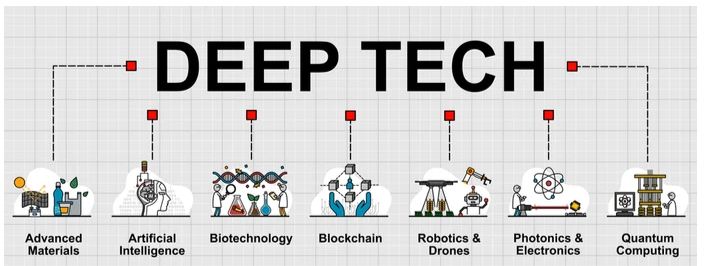
The previous 10-year window was found to be insufficient for “Deep Tech” sectors (AI, Semiconductors, Biotech, Spacetech). These ventures spend 7–8 years in intensive R&D and lab-scale validation, often losing their “Startup Status” and tax benefits just as they reach the commercialization phase.
Key Revisions at a Glance:
| Feature | Regular Startups (Revised) | Deep Tech Startups |
| Eligibility Age | Up to 10 years | Up to 20 years |
| Turnover Limit | Up to ₹200 crore (Revised from ₹100cr) | Up to ₹300 crore |
| Primary Focus | Innovation & Scalability | Breakthrough science/engineering knowledge |
| Investment | General | High R&D intensity & Intellectual Property (IP) |
Definition of “Deep Tech Startup”:
For the first time, the government has provided an official definition. An entity is classified as “Deep Tech” if:
- It works on solutions based on new scientific or engineering knowledge that is yet to be developed.
- It spends a major portion of its expenditure on Research & Development (R&D).
- It owns or is in the process of creating significant novel Intellectual Property (IP).
- It faces high technical/scientific uncertainty and capital-intensive development.
Major Benefits & Implications :
- Extended Tax Holidays: Deep Tech firms can now benefit from Section 80-IAC tax holidays and angel tax exemptions for a longer duration (up to 20 years).
- Access to Patient Capital: The rules aim to attract “Patient Capital” (long-term investment) from family offices and institutional investors who were previously deterred by the 10-year expiration of benefits.
- Loss Offsetting: Entities can now carry forward accumulated losses for up to 20 years to offset future profits, which is critical for R&D-heavy sectors that stay in the red for over a decade.
- Inclusion of Cooperatives: Interestingly, the 2026 rules have also opened startup recognition to Multi-State Cooperative Societies, aiming to bring innovation to rural and agricultural sectors.
Compliance & Restrictions:
To ensure these benefits reach genuine innovators, the DPIIT has tightened fund-use rules:
- Startups are prohibited from investing in non-productive or speculative assets (e.g., residential real estate, luxury assets, or unrelated shares/securities).
- Funds must be deployed primarily toward core business activities, innovation, and scaling.

October 17, 2025
October 16, 2025
October 6, 2025
September 24, 2025

