March 6, 2026
What are Nicotine Pouches?
Why in New ? The news highlights a growing concern in India, specifically in Tamil Nadu, regarding the illegal sale and health risks of oral nicotine pouches. Doctors and regulators are calling for a total ban as these products gain popularity through online platforms.
Here are the key points from the report:
1. The Current Situation in Tamil Nadu:
-
Regulatory Action: Tamil Nadu’s Directorate of Drugs Control (DDC) has issued a public alert and “show-cause” notices to dealers selling these pouches illegally.
-
Illegal Sales: Despite not being approved for sale in India, the products are easily available on at least 100 online portals and various e-commerce sites.
-
Unapproved Status: The DDC emphasized that these pouches are not approved for safety, efficacy, or quality in India.
2. What are Nicotine Pouches?
-
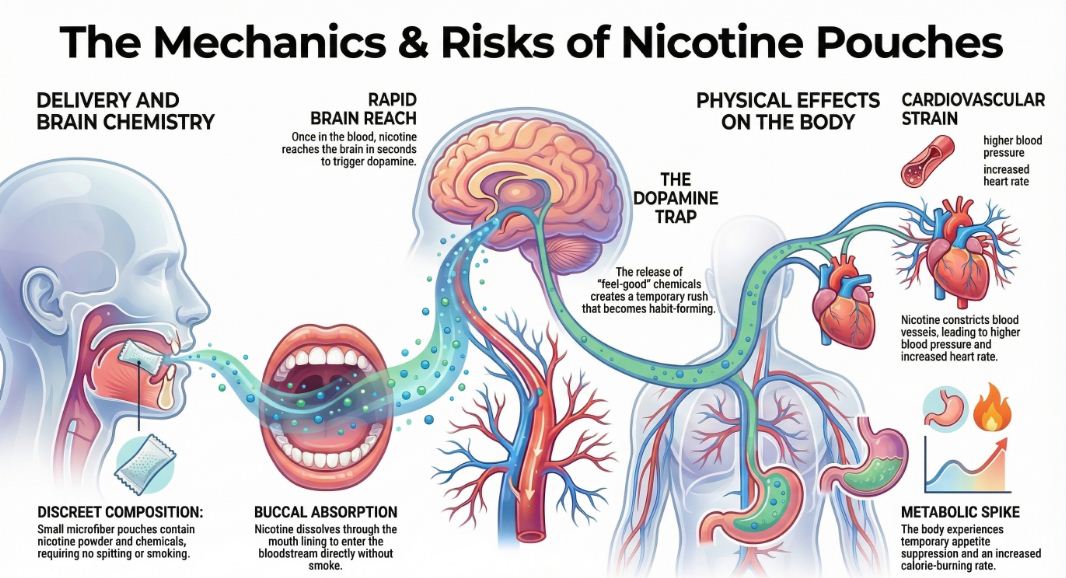
Composition: Small microfiber pouches containing nicotine powder, flavorings, and other chemicals.
-
Usage: They are placed between the lip and gum. The nicotine dissolves and is absorbed directly into the bloodstream through the mouth lining (buccal absorption).
-
The Trap: Unlike traditional tobacco, they don’t require spitting or smoking, making them discreet and attractive to youth and adults alike.
3. Major Health Concerns:
-
High Addiction: Nicotine is a highly addictive chemical. Experts warn it is especially dangerous for youth, young adults, and pregnant women.
-
Extreme Dosage: While medical nicotine patches (used to quit smoking) usually contain about 2 mg of nicotine, these recreational pouches can contain up to 50 mg, which is considered dangerous.
-
Physical Damage: Beyond addiction, they pose cardiovascular risks (heart issues) and can cause significant gum damage.
-
Misleading Marketing: Experts warn that being “tobacco-free” does not mean they are harmless. They are often wrongly marketed as “smoking cessation aids” (tools to help quit smoking), but they are not approved for this purpose.
4. Calls for Action:
-
Total Ban: Anti-tobacco activists are pushing for both the Central and State governments to implement a complete ban.
-
Legal Amendments: There are calls for Tamil Nadu to amend its Public Health Act to prevent these products from entering the market in the future.
-
Cyber Vigilance: Since the primary source of these products is the internet, there is a strong demand for cybercrime cells to crack down on online sellers.
Nicotine is a powerful alkaloid found naturally in the tobacco plant. It acts as a stimulant in the human body and is the primary reason why products like cigarettes, cigars, and the new nicotine pouches are so difficult to quit.
1. How it Works?
When nicotine enters the body (through the lungs or the lining of the mouth), it quickly enters the bloodstream and reaches the brain in seconds. It triggers the release of dopamine, the brain’s “feel-good” chemical. This creates a temporary rush of pleasure and alertness, which is why it becomes habit-forming so quickly.
2. Physical Effects:
Beyond the “buzz,” nicotine causes several immediate physical changes:
-
Increased Heart Rate: It makes your heart beat faster.
-
Higher Blood Pressure: It constricts your blood vessels, putting extra strain on your cardiovascular system.
-
Metabolic Spike: It can temporarily suppress appetite and slightly increase the rate at which your body burns calories.
3. Why it is Dangerous?
-
Extreme Addiction: It is considered one of the most addictive substances in the world, comparable to heroin or cocaine in terms of how hard it is to stop using.
-
Toxic in High Doses: While small amounts provide a stimulant effect, pure nicotine is actually a potent poison. In the past, it was even used as a commercial pesticide to kill insects.
-
Developmental Risks: It is particularly harmful to the developing brains of teenagers and young adults (up to age 25), affecting parts of the brain that control attention, learning, and impulse control.
4. Tobacco vs. Synthetic Nicotine:
-
Tobacco-Derived: Historically, all nicotine was extracted from tobacco leaves.
-
Synthetic: Recently, labs have begun creating “tobacco-free” or synthetic nicotine. While it doesn’t come from a plant, it is chemically the same and carries the same health and addiction risks.

October 17, 2025
October 16, 2025
October 6, 2025
September 24, 2025

