November 27, 2026
UN Conference on Trade and Development (UNCTAD): Review of Maritime Transport 2026
UN Conference on Trade and Development (UNCTAD): Review of Maritime Transport 2026
Why in News?
The UN Conference on Trade and Development (UNCTAD) released its Review of Maritime Transport 2026, highlighting the impact of geopolitical conflicts on global shipping and India’s maritime trade.
Key Findings:
Global Maritime Trade:
-
Global seaborne trade growth is projected to remain at 0% in 2026, compared to 1.9% in 2025.
-
Conflicts around the Strait of Hormuz reduced shipping traffic by nearly 95%, stranding over 20,000 seafarers.
-
Crude oil prices crossed $100 per barrel.
Impact on Indian Ports:
-
Shipping diversions increased container-handling capacity at:
-
Mundra Port: 53% increase.
-
Jawaharlal Nehru Port: 47% increase (February–June 2026).
-
-
India’s container trade with the US increased by 95% (6.26 lakh TEUs) between 2015 and 2025.
-
India ranked 9th globally in the Liner Shipping Connectivity Index, while Vietnam ranked 6th.
Importance for India’s Maritime Security:
-
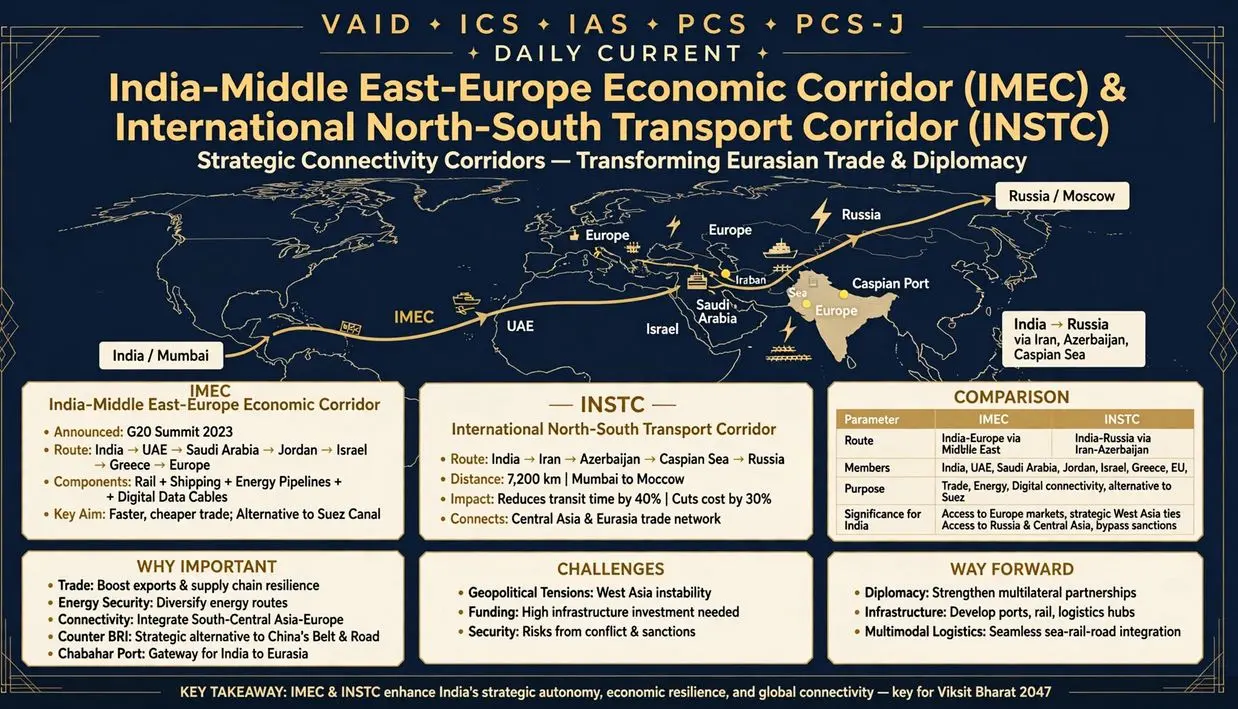
Alternative Trade Routes: India-Middle East-Europe Economic Corridor (IMEC) and International North-South Transport Corridor (INSTC) can reduce dependence on vulnerable shipping routes.
-
Port Modernisation: Sagarmala Programme and Maritime India Vision 2030 aim to improve port infrastructure and efficiency.
-
Energy Security: India’s crude oil imports increased from 72 million tonnes (2000) to 240 million tonnes (2024), increasing exposure to disruptions in Gulf routes.
-
Vizhinjam International Seaport: Aims to develop India as a major transshipment hub and reduce dependence on foreign ports such as Colombo.
-
Customs Reforms: Measures by CBIC, including waiving certain bills of entry requirements, helped reduce congestion during shipping diversions.
Key Concepts:
-
Liner Shipping Connectivity Index (LSCI): UNCTAD index measuring a country’s integration into global container shipping networks.
-
Transshipment Hub: A port where cargo is transferred from one ship to another for onward transportation.
-
TEU (Twenty-Foot Equivalent Unit): Standard unit used to measure container shipping capacity; one TEU represents a 20-foot container.
Way Forward:
-
Develop alternative international trade routes.
-
Strengthen port infrastructure and coastal connectivity.
-
Reduce dependence on vulnerable maritime chokepoints.
-
Improve domestic shipping capacity and transshipment facilities.
-
Strengthen maritime security and energy supply diversification.
Conclusion:
India needs resilient maritime infrastructure, diversified trade routes and stronger port connectivity to protect its trade and energy security against global geopolitical disruptions.
व्यापार एवं विकास पर संयुक्त राष्ट्र सम्मेलन (UNCTAD): समुद्री परिवहन समीक्षा 2026
समाचार में क्यों?
व्यापार एवं विकास पर संयुक्त राष्ट्र सम्मेलन (UNCTAD) ने समुद्री परिवहन समीक्षा 2026 जारी की है। इसमें भू-राजनीतिक संघर्षों का वैश्विक समुद्री व्यापार, जहाजरानी मार्गों और भारत के बंदरगाहों पर पड़ने वाले प्रभावों को रेखांकित किया गया है।
प्रमुख निष्कर्ष:
वैश्विक समुद्री व्यापार:
-
वर्ष 2026 में वैश्विक समुद्री व्यापार की वृद्धि दर 0% रहने का अनुमान है, जबकि 2025 में यह 1.9% थी।
-
भू-राजनीतिक संघर्षों के कारण होर्मुज जलडमरूमध्य से जहाजों का आवागमन लगभग 95% घट गया।
-
इसके कारण 20,000 से अधिक नाविक समुद्र में फँस गए तथा कच्चे तेल की कीमत 100 डॉलर प्रति बैरल से अधिक हो गई।
भारतीय बंदरगाहों पर प्रभाव:
-
जहाजरानी मार्गों में बदलाव के कारण फरवरी से जून 2026 के बीच कंटेनर क्षमता में वृद्धि हुई:
-
मुंद्रा बंदरगाह: 53% वृद्धि।
-
जवाहरलाल नेहरू बंदरगाह: 47% वृद्धि।
-
-
वर्ष 2015 से 2025 के बीच अमेरिका के साथ भारत का कंटेनर व्यापार 95% बढ़कर 6.26 लाख TEU हो गया।
-
लाइनर शिपिंग कनेक्टिविटी सूचकांक में भारत विश्व में 9वें स्थान पर रहा, जबकि वियतनाम छठे स्थान पर था।
भारत की समुद्री सुरक्षा के लिए महत्त्व:
-
वैकल्पिक व्यापार मार्ग: भारत-मध्य पूर्व-यूरोप आर्थिक गलियारा (IMEC) और अंतरराष्ट्रीय उत्तर-दक्षिण परिवहन गलियारा (INSTC) संवेदनशील समुद्री मार्गों पर निर्भरता कम कर सकते हैं।
-
बंदरगाहों का आधुनिकीकरण: सागरमाला कार्यक्रम और समुद्री भारत दृष्टि 2030 का उद्देश्य बंदरगाहों की आधारभूत संरचना एवं कार्यक्षमता में सुधार करना है।
-
ऊर्जा सुरक्षा: भारत का कच्चे तेल का आयात वर्ष 2000 के 72 मिलियन टन से बढ़कर 2024 में 240 मिलियन टन हो गया।
-
विझिंजम अंतरराष्ट्रीय समुद्री बंदरगाह: इसका उद्देश्य भारत को प्रमुख माल स्थानांतरण केंद्र बनाना तथा कोलंबो जैसे विदेशी बंदरगाहों पर निर्भरता कम करना है।
-
सीमा शुल्क सुधार: केंद्रीय अप्रत्यक्ष कर एवं सीमा शुल्क बोर्ड (CBIC) द्वारा उठाए गए कदमों से जहाजों के मार्ग परिवर्तन के दौरान बंदरगाहों पर भीड़ कम करने में सहायता मिली।
प्रमुख अवधारणाएँ:
लाइनर शिपिंग कनेक्टिविटी सूचकांक (LSCI):
– UNCTAD द्वारा विकसित सूचकांक, जो वैश्विक कंटेनर जहाजरानी नेटवर्क में किसी देश के एकीकरण और संपर्क की स्थिति को मापता है।
माल स्थानांतरण केंद्र (Transshipment Hub):
– ऐसा बंदरगाह जहाँ माल को एक जहाज से दूसरे जहाज में स्थानांतरित करके आगे भेजा जाता है।
ट्वेंटी फुट इक्विवेलेंट यूनिट (TEU):
– समुद्री कंटेनर परिवहन की क्षमता मापने की मानक इकाई। एक TEU का अर्थ 20 फुट लंबे कंटेनर से है।
आगे की राह:
-
वैकल्पिक अंतरराष्ट्रीय व्यापार मार्गों का विकास करना।
-
बंदरगाहों की आधारभूत संरचना एवं तटीय संपर्क को मजबूत बनाना।
-
संवेदनशील समुद्री मार्गों पर निर्भरता कम करना।
-
घरेलू जहाजरानी क्षमता और माल स्थानांतरण सुविधाओं का विस्तार करना।
-
समुद्री सुरक्षा तथा ऊर्जा आपूर्ति के विविधीकरण को बढ़ावा देना।
निष्कर्ष:
वैश्विक भू-राजनीतिक अनिश्चितताओं के बीच भारत को अपने समुद्री व्यापार और ऊर्जा सुरक्षा की रक्षा के लिए मजबूत बंदरगाह अवसंरचना, वैकल्पिक व्यापार मार्गों तथा बेहतर समुद्री संपर्क का विकास करना आवश्यक है।

May 19, 2026
October 17, 2025
October 16, 2025
October 6, 2025

