October 6, 2026
Tiger Reintroduction in Buxa Tiger Reserve/बक्सा टाइगर रिजर्व में बाघ पुनर्वास:
Why in News?
A three-year-old tigress (T138) was released in Buxa Tiger Reserve, West Bengal, beginning a phased programme to establish a viable and self-sustaining tiger population.
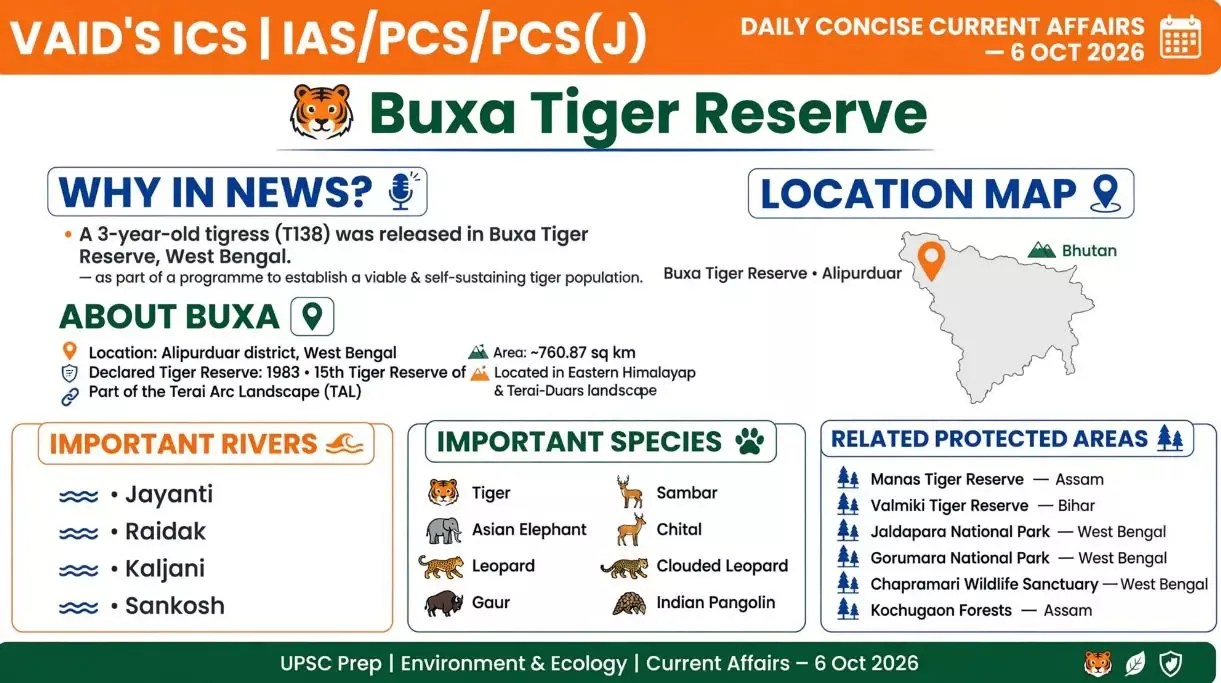
Buxa Tiger Reserve: Key Facts
- Declared a Tiger Reserve in 1983; 15th tiger reserve of India.
- Located in Alipurduar district, West Bengal.
- Area: 760.87 sq. km.
- Ecological connectivity with Bhutan, Manas Tiger Reserve, Kochugaon forests and Jaldapara National Park.
- Tiger population declined due to habitat degradation, fragmentation, land-use change and reduced prey availability.
Why was Valmiki Tiger Reserve Selected?
- Valmiki Tiger Reserve, Bihar lies in the Terai Arc Landscape.
- Its terrain and ecological conditions are relatively similar to Buxa.
- Tigers from the Sundarbans were not preferred because of major differences between mangrove and Terai–foothill ecosystems.
Tiger Reintroduction in India:
- Reintroduction means establishing a tiger population in its historical range from where it has become locally extinct.
- Began successfully in Sariska and Panna in 2008.
- Conducted across 12 tiger reserves with collaboration among NTCA, State Governments and WII.
- Success has been uneven across reserves.
Lessons from Satkosia:
- Translocated tigers faced difficulties in adapting to the new environment.
- Livestock depredation and human–tiger conflict increased.
- Local opposition affected the programme.
NTCA Reintroduction Protocol:
The protocol covers:
- Site feasibility and habitat assessment
- Selection of suitable source tigers
- Socio-economic assessment
- Release preparation
- Post-release monitoring
- Institutional coordination and management
Major Challenges at Buxa:
- Absence of a stable resident tiger population for several years.
- Settlements, revenue villages and tea estates within and around the reserve.
- Relocation of about 300 families to facilitate conservation.
- Railway and road infrastructure threatens wildlife movement.
- Heavy commercial traffic towards Bhutan may increase disturbance and wildlife mortality.
- Human–wildlife conflict remains a major concern.
Way Forward:
- Ensure adequate prey base and habitat quality before further releases.
- Strengthen wildlife corridors and habitat connectivity.
- Minimise impacts of roads and railway infrastructure.
- Ensure community participation and fair rehabilitation.
- Adopt rigorous scientific monitoring after translocation.
- Follow a landscape-level approach rather than focusing only on tiger numbers.
Conclusion:
Tiger reintroduction can restore populations in their historical range, but its success depends on habitat quality, prey availability, ecological connectivity and community support. Buxa must therefore be developed as a self-sustaining tiger landscape, not merely as a site for releasing individual animals.
बक्सा टाइगर रिजर्व में बाघ पुनर्वास:
समाचार में क्यों?
पश्चिम बंगाल के बक्सा टाइगर रिजर्व (BTR) में तीन वर्षीय बाघिन T138 को छोड़ा गया है। इसका उद्देश्य बक्सा में एक व्यवहार्य एवं आत्मनिर्भर बाघ आबादी स्थापित करना है।
बक्सा टाइगर रिजर्व : प्रमुख तथ्य
-
स्थापना: 1983 में टाइगर रिजर्व घोषित; यह भारत का 15वाँ टाइगर रिजर्व था।
-
स्थान: अलीपुरद्वार जिला, पश्चिम बंगाल।
-
क्षेत्रफल: लगभग 760.87 वर्ग किमी।
-
यह भूटान, मानस टाइगर रिजर्व, कोचुगाँव वन क्षेत्र तथा जलदापाड़ा राष्ट्रीय उद्यान से पारिस्थितिक संपर्क स्थापित करता है।
-
यह क्षेत्र बाघों के लिए महत्वपूर्ण वन्यजीव गलियारा है।
बाघों की संख्या में गिरावट के कारण
-
आवास का क्षरण एवं विखंडन
-
भूमि-उपयोग में परिवर्तन
-
शिकार-प्रजातियों में कमी
-
मानव गतिविधियों का बढ़ता दबाव
-
सड़क एवं रेल जैसी अवसंरचनात्मक परियोजनाएँ
-
मानव–वन्यजीव संघर्ष
बाघ पुनर्वास का अर्थ
बाघ पुनर्वास (Tiger Reintroduction) का अर्थ ऐसे क्षेत्र में बाघों की आबादी को पुनः स्थापित करना है जहाँ वे ऐतिहासिक रूप से पाए जाते थे, लेकिन स्थानीय स्तर पर विलुप्त हो गए हैं।
भारत में सरिस्का और पन्ना में 2008 से पुनर्वास कार्यक्रमों को महत्वपूर्ण सफलता मिली। वर्तमान में विभिन्न टाइगर रिजर्वों में ऐसे कार्यक्रम संचालित किए जा रहे हैं।
वाल्मीकि टाइगर रिजर्व का चयन
बाघों के स्रोत क्षेत्र के रूप में वाल्मीकि टाइगर रिजर्व को इसलिए चुना गया क्योंकि:
-
यह तराई आर्क लैंडस्केप का हिस्सा है।
-
इसकी भौगोलिक एवं पारिस्थितिक परिस्थितियाँ बक्सा से काफी मिलती-जुलती हैं।
-
इसके विपरीत, सुंदरबन का मैंग्रोव पारिस्थितिकी तंत्र बक्सा के तराई–पर्वतीय क्षेत्र से भिन्न है।
पूर्व के पुनर्वास कार्यक्रमों से सीख
सतकोसिया जैसे क्षेत्रों के अनुभव बताते हैं कि केवल बाघों को स्थानांतरित करना पर्याप्त नहीं है।
प्रमुख समस्याएँ:
-
नए आवास के प्रति अनुकूलन में कठिनाई
-
पशुधन पर निर्भरता
-
मानव–बाघ संघर्ष
-
स्थानीय समुदायों की नकारात्मक प्रतिक्रिया
अतः पुनर्वास में पारिस्थितिक तथा सामाजिक दोनों पहलुओं का ध्यान आवश्यक है।
NTCA के प्रमुख प्रोटोकॉल
बाघ पुनर्वास में निम्नलिखित चरण महत्वपूर्ण हैं:
-
स्थल की वैज्ञानिक एवं व्यवहार्यता संबंधी जाँच
-
उपयुक्त स्रोत आबादी का चयन
-
आवास एवं शिकार-आधार का मूल्यांकन
-
स्थानीय समुदायों का सामाजिक-आर्थिक आकलन
-
बाघों को छोड़ने से पूर्व आवश्यक तैयारी
-
रेडियो-कॉलर एवं अन्य माध्यमों से पुनर्वास के बाद निगरानी
-
केंद्र एवं राज्य एजेंसियों के बीच समन्वय
बक्सा के समक्ष प्रमुख चुनौतियाँ
-
लंबे समय से स्थायी बाघ आबादी का अभाव
-
वन क्षेत्र में राजस्व ग्राम एवं बस्तियाँ
-
चाय बागानों की उपस्थिति
-
लगभग 300 परिवारों का पुनर्वास
-
रेलवे एवं सड़क अवसंरचना
-
भूटान के साथ भारी वाणिज्यिक यातायात
-
मानव–वन्यजीव संघर्ष की संभावना
आगे की राह
-
बाघों के लिए पर्याप्त शिकार-आधार एवं गुणवत्तापूर्ण आवास सुनिश्चित करना।
-
वन्यजीव गलियारों एवं पारिस्थितिक संपर्क को बनाए रखना।
-
सड़कों और रेलवे से होने वाले वन्यजीव जोखिम को न्यूनतम करना।
-
स्थानीय समुदायों की सार्थक भागीदारी सुनिश्चित करना।
-
पुनर्वास एवं विस्थापन की स्थिति में न्यायसंगत मुआवजा एवं पुनर्वास प्रदान करना।
-
वैज्ञानिक निगरानी और त्वरित संघर्ष-प्रबंधन तंत्र विकसित करना।
-
केवल बाघ-केंद्रित दृष्टिकोण के बजाय समग्र लैंडस्केप-आधारित संरक्षण अपनाना।
निष्कर्ष
बाघ पुनर्वास केवल प्रजाति को एक स्थान से दूसरे स्थान पर स्थानांतरित करने की प्रक्रिया नहीं है। इसकी सफलता उपयुक्त आवास, पर्याप्त शिकार-आधार, पारिस्थितिक संपर्क, वैज्ञानिक निगरानी तथा स्थानीय समुदायों के सहयोग पर निर्भर करती है। बक्सा टाइगर रिजर्व इस समग्र संरक्षण दृष्टिकोण का महत्वपूर्ण उदाहरण बन सकता है।
मुख्य परीक्षा प्रश्न:
“बाघ पुनर्वास तभी सफल हो सकता है जब प्रजाति के स्थानांतरण के साथ पारिस्थितिक उपयुक्तता और स्थानीय समुदायों की भागीदारी सुनिश्चित की जाए।” बक्सा टाइगर रिजर्व के संदर्भ में चर्चा कीजिए।

May 19, 2026
October 17, 2025
October 16, 2025
October 6, 2025

