April 6, 2026
Semaglutide:
About Semaglutide:
1. Mechanism of Action
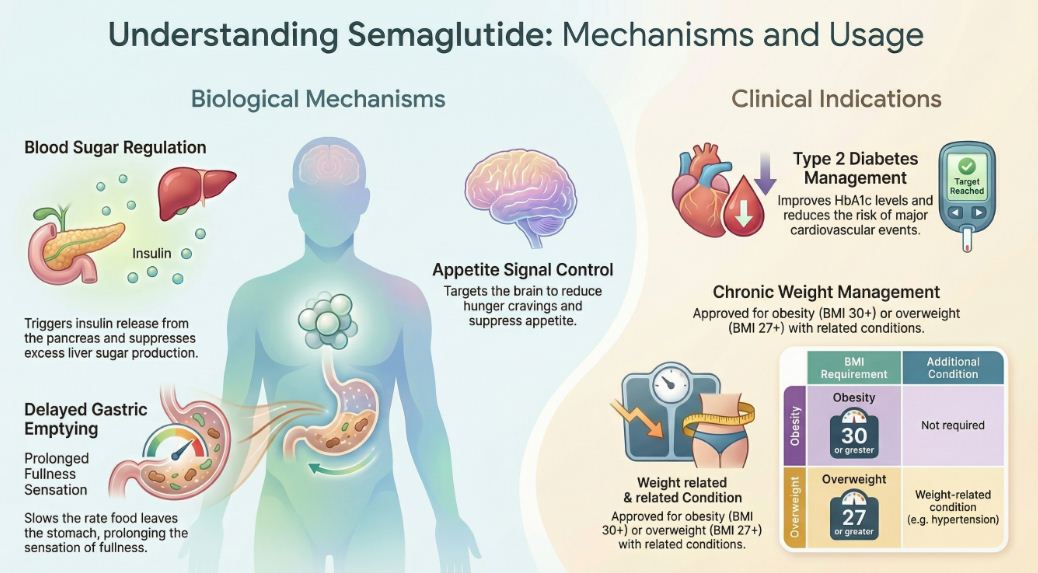
Semaglutide belongs to a class of drugs called GLP-1 Receptor Agonists (Glucagon-like Peptide-1). It mimics a natural hormone produced in the gut.
- Insulin Regulation: It tells the pancreas to release more insulin when blood sugar is high.
- Glucagon Suppression: It stops the liver from making too much sugar.
- Gastric Emptying: It slows down how quickly food leaves the stomach, making the patient feel full longer.
- Appetite Control: It signals the brain to reduce hunger cravings.
2. Medical Indications
- Type 2 Diabetes Mellitus: Used when metformin or other drugs are insufficient to control HbA1c levels. It also reduces the risk of major cardiovascular events (heart attack/stroke) in these patients.
- Chronic Weight Management: Approved for adults with a BMI of 30 or greater (obesity) or 27 or greater (overweight) with at least one weight-related condition (e.g., hypertension).
3. Administration
- It is typically a once-weekly subcutaneous injection (under the skin).
- Indian generics are offering varied delivery systems: Reusable multi-dose pens (Zydus) and Pre-filled disposable pens (Dr. Reddy’s).
Pharma & Intellectual Property :
Patent Expiry and Generic Competition:
This case is a classic example of “Patent Cliff.” When the 20-year patent protection ends, generic manufacturers can produce the same molecule at a fraction of the cost because they do not have to recover the initial R&D expenses. This is vital for India, the “Pharmacy of the World.”
DCGI and Regulatory Approval:
The Drug Controller General of India (DCGI) must approve these generics based on “Bioequivalence” studies, ensuring the generic drug performs exactly like the innovator drug in the human body.
Public Health Impact:
- The “Twin Epidemic”: India faces a massive burden of both Diabetes and Obesity (Diabesity). Affordable Semaglutide could significantly reduce long-term healthcare costs by preventing complications like kidney failure and heart disease.
- NCD Burden: Non-Communicable Diseases (NCDs) are a priority under the National Health Policy.

Gist of daily Article /The Hindu 17oct 2025
October 17, 2025
Daily Gist of the Hindu/Indian Express : 16 Oct 2025
October 16, 2025
Daily Gist of The Hindu/Indian Express: 6 Oct 2025
October 6, 2025
Daily Gist of Article /The Hindu /Indian Express: 24 Sep 2025
September 24, 2025

