October 2, 2026
RBI SOLD ₹1 trillion BOND
Why in News?
The Reserve Bank of India (RBI) has net sold government bonds worth approximately ₹1 trillion during the current financial year, marking its largest annual net bond sale in over a decade.
Why is RBI Selling Bonds?
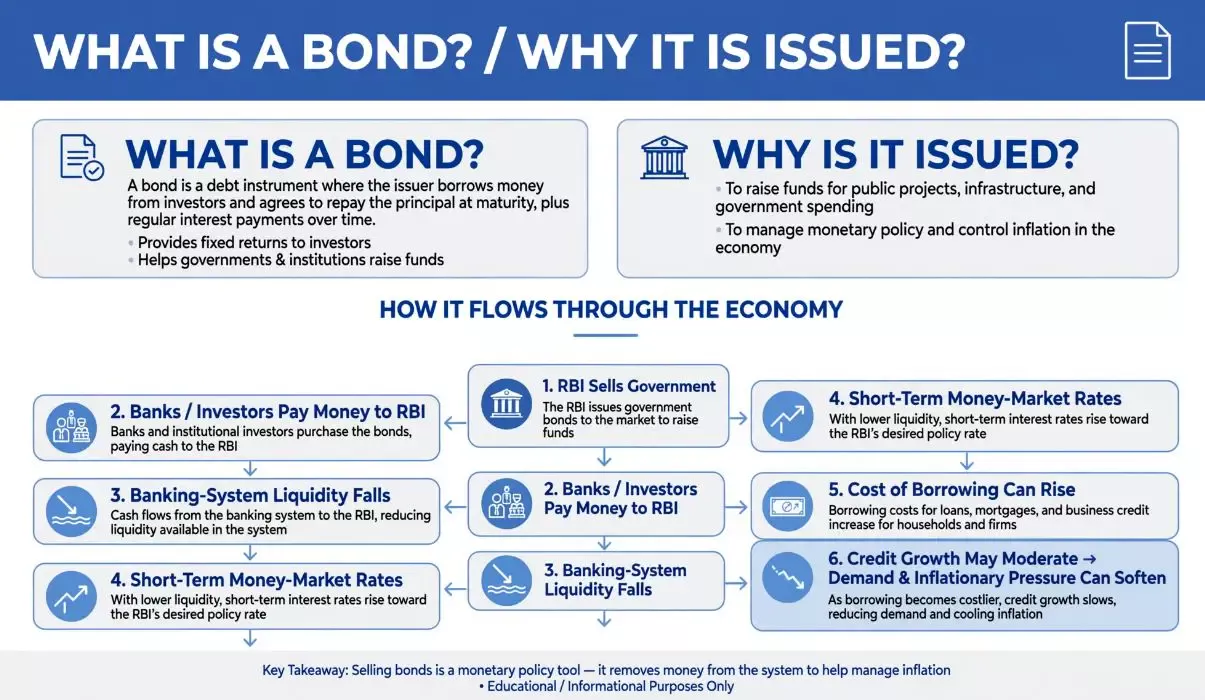
The banking system is currently experiencing excess liquidity. To absorb this surplus, the RBI is actively using Open Market Operations (OMO).
- The Mechanism: RBI sells government securities /Banks and investors pay money to the RBI – Money is withdrawn from the banking system -Liquidity decreases.
Why Did Excess Liquidity Increase?
- Banks were permitted to raise U.S. dollars through a special RBI window, which boosted foreign-exchange inflows and reinforced forex reserves.
- The resulting liquidity surplus pushed overnight interest rates below the RBI’s policy rate.
- To realign market interest rates with its desired policy stance, the RBI is utilizing strategic bond sales.
Understanding Open Market Operations (OMO):
Open Market Operations refer to the RBI’s purchase or sale of government securities in the open market to manage liquidity and influence monetary conditions.
- RBI buys bonds: Liquidity increases.
- RBI sells bonds: Liquidity decreases.
- Previous Record: The prior high was around ₹900 billion in FY2018, when the RBI sold bonds to manage liquidity shifts following demonetisation.
Government Borrowing and the Bond Market:
The government has reduced the supply of 3-year and 5-year securities for the remainder of the financial year, a move market participants expect to be accompanied by further RBI OMO sales.
Economic Impact Across Sectors:
- Banks: Less surplus cash restricts excess liquidity for lending, leading to tighter credit conditions.
- Businesses: Rising market interest rates make loans and working-capital finance more expensive, which may moderate private investment.
- Consumers: Higher borrowing costs impact home, vehicle, and retail loans, potentially dampening consumer spending.
- Inflation: Reduced excess liquidity and tempered demand help contain inflationary pressures, though outcomes remain dependent on food prices, oil prices, and global supply chains.
- Government Bonds: RBI sales increase bond market supply; if demand does not match this pace, bond prices can fall while yields rise.
- Rupee: Tighter liquidity can support the local currency via improved interest-rate attractiveness, though the exchange rate is also shaped by oil prices, capital flows, and global dynamics.
- Economic Growth: A delicate trade-off exists: moderate liquidity withdrawal maintains price stability and policy transmission, whereas excessive tightening can constrain credit, investment, and economic growth.
Key Distinction:
OMO bond sales are distinct from raising the policy repo rate. The RBI can sell bonds to remove surplus liquidity while keeping the policy rate unchanged, with the primary objective of guiding overnight rates back toward the policy rate.

May 19, 2026
October 17, 2025
October 16, 2025
October 6, 2025

