September 5, 2025
GST 2.0: Reshaping India’s Tax Landscape for Economic Resilience
On September 3, 2025, the GST Council approved major reforms to the Goods and Services Tax system, representing a pivotal moment in India’s taxation framework.These reforms are expected to improve the overall economic mood and stimulate growth, especially when other engines of growth such as exports and private investments are faltering.
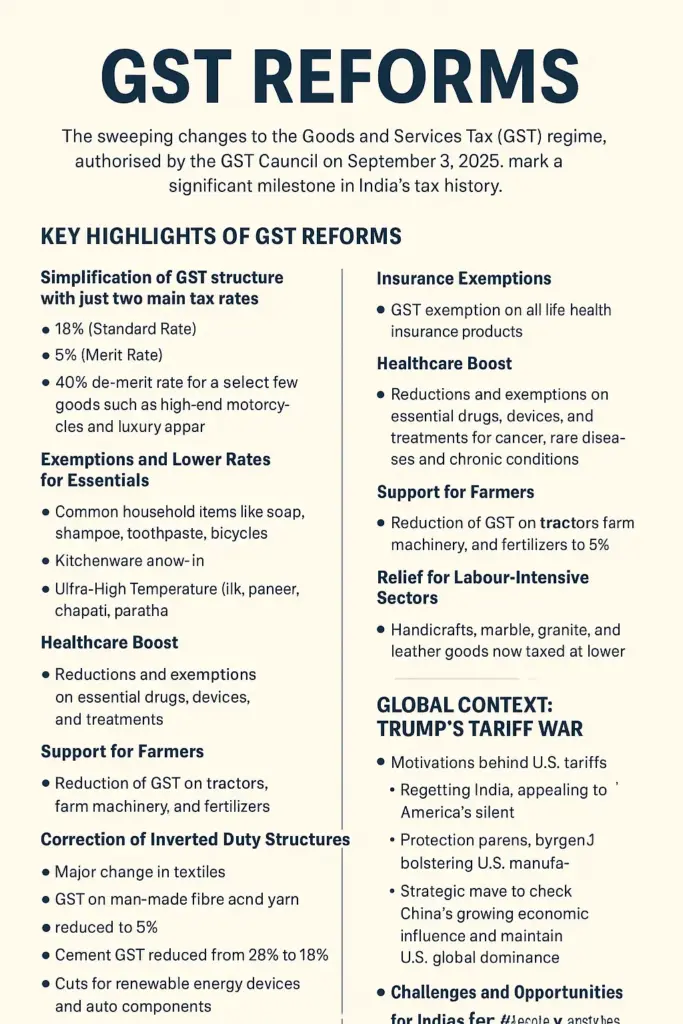
Key Highlights of GST Reforms:
- Simplification of GST structure with just two main tax rates:
- 18% (Standard Rate)
- 5% (Merit Rate)
- 40% (De-merit Rate for a select few goods such as high-end motorcycles and luxury apparel)
- Exemptions and Lower Rates for Essentials:
- Common household items like soap, shampoo, toothpaste, bicycles, and kitchenware are now in the 5% bracket.
- UHT milk, as well as paneer, chapati, and paratha, fall under the category of items fully exempt from GST.
- There have been notable price cuts on packaged foods, noodles, chocolates, and drinks.
- Insurance Exemptions:
- GST exemption on all life and health insurance products to increase affordability, particularly benefiting senior citizens and low-income families.
- Healthcare Boost:
- Concessions and tax relief on critical medicines, medical equipment, and therapies for cancer, rare ailments, and long-term health conditions.
- Support for Farmers:
- Reduction of GST on tractors, farm machinery, and fertilizers to 5%, lowering cultivation costs and improving productivity.
- Relief for Labour-Intensive Sectors:
- Reduced tax rates on handicrafts, marble, granite, and leather products are expected to enhance job creation and strengthen market competitiveness.
- Correction of Inverted Duty Structures:
- The tax rate on cement has been lowered from 28% to 18%, providing much-needed support to the housing and construction industries.
- Reductions in duties for renewable energy equipment and auto parts aimed at boosting green growth efforts.
Institutional and Structural Reforms:
- Faster dispute resolution
- Greater consistency in rulings
- Higher trust in the tax system
- Process Reforms Introduced:
- Provisional refunds for inverted duty structures
- Risk-based compliance checks
- Aligning valuation standards to minimize conflicts and lower compliance expenses.
Impact on Citizens and the Economy:
These reforms are designed as people-centric changes, benefiting every section of society:
- Families save more due to lower taxes on essentials.
- Workers in traditional industries gain from increased competitiveness.
- Businesses see reduced compliance burdens and improved predictability.
The careful phasing of reforms starting September 22, 2025, ensures that benefits reach consumers and businesses quickly while maintaining fiscal stability.
Revenue Implications:
- The government estimates a revenue impact of around Rs 48,000 crore annually based on 2023-24 data.
- However, given the wide scope of reforms, the actual figure might be higher.
The compensation cess has been removed, pushing states to explore alternate revenue sources and rely on the 16th Finance Commission for support.
Global Context: Trump’s Tariff War:
While India reforms its domestic tax structure, the global economic landscape remains volatile due to U.S. President Donald Trump’s tariff policies.
Motivations Behind U.S. Tariffs:
- Appealing to the quiet majority in the United States who feel marginalized by the effects of globalization.
- Protectionist policies aimed at bolstering U.S. manufacturing.
- Strategic move to check China’s growing economic influence and maintain U.S. global dominance.
- Discriminatory tariffs negatively affecting India’s textiles, jewellery, auto components, and metal sectors.
Challenges and Opportunities for India:
India must:
- Reassess its geopolitical alignment with the U.S., especially given America’s renewed engagement with Pakistan and inconsistent support for India.
- Defend its economic interests by standing firm on issues like agricultural protections and oil imports.
- Strengthen internal economic resilience by addressing challenges such as low manufacturing output, unemployment, and stagnant private investment.
- Champion multipolarity and lead efforts to create a New Economic Deal that benefits the Global South.
Conclusion:
GST 2.0 represents a major overhaul of India’s tax framework, bringing significant changes to the system.
By:
- Simplifying the tax structure,
- Lowering rates on essential goods,
- Supporting labour-intensive sectors, and
- Strengthening institutional mechanisms,
India has taken a decisive step toward inclusive economic growth and a Viksit Bharat 2047 vision. These reforms are not merely technical adjustments; they are people’s reforms, designed to touch every household, every business, and every citizen.

May 19, 2026
October 17, 2025
October 16, 2025
October 6, 2025

