May 20, 2026
Local Government: “stepchild” of Indian federalism
Local Government: “stepchild” of Indian federalism
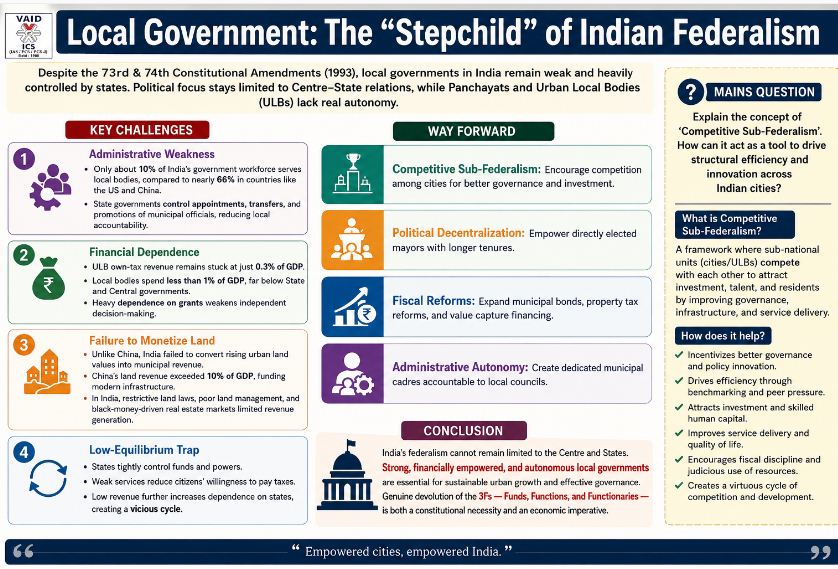
- Despite the 73rd and 74th Constitutional Amendment Acts (1993) granting constitutional status to Panchayats and Urban Local Bodies (ULBs), India’s third tier of governance remains structurally weak. It is frequently labeled the “stepchild” of Indian federalism, as mainstream political narratives remain heavily preoccupied with Centre-State relations, leaving local bodies under the strict, paternalistic control of state governments.
Structural Bottlenecks in Local Governance:
Severe Administrative & Capacity Deficits:
- Low Personnel Share: Unlike developed or rapidly developing economies where local bodies drive governance, India’s local government workforce is severely restricted.
- US and China Comparison: Nearly two-thirds (~66%) of all government employees work under local governments, allowing for direct public service delivery.
- India Reality: Just over 10% of government employees work for local bodies, crippling their operational capacity.
- Accountability Crisis: State governments retain absolute control over the appointment, transfer, and discipline of Municipal Commissioners and senior administrative staff. Even when functions are devolved, personnel look to state capitals rather than local councils for career advancement.
Poor Financial Autonomy (The Low-Equilibrium Trap):
- Stagnant Own-Tax Revenue: Over the past six decades, while Central and State tax collections grew by 2x and 2.5x respectively, the urban third tier’s own-tax revenue has stagnated at a meager 0.3% of GDP.
- Spending Deprivation: Low revenue generation directly translates to an inability to spend on public infrastructure.
- ULB Expenditure: Consistently less than 1% of GDP.
- Comparison: States spend roughly 15 times more, and the Centre spends nearly 20 times more than local bodies.
- The Dependency Cycle: This resource gap creates a chronic dependency on external fiscal transfers and grants from State and Central governments, stripping local bodies of independent decision-making powers.
The Failure of Land Monetization: India vs. China:
A major structural failure of Indian ULBs is the inability to capture and monetize rising land values driven by rapid economic growth and urbanization.
- The Chinese Model: China successfully converted urban demographic growth into municipal wealth through aggressive land sales and land-use taxation.
- China Land Revenue: Rose from less than 1% of GDP to over 10% at its peak.
- Per Capita Revenue: Per urban resident, China’s land revenue was 15 times higher than India’s in 1999, and 225 times higher at its 2020 peak, funding world-class infrastructure.
- The Indian Reality: Land-related revenues have remained frozen at ~1% of GDP due to deep-seated policy failures, despite similar economic growth curves.
Reasons for India’s Failure to Mobilize Land Revenue:
- Socialist Policy Hangover: Legislation like the Urban Land Ceiling Act of 1976 fragmented land holdings rather than facilitating organized public land banks or strategic monetization.
- Underutilized Public Land: Immense, high-value land parcels held by Central/State entities (Public Sector Enterprises, Port Trusts, Defense establishments, and State-managed temples) sit vacant or encroached upon without generating revenue for cities.
- Market Distortions & Black Money: Over-regulated building by-laws and rigid land-use zoning have driven rental and land markets underground, promoting rent-seeking and massive black money generation in real estate instead of public wealth.
The Low-Equilibrium Political Economy Trap:
- Higher tiers (Centre and States) tightly control fiscal devolution.
- Local bodies consequently lack independent, predictable revenue sources.
- Due to poor service delivery, local bodies are reluctant or unable to tax local citizens to avoid political backlash.
- This results in chronic resource shortages, reinforcing complete administrative and financial dependency on the state.
Way Forward & Reform Strategy:
To resolve pressing urban crises—such as Delhi’s toxic air pollution or Bengaluru’s infrastructure congestion—the third tier must be structurally re-engineered.
- Promote Competitive Sub-Federalism: Just as states compete for investment, India needs to foster structural competition among cities to drive innovation, cleanliness, and administrative efficiency.
- Leverage Demographic Shifts: The upcoming Census and subsequent intra-state delimitation will inevitably increase the electoral weight of urban areas. This shift should be leveraged to demand greater political accountability and decentralization for city leaders (e.g., directly elected mayors with long tenures).
- Fiscal Empowerment: Shift from grant-dependency to market-based instruments like Municipal Bonds, Value Capture Financing (VCF), and comprehensive property tax reforms.
- Administrative Autonomy: Create dedicated municipal cadres where senior bureaucrats are directly accountable to the elected local council rather than state secretariats.
Conclusion:
Indian federalism can no longer afford to be a two-tier conversation between New Delhi and state capitals. For India to sustain a high-growth trajectory, its cities must transition from passive administrative outposts into self-governing, financially vibrant engines of innovation. Genuine devolution of the 3Fs (Funds, Functions, and Functionaries) is not just a constitutional obligation; it is an economic imperative.
स्थानीय सरकार: भारतीय संघवाद की “सौतेली संतान”::
पंचायती राज और शहरी स्थानीय निकायों (ULBs) को संवैधानिक दर्जा देने वाले 73वें और 74वें संविधान संशोधन अधिनियम (1993) के बावजूद, भारत में शासन का यह तीसरा स्तर संरचनात्मक रूप से बेहद कमजोर बना हुआ है। इसे अक्सर भारतीय संघवाद की “सौतेली संतान” (stepchild) कहा जाता है, क्योंकि मुख्यधारा का राजनीतिक नैरेटिव और विमर्श पूरी तरह से केंद्र-राज्य संबंधों तक ही सीमित रहता है, जिससे स्थानीय निकाय राज्य सरकारों के कड़े और पितृसत्तात्मक नियंत्रण में आ जाते हैं।
स्थानीय शासन में संरचनात्मक बाधाएँ::
गंभीर प्रशासनिक एवं क्षमता का अभाव::
- कर्मचारियों की कम हिस्सेदारी: उन विकसित या तेजी से विकास कर रही अर्थव्यवस्थाओं के विपरीत जहाँ स्थानीय निकाय जमीनी स्तर पर शासन चलाते हैं, भारत में स्थानीय सरकारी कार्यबल (workforce) बेहद सीमित है।
- अमेरिका और चीन से तुलना: इन देशों में लगभग दो-तिहाई (~66%) सरकारी कर्मचारी स्थानीय सरकारों के अधीन काम करते हैं, जिससे वे सीधे जनता तक सार्वजनिक सेवाएँ पहुँचाने में सक्षम होते हैं।
- भारत की वास्तविकता: भारत में केवल 10% से कुछ ही अधिक सरकारी कर्मचारी स्थानीय निकायों के लिए काम करते हैं, जो उनकी परिचालन क्षमता को पंगु बना देता है।
- जवाबदेही का संकट: नगर आयुक्तों (Municipal Commissioners) और वरिष्ठ प्रशासनिक अधिकारियों की नियुक्ति, स्थानांतरण और अनुशासन पर राज्य सरकारों का पूर्ण नियंत्रण होता है। कार्यों का हस्तांतरण होने के बावजूद, ये अधिकारी अपने करियर में उन्नति के लिए स्थानीय परिषदों के बजाय राज्य की राजधानियों (मंत्रालयों) की ओर देखते हैं।
कमजोर वित्तीय स्वायत्तता (निम्न-संतुलन का जाल / The Low-Equilibrium Trap)::
- स्थिर कर राजस्व: पिछले छह दशकों में जहाँ केंद्र और राज्यों के स्व-जनित कर संग्रह में क्रमशः 2 गुना और5 गुना की वृद्धि हुई है, वहीं शहरी तीसरे स्तर का अपना खुद का कर राजस्व सकल घरेलू उत्पाद (GDP) के मात्र 0.3% पर ही अटका हुआ है।
- व्यय की कमी (Spending Deprivation): कम राजस्व सृजन का सीधा असर सार्वजनिक बुनियादी ढांचे (infrastructure) पर खर्च करने की असमर्थता के रूप में दिखाई देता है।
- ULB का व्यय: यह लगातार GDP के 1% से भी कम बना हुआ है।
- तुलनात्मक स्थिति: राज्य सरकारें स्थानीय निकायों की तुलना में लगभग 15 गुना अधिक और केंद्र सरकार लगभग 20 गुना अधिक खर्च करती है।
- निर्भरता का दुष्चक्र: यह वित्तीय अंतर राज्य और केंद्र सरकारों से मिलने वाले बाहरी वित्तीय हस्तांतरणों और अनुदानों पर एक दीर्घकालिक निर्भरता पैदा करता है, जिससे स्थानीय निकायों की स्वतंत्र निर्णय लेने की शक्ति छिन जाती है।
भूमि मुद्रीकरण (Land Monetization) की विफलता: भारत बनाम चीन::
भारतीय शहरी स्थानीय निकायों (ULBs) की एक बड़ी संरचनात्मक विफलता यह रही है कि वे तीव्र आर्थिक विकास और शहरीकरण के कारण जमीन और संपत्ति की बढ़ती कीमतों का लाभ उठाने और उसका मुद्रीकरण करने में पूरी तरह असमर्थ रहे हैं।
- चीनी मॉडल: चीन ने आक्रामक भूमि बिक्री और भूमि-उपयोग कराधान (land-use taxation) के माध्यम से शहरी जनसांख्यिकीय विकास को नगरपालिकाओं की संपत्ति में सफलतापूर्वक बदल दिया।
- चीन का भूमि राजस्व: यह अपने चरम पर GDP के 1% से बढ़कर 10% से अधिक हो गया था।
- प्रति व्यक्ति राजस्व: प्रति शहरी निवासी के आधार पर, चीन का भूमि राजस्व 1999 में भारत की तुलना में 15 गुना अधिक था, और 2020 में अपने चरम पर यह 225 गुना अधिक हो गया, जिसने वहाँ विश्व स्तरीय बुनियादी ढांचे को वित्तपोषित किया।
- भारतीय वास्तविकता: समान आर्थिक विकास दर के बावजूद, गहरी नीतिगत विफलताओं के कारण भारत में भूमि से संबंधित राजस्व GDP के ~1% पर ही जमा हुआ (frozen) है।
भूमि राजस्व जुटाने में भारत की विफलता के कारण::
- समाजवादी नीतियों का असर (Socialist Policy Hangover): ‘शहरी भूमि सीमा अधिनियम, 1976’ (Urban Land Ceiling Act) जैसे कानूनों ने संगठित सार्वजनिक भूमि बैंकों या रणनीतिक मुद्रीकरण को बढ़ावा देने के बजाय भूमि के मालिकाना हक को खंडित कर दिया।
- सार्वजनिक भूमि का कम उपयोग: केंद्र और राज्य की संस्थाओं (सार्वजनिक क्षेत्र के उपक्रमों, पोर्ट ट्रस्टों, रक्षा प्रतिष्ठानों और राज्य-प्रबंधित मंदिरों) के पास मौजूद विशाल और अत्यधिक मूल्यवान भूमि खंड या तो खाली पड़े हैं या उन पर अतिक्रमण हो चुका है, जिससे शहरों को कोई राजस्व नहीं मिल पाता।
- बाजार की विकृतियाँ और काला धन: अत्यधिक विनियमित भवन उप-नियमों (building by-laws) और कड़े भूमि-उपयोग ज़ोनिंग ने किराये और भूमि बाजारों को भूमिगत (अवैध) कर दिया है। इसने सार्वजनिक संपत्ति बनाने के बजाय रेंट-सीकिंग (घूसखोरी/दलाली) और रियल एस्टेट क्षेत्र में भारी मात्रा में काले धन को बढ़ावा दिया है।
निम्न-संतुलन राजनीतिक अर्थव्यवस्था का जाल (The Low-Equilibrium Political Economy Trap)::
- उच्च स्तर (केंद्र और राज्य) वित्तीय हस्तांतरण और कर शक्तियों पर कड़ा नियंत्रण रखते हैं।
- इसके परिणामस्वरूप स्थानीय निकायों के पास स्वतंत्र और अनुमानित राजस्व स्रोतों का अभाव होता है।
- खराब सेवा वितरण के कारण, स्थानीय निकाय राजनीतिक नुकसान और जनता के आक्रोश से बचने के लिए स्थानीय नागरिकों पर कर लगाने से कतराते हैं या असमर्थ होते हैं।
- इसके चलते संसाधनों की स्थायी कमी बनी रहती है, जो राज्य पर उनके पूर्ण प्रशासनिक और वित्तीय निर्भरता को और मजबूत करती है।
आगे की राह और सुधार की रणनीति::
दिल्ली के जहरीले वायु प्रदूषण या बेंगलुरु के बुनियादी ढांचे के गतिरोध (ट्रैफिक जाम) जैसे गंभीर शहरी संकटों को हल करने के लिए शासन के इस तीसरे स्तर को संरचनात्मक रूप से पुनर्गठित (re-engineered) करना होगा।
- प्रतिस्पर्धी उप-संघवाद (Competitive Sub-Federalism) को बढ़ावा देना: जिस तरह राज्य निवेश के लिए आपस में प्रतिस्पर्धा करते हैं, उसी तरह भारत को नवाचार, स्वच्छता और प्रशासनिक दक्षता को बढ़ावा देने के लिए शहरों के बीच संरचनात्मक प्रतिस्पर्धा को विकसित करना होगा।
- जनसांख्यिकीय बदलावों का लाभ उठाना: आगामी जनगणना और उसके बाद होने वाले अंतः-राज्य परिसीमन (intra-state delimitation) से शहरी क्षेत्रों का चुनावी महत्व निश्चित रूप से बढ़ेगा। इस बदलाव का उपयोग शहरी नेताओं के लिए अधिक राजनीतिक जवाबदेही और विकेंद्रीकरण (जैसे दीर्घकालिक कार्यकाल वाले सीधे चुने गए मेयर) की मांग के लिए किया जाना चाहिए।
- वित्तीय सशक्तिकरण: अनुदान पर निर्भरता को छोड़कर बाजार-आधारित उपकरणों जैसे कि म्युनिसिपल बॉन्ड (Municipal Bonds), वैल्यू कैप्चर फाइनेंसिंग (VCF), और व्यापक संपत्ति कर सुधारों की ओर बढ़ना होगा।
- प्रशासनिक स्वायत्तता: समर्पित नगरपालिका संवर्गों (municipal cadres) का निर्माण किया जाए जहाँ वरिष्ठ नौकरशाह राज्य सचिवालयों के बजाय सीधे निर्वाचित स्थानीय परिषद के प्रति जवाबदेह हों।
निष्कर्ष::
भारतीय संघवाद अब केवल नई दिल्ली और राज्यों की राजधानियों के बीच दो-स्तरीय बातचीत तक सीमित रहने का जोखिम नहीं उठा सकता। भारत को एक उच्च-विकास पथ पर बनाए रखने के लिए, इसके शहरों को निष्क्रिय प्रशासनिक चौकियों से आत्मनिर्भर, वित्तीय रूप से जीवंत और नवाचार के इंजनों में बदलना होगा। 3Fs (Funds-धन, Functions-कार्य, और Functionaries-कर्मचारी) का वास्तविक हस्तांतरण केवल एक संवैधानिक दायित्व नहीं है; यह एक आर्थिक अनिवार्यता है।

May 19, 2026
October 17, 2025
October 16, 2025
October 6, 2025

