September 16, 2026
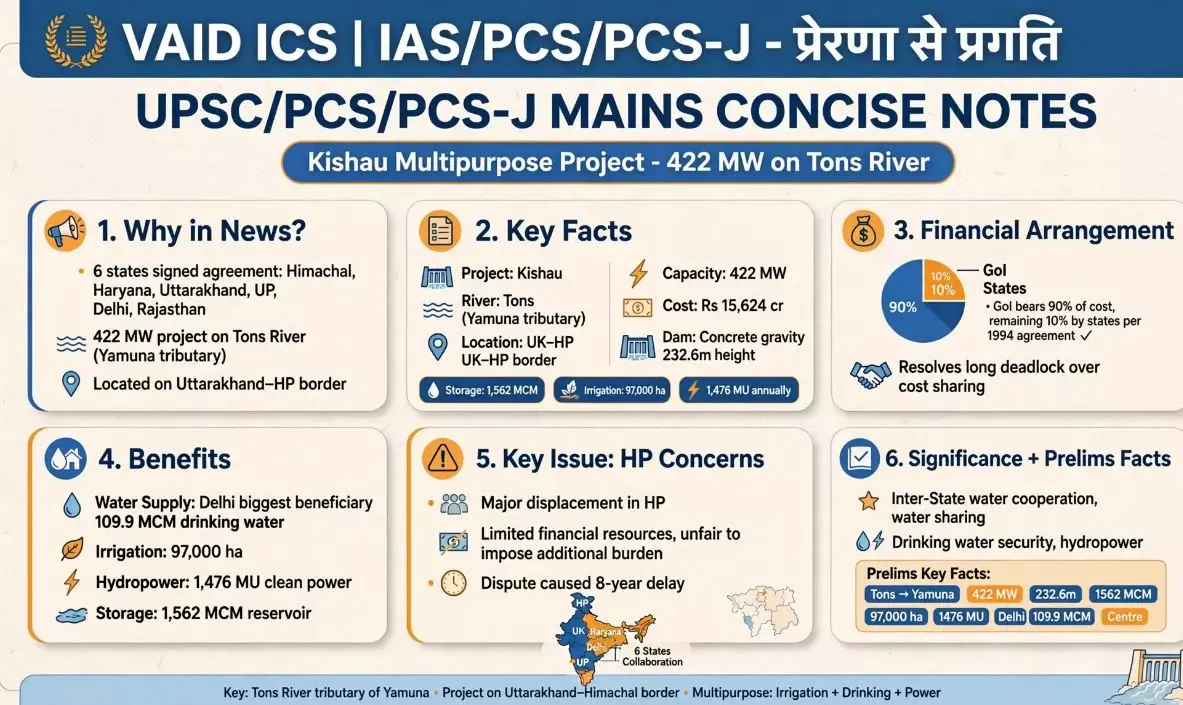
Kishau Multipurpose Project/किशाऊ बहुउद्देशीय परियोजना
Why in News?
Himachal Pradesh, Haryana, Uttarakhand, Uttar Pradesh, Delhi and Rajasthan have signed an agreement for the implementation of the 422 MW Kishau Multipurpose Project.
The project will be constructed on the Tons River, along the Uttarakhand–Himachal Pradesh border.
Key Facts:
-
Project: Kishau Multipurpose Project
-
River: Tons River, a tributary of the Yamuna
-
Location: Uttarakhand–Himachal Pradesh border
-
Installed Capacity: 422 MW
-
Estimated Cost: ₹15,624 crore
-
Type of Dam: Concrete gravity dam
-
Dam Height: 232.6 metres
-
Storage Capacity: 1,562 million cubic metres
-
Irrigation Potential: About 97,000 hectares
-
Hydropower Generation: 1,476 million units of clean electricity annually
-
Participating States/UT: Himachal Pradesh, Haryana, Uttarakhand, Uttar Pradesh, Rajasthan and Delhi
Financial Arrangement:
-
The Government of India will bear approximately 90% of the project cost.
-
The remaining 10% will be borne by the participating States according to the 1994 agreement.
-
The agreement resolves a long-standing deadlock over the sharing of the financial burden.
Benefits:
1. Water Supply:
-
The project will augment water availability for the participating regions.
-
Delhi is expected to be the biggest beneficiary.
-
Delhi will receive approximately 109.9 million cubic metres of water annually for meeting its drinking-water requirements.
2. Irrigation:
-
The project is expected to provide irrigation to approximately 97,000 hectares of land.
3. Hydropower:
-
It will generate around 1,476 million units of clean hydropower.
4. Water Storage:
-
The large reservoir will provide 1,562 million cubic metres of water-storage capacity.
Key Issue: Himachal Pradesh’s Concerns
Himachal Pradesh has raised concerns regarding the distribution of costs and benefits.
-
A major portion of the population displacement associated with the project would occur in Himachal Pradesh.
-
The State has argued that, given its limited financial resources and displacement burden, imposing an additional financial contribution would be unfair.
-
The earlier dispute over the State’s financial contribution contributed to the eight-year delay in implementation.
Significance:
The agreement is important for inter-State water cooperation, as the project involves multiple States and addresses issues relating to:
-
Water sharing
-
Irrigation
-
Drinking-water security
-
Hydropower generation
-
Inter-State coordination
-
Resolution of water-related disputes
Prelims Facts to Remember:
Kishau Project → Tons River → Yamuna Basin
Capacity: 422 MW
Dam Height: 232.6 m
Storage: 1,562 MCM
Irrigation: 97,000 hectares
Power: 1,476 million units
Delhi’s annual water allocation: 109.9 MCM
Central Government funding: Approximately 90%
किशाऊ बहुउद्देशीय परियोजना :
चर्चा में क्यों?
हिमाचल प्रदेश, हरियाणा, उत्तराखंड, उत्तर प्रदेश, दिल्ली और राजस्थान ने 422 MW की किशाऊ बहुउद्देशीय परियोजना के कार्यान्वयन के लिए समझौते पर हस्ताक्षर किए हैं।
यह परियोजना टोंस नदी पर उत्तराखंड–हिमाचल प्रदेश सीमा के निकट बनाई जाएगी।
प्रमुख तथ्य:
-
परियोजना: किशाऊ बहुउद्देशीय परियोजना
-
नदी: टोंस नदी, जो यमुना की सहायक नदी है
-
स्थान: उत्तराखंड–हिमाचल प्रदेश सीमा
-
स्थापित क्षमता: 422 MW
-
अनुमानित लागत: ₹15,624 करोड़
-
बांध का प्रकार: कंक्रीट ग्रेविटी बांध
-
बांध की ऊँचाई: 232.6 मीटर
-
जल भंडारण क्षमता: 1,562 मिलियन घन मीटर (MCM)
-
सिंचाई क्षमता: लगभग 97,000 हेक्टेयर
-
जलविद्युत उत्पादन: प्रतिवर्ष लगभग 1,476 मिलियन यूनिट स्वच्छ विद्युत
-
भागीदार राज्य/केंद्रशासित प्रदेश: हिमाचल प्रदेश, हरियाणा, उत्तराखंड, उत्तर प्रदेश, राजस्थान और दिल्ली
वित्तीय व्यवस्था:
-
भारत सरकार परियोजना लागत का लगभग 90% वहन करेगी।
-
शेष 10% राशि भागीदार राज्यों द्वारा 1994 के समझौते के अनुसार वहन की जाएगी।
-
इस समझौते से परियोजना के वित्तीय भार के बंटवारे को लेकर लंबे समय से चले आ रहे गतिरोध को दूर किया गया है।
परियोजना के लाभ:
1. जल आपूर्ति:
-
परियोजना से संबंधित क्षेत्रों में जल की उपलब्धता बढ़ेगी।
-
दिल्ली को प्रमुख लाभार्थी माना जा रहा है।
-
दिल्ली को पेयजल आवश्यकताओं के लिए प्रतिवर्ष लगभग 109.9 मिलियन घन मीटर (MCM) जल प्राप्त होगा।
2. सिंचाई:
-
परियोजना से लगभग 97,000 हेक्टेयर भूमि को सिंचाई सुविधा मिलने की संभावना है।
3. जलविद्युत:
-
प्रतिवर्ष लगभग 1,476 मिलियन यूनिट स्वच्छ जलविद्युत का उत्पादन होगा।
4. जल भंडारण:
-
परियोजना का जलाशय लगभग 1,562 मिलियन घन मीटर जल का भंडारण कर सकेगा।
प्रमुख मुद्दा: हिमाचल प्रदेश की चिंताएँ
हिमाचल प्रदेश ने परियोजना से जुड़े लागत और लाभ के वितरण को लेकर चिंताएँ व्यक्त की हैं।
-
परियोजना के कारण होने वाले जनसंख्या विस्थापन का एक बड़ा हिस्सा हिमाचल प्रदेश में होने की संभावना है।
-
राज्य का तर्क रहा है कि उसकी सीमित वित्तीय क्षमता और विस्थापन के बोझ को देखते हुए अतिरिक्त वित्तीय योगदान उचित नहीं होगा।
-
राज्य के वित्तीय योगदान को लेकर पूर्व में उत्पन्न विवाद परियोजना के कार्यान्वयन में लगभग आठ वर्ष की देरी का एक कारण रहा।
महत्व:
यह समझौता अंतर्राज्यीय जल सहयोग की दृष्टि से महत्वपूर्ण है। परियोजना निम्नलिखित मुद्दों को संबोधित करती है:
-
जल बंटवारा
-
सिंचाई सुविधा
-
पेयजल सुरक्षा
-
जलविद्युत उत्पादन
-
अंतर्राज्यीय समन्वय
-
जल संबंधी विवादों का समाधान
प्रारंभिक परीक्षा के लिए महत्वपूर्ण तथ्य:
किशाऊ परियोजना → टोंस नदी → यमुना नदी बेसिन
-
क्षमता: 422 MW
-
बांध की ऊँचाई: 232.6 मीटर
-
जल भंडारण: 1,562 MCM
-
सिंचाई: 97,000 हेक्टेयर
-
विद्युत उत्पादन: 1,476 मिलियन यूनिट/वर्ष
-
दिल्ली का वार्षिक जल आवंटन: 109.9 MCM
-
केंद्र सरकार का वित्तीय योगदान: लगभग 90%

May 19, 2026
October 17, 2025
October 16, 2025
October 6, 2025

