April 28, 2026
International Waters rules:
The UN Watercourses Convention (1997):
Full Name: Convention on the Law of the Non-Navigational Uses of International Watercourses.
This is the most significant global framework for shared fresh water. It does not replace local treaties (like the Indus Waters Treaty) but provides a template for them.
Core Principles:
- Equitable and Reasonable Utilization (Article 5): Countries must use shared water in a way that is fair. “Equitable” does not mean a 50/50 split; it depends on factors like population, geography, and the economic needs of the people.
- The Obligation Not to Cause Significant Harm (Article 7): Nations must take all appropriate measures to ensure their activities (like building a large dam) do not cause “significant harm” to the environment or economy of other nations sharing the same water.
- Prior Notification (Article 12): If a country plans a project that might affect the river flow, it must notify neighboring countries in advance and share technical data.
- General Obligation to Cooperate: Countries are encouraged to set up joint commissions (like the Indus Commission) to manage the water together.
The UNECE Water Convention (1992):
Full Name: Convention on the Protection and Use of Transboundary Watercourses and International Lakes.
Originally designed for Europe, it was opened for global membership in 2016. Many African and Asian nations are now joining it.
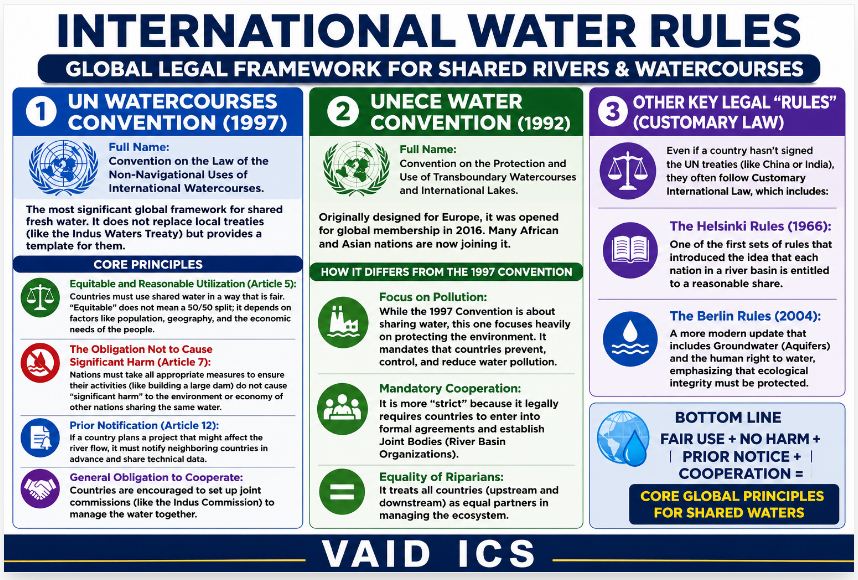
How it differs from the 1997 Convention?
- Focus on Pollution: While the 1997 Convention is about sharing water, this one focuses heavily on protecting the environment. It mandates that countries prevent, control, and reduce water pollution.
- Mandatory Cooperation: It is more “strict” because it legally requires countries to enter into formal agreements and establish Joint Bodies (River Basin Organizations).
- Equality of Riparians: It treats all countries (upstream and downstream) as equal partners in managing the ecosystem.
Other Key Legal “Rules” (Customary Law):
Even if a country hasn’t signed the UN treaties (like China or India), they often follow Customary International Law, which includes:
- The Helsinki Rules (1966): One of the first sets of rules that introduced the idea that each nation in a river basin is entitled to a reasonable share.
- The Berlin Rules (2004): A more modern update that includes Groundwater (Aquifers) and the human right to water, emphasizing that ecological integrity must be protected.

October 17, 2025
October 16, 2025
October 6, 2025
September 24, 2025

