August 24, 2026
Gist of Daily Articles: 24 August 2026/ Daily Mains Qn/Model Answer/Mains Concise Note The Hindu/Indian Express
Why in news?:
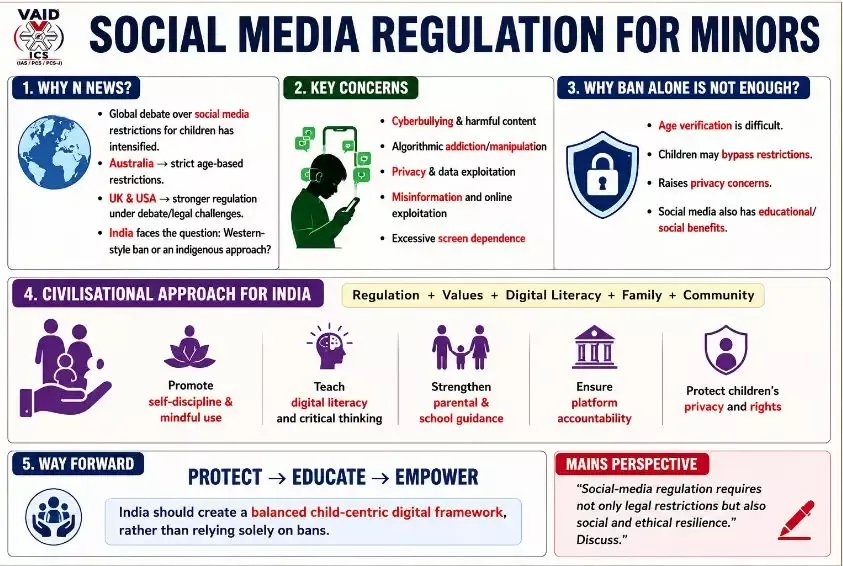
The debate over regulating or banning social media for minors has intensified globally, raising crucial questions for policy frameworks. Australia has introduced strict age-based restrictions, the UK is weighing tighter safeguards, and similar initiatives in the USA face legal hurdles. This international trend prompts a vital policy question for India: Should it copy Western restrictive models, or formulate a unique solution suited to its social and cultural landscape?
What is the Core Issue?
While social media offers vital tools for education, communication, and entertainment, excessive or unsafe engagement exposes children to severe digital risks:
-
Cyberbullying and toxic content loops
-
Algorithmic addiction and excessive screen dependence
-
Online manipulation, privacy violations, and data exploitation
-
Distorted social comparison and psychological pressures
The challenge is not simply declaring social media inherently harmful, but systematically engineering a safer digital ecosystem for minors.
Why are Countries Considering Restrictions?
Platform architectures rely on engagement-maximizing algorithms that trap user attention through continuous feedback loops. Children lack the fully developed digital maturity and critical literacy required to navigate these persuasive designs. Consequently, they struggle to separate verified facts, constructive knowledge, and educational resources from misinformation, manipulation, and predatory targeting.
What is the Problem with a Complete Ban?
Relying solely on blanket bans introduces practical, technical, and systemic implementation bottlenecks:
-
Enforcement Hurdles: Minors easily bypass age-verification walls using false credentials or multiple profiles.
-
Privacy Paradox: Enforcing stringent age gates forces platforms to harvest massive volumes of sensitive personal data.
-
Digital Exclusion: Complete curbs cut children off from legitimate digital learning communities and peer collaboration tools.
-
Rapid Technological Shifts: Fast-evolving decentralized technologies and proxy tools outpace rigid legislative bans.
What is a Civilisational Approach?
Rather than mirroring Western legal frameworks that lean heavily on state-led censorship or platform bans, India can adopt a civilisational approach. This paradigm integrates Technology, Regulation, Family, Education, Community, and Values. Instead of depending exclusively on punitive state restrictions, it builds native resilience, encouraging children to develop internal self-regulation and ethical technology habits.
India’s Unique Advantage:
India draws from a deep cultural tradition emphasizing self-discipline, mindfulness, balanced living, and collective societal well-being. Aligning these enduring values with modern digital literacy shifts the objective: teaching children not just how to operate devices, but when, why, and how responsibly to engage with them.
What Should India Do?
-
Age-Appropriate Regulation: Enforce stringent design standards and accountability frameworks for younger users.
-
Targeted Digital Literacy: Educate students proactively on algorithms, data privacy, and online safety.
-
Encouraging Parental Guidance: Foster healthy home digital habits rather than depending solely on constant digital surveillance.
-
Platform Accountability: Mandate algorithmic transparency, swift grievance redresses, and robust child data protection protocols.
-
School-Based Integration: Embed digital citizenship and cyber ethics directly into core school curricula.
-
Cultural Grounding: Champion empathy, mindfulness, and online self-control.
-
Child Rights Framework: Balance safety with unhindered access to valid information, expression, and peer communication.
Western Model vs. Civilisational Approach:
| Western Regulatory Approach | Civilisational Approach |
| Heavy reliance on legal restrictions and bans | Combination of smart regulation and social responsibility |
| State- or platform-led enforcement | Family-, school-, community-, and state-backed guidance |
| Primary focus on restricting physical access | Core emphasis on building inner digital maturity |
| Reactive penalization of platforms | Preventive, behavioral, and value-driven education |
The ideal path for India lies neither in absolute bans nor in total laissez-faire, but in smart regulation coupled with value-based digital education.
Way Forward:
India should anchor its strategy around an Indian Digital Social Contract centered on three pillars: Protect, Educate, and Empower.
-
Protect children from malicious exploitation and toxic content.
-
Educate them systematically about digital design mechanics and risks.
-
Empower them to exercise sound moral judgment online.
The ultimate aim must be to nurture digitally resilient citizens rather than merely restricted users.
UPSC Mains Perspective:
-
GS-II: Governance, Fundamental Rights, Child Rights, and Technology Regulation.
-
GS-Ethics (GS-IV): Ethics in public life, self-regulation, and responsible digital behavior.
-
Essay: Technology versus Tradition; Individual Freedom versus Social Responsibility.
Sample Mains Question:
“Regulating social media for minors requires more than technological restrictions; it requires social, ethical, and cultural resilience.” Discuss with reference to India.
क्यों चर्चा में है?:
नाबालिकों के लिए सोशल मीडिया को विनियमित करने या प्रतिबंधित करने पर वैश्विक स्तर पर बहस तेज हो गई है, जिससे नीति निर्माताओं के समक्ष महत्वपूर्ण प्रश्न खड़े हो गए हैं। ऑस्ट्रेलिया ने कड़े आयु-आधारित प्रतिबंध लागू किए हैं, ब्रिटेन कड़े सुरक्षा उपायों पर विचार कर रहा है, और संयुक्त राज्य अमेरिका में इस तरह की पहलों को कानूनी चुनौतियों का सामना करना पड़ा है। इस वैश्विक रुझान ने भारत के समक्ष एक अहम नीतिगत सवाल खड़ा कर दिया है: क्या भारत को पश्चिमी मॉडलों की नकल करनी चाहिए, या अपनी सामाजिक और सांस्कृतिक पृष्ठभूमि के अनुकूल एक अनूठा समाधान विकसित करना चाहिए?
मूल समस्या क्या है?
यद्यपि सोशल मीडिया बच्चों को शिक्षा, संचार और मनोरंजन के लिए महत्वपूर्ण साधन प्रदान करता है, किंतु इसका अत्यधिक या असुरक्षित उपयोग उन्हें गंभीर डिजिटल जोखिमों के संपर्क में लाता है:
-
साइबरबुलिंग और हानिकारक सामग्री के दुष्चक्र
-
एल्गोरिदम आधारित लत और स्क्रीन पर अत्यधिक निर्भरता
-
ऑनलाइन हेरफेर, गोपनीयता का उल्लंघन और डेटा का दोहन
-
विकृत सामाजिक तुलना और मनोवैज्ञानिक दबाव
चुनौती यह नहीं है कि सोशल मीडिया को अंतर्निहित रूप से बुरा मान लिया जाए, बल्कि बच्चों के लिए एक सुरक्षित डिजिटल परिवेश का व्यवस्थित निर्माण किया जाए।
देश प्रतिबंधों पर क्यों विचार कर रहे हैं?
प्लेटफॉर्म संरचनाएं ऐसी एंगेजमेंट-मैक्सिमाइजिंग (जुड़ाव बढ़ाने वाली) एल्गोरिदम पर निर्भर करती हैं जो निरंतर फीडबैक लूप के माध्यम से उपयोगकर्ताओं का ध्यान आकर्षित करती हैं। बच्चों में वे डिजिटल परिपक्वता और महत्वपूर्ण साक्षरता विकसित नहीं होती है जो इन डिजाइन रणनीतियों से निपटने के लिए आवश्यक है। परिणामस्वरूप, वे सत्यापित तथ्यों, रचनात्मक ज्ञान और शैक्षिक संसाधनों को गलत सूचना, हेरफेर और लक्षित प्रलोभनों से अलग करने में संघर्ष करते हैं।
पूर्ण प्रतिबंध के साथ क्या समस्या है?
केवल पूर्ण प्रतिबंधों पर निर्भर रहने से व्यावहारिक, तकनीकी और प्रणालीगत कार्यान्वयन संबंधी बाधाएं उत्पन्न होती हैं:
-
प्रवर्तन संबंधी बाधाएं: नाबालिग आसानी से फर्जी क्रेडेंशियल या एकाधिक प्रोफाइल का उपयोग करके आयु-सत्यापन की दीवारों को पार कर लेते हैं।
-
गोपनीयता का विरोधाभास: सख्त आयु प्रतिबंध लागू करने से प्लेटफॉर्मों को भारी मात्रा में संवेदनशील व्यक्तिगत डेटा जुटाने के लिए मजबूर होना पड़ता है।
-
डिजिटल निष्कासन: पूर्ण प्रतिबंध बच्चों को वैध डिजिटल शिक्षण समुदायों और साथियों के साथ सहयोग के साधनों से वंचित कर देते हैं।
-
तेजी से तकनीकी बदलाव: तेजी से विकसित हो रही विकेंद्रीकृत प्रौद्योगिकियां कठोर विधायी प्रतिबंधों को पीछे छोड़ देती हैं।
‘सभ्यतागत दृष्टिकोण’ क्या है?
पश्चिमी कानूनी ढांचों, जो मुख्य रूप से राज्य-समर्थित सेंसरशिप या प्लेटफॉर्म प्रतिबंधों पर आधारित हैं, की नकल करने के बजाय भारत एक सभ्यतागत दृष्टिकोण अपना सकता है। यह प्रतिमान प्रौद्योगिकी, विनियमन, परिवार, शिक्षा, समुदाय और मूल्यों को एक साथ जोड़ता है। केवल दंडात्मक राज्य प्रतिबंधों पर निर्भर रहने के बजाय, यह आंतरिक लचीलेपन का निर्माण करता है और बच्चों को आंतरिक आत्म-नियमितीकरण तथा नैतिक तकनीक आदतों को विकसित करने के लिए प्रोत्साहित करता है।
भारत का विशिष्ट लाभ
भारत की एक समृद्ध सांस्कृतिक परंपरा रही है जो आत्म-अनुशासन, mindfulness (सजगता), संतुलित जीवन, और सामूहिक सामाजिक कल्याण पर जोर देती है। इन स्थायी मूल्यों को आधुनिक डिजिटल साक्षरता के साथ जोड़ने से उद्देश्य बदल जाता है: बच्चों को केवल यह सिखाना नहीं कि उपकरणों का संचालन कैसे करें, बल्कि यह सिखाना कि उनके साथ कब, क्यों और कितनी जिम्मेदारी से जुड़ना है।
भारत को क्या करना चाहिए?
-
आयु-उपयुक्त विनियमन: कम उम्र के उपयोगकर्ताओं के लिए कड़े डिजाइन मानकों और जवाबदेही ढांचों को लागू करना।
-
लक्षित डिजिटल साक्षरता: छात्रों को एल्गोरिदम, डेटा गोपनीयता और ऑनलाइन सुरक्षा के बारे में सक्रिय रूप से शिक्षित करना।
-
माता-पिता के मार्गदर्शन को प्रोत्साहन: केवल निरंतर डिजिटल निगरानी पर निर्भर रहने के बजाय घर पर स्वस्थ डिजिटल आदतें विकसित करना।
-
प्लेटफॉर्म की जवाबदेही: एल्गोरिथम पारदर्शिता, त्वरित शिकायत निवारण और मजबूत बाल डेटा सुरक्षा प्रोटोकॉल अनिवार्य करना।
-
विद्यालय-आधारित एकीकरण: डिजिटल नागरिकता और साइबर नैतिकता को सीधे मुख्य स्कूली पाठ्यक्रम में शामिल करना।
-
सांस्कृतिक आधार: सहानुभूति, सजगता और ऑनलाइन आत्म-नियंत्रण को बढ़ावा देना।
-
बाल अधिकार ढांचा: सूचना, अभिव्यक्ति और साथियों के बीच संचार तक वैध पहुंच को सीमित किए बिना सुरक्षा सुनिश्चित करना।
पश्चिमी मॉडल बनाम सभ्यतागत दृष्टिकोण:
| पश्चिमी विनियामक दृष्टिकोण | सभ्यतागत दृष्टिकोण |
| कानूनी प्रतिबंधों और बैन पर अत्यधिक निर्भरता | स्मार्ट विनियमन और सामाजिक जिम्मेदारी का संयोजन |
| राज्य या प्लेटफॉर्म के नेतृत्व में प्रवर्तन | परिवार, स्कूल, समुदाय और राज्य समर्थित मार्गदर्शन |
| भौतिक पहुंच को प्रतिबंधित करने पर मुख्य ध्यान | आंतरिक डिजिटल परिपक्वता के निर्माण पर मुख्य जोर |
| प्लेटफॉर्मों का प्रतिक्रियात्मक दंड | निवारक, व्यवहारिक और मूल्य-आधारित शिक्षा |
भारत के लिए सही रास्ता न तो पूर्ण प्रतिबंध में है और न ही पूर्ण अनियंत्रण में, बल्कि मूल्य-आधारित डिजिटल शिक्षा के साथ-साथ स्मार्ट विनियमन में निहित है।
आगे की राह:
भारत को अपनी रणनीति को ‘प्रोटेक्ट, एजुकेट और एम्पॉवर’ (संरक्षण, शिक्षा और सशक्तिकरण) के तीन सिद्धांतों पर आधारित एक ‘इंडियन डिजिटल सोशल Contract’ के इर्द-गिर्द केंद्रित करना चाहिए।
-
बच्चों को दुर्भावनापूर्ण शोषण और हानिकारक सामग्री से संरक्षित करना।
-
उन्हें डिजिटल डिजाइन की कार्यप्रणाली और जोखिमों के बारे में शिक्षित करना।
-
उन्हें ऑनलाइन सही नैतिक निर्णय लेने के लिए सशक्त करना।
अंतिम उद्देश्य केवल डिजिटल रूप से प्रतिबंधित बच्चों को तैयार करना नहीं, बल्कि डिजिटल रूप से लचीले नागरिकों का पोषण करना होना चाहिए।
यूपीएससी मुख्य परीक्षा परिप्रेक्ष्य:
-
जीएस-द्वितीय (GS-II): शासन, मौलिक अधिकार, बाल अधिकार और प्रौद्योगिकी का विनियमन।
-
जीएस-नैतिकता (GS-IV): लोक सेवा में नैतिकता, आत्म-नियमितीकरण और जिम्मेदार डिजिटल व्यवहार।
-
निबंध: प्रौद्योगिकी बनाम परंपरा; व्यक्तिगत स्वतंत्रता बनाम सामाजिक उत्तरदायित्व।
नमूना मुख्य परीक्षा प्रश्न:
“नाबालिकों के लिए सोशल मीडिया को विनियमित करने के लिए केवल तकनीकी प्रतिबंधों से अधिक की आवश्यकता है; इसके लिए सामाजिक, नैतिक और दार्शनिक लचीलेपन की आवश्यकता है।” भारत के संदर्भ में चर्चा करें।

May 19, 2026
October 17, 2025
October 16, 2025
October 6, 2025

