August 12, 2026
Fitch Ratings on India: What is a Sovereign Credit Rating?
Why in News?:
-
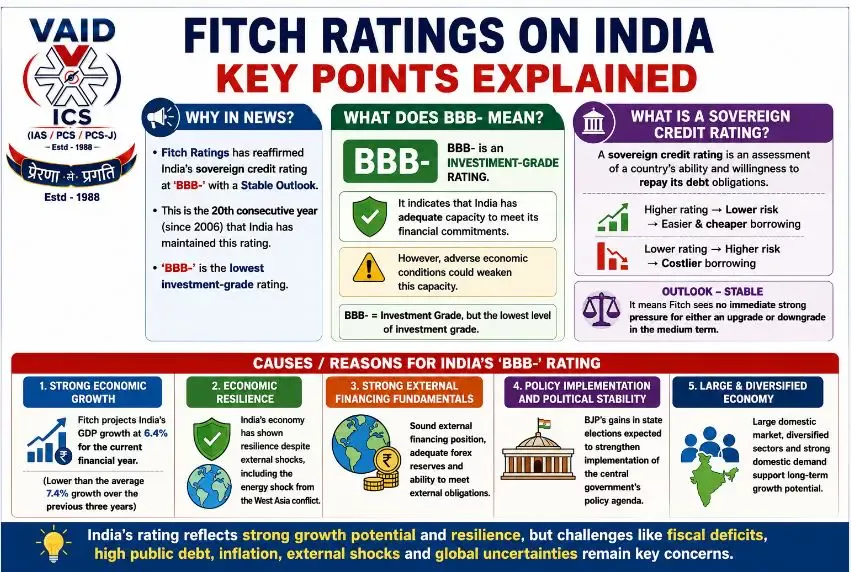
Fitch Ratings has reaffirmed India’s sovereign credit rating at ‘BBB-’ with a Stable Outlook.
-
India has retained this rating continuously since 2006.
-
This marks the twentieth consecutive year at the same rating.
-
BBB- is the lowest investment-grade rating in Fitch’s scale.
What is a Sovereign Credit Rating?
-
A sovereign credit rating is an assessment of a country’s ability and willingness to repay its debt obligations.
-
It indicates the perceived creditworthiness and default risk of a country.
-
In simple terms:
-
Higher rating leads to lower perceived risk and easier or cheaper borrowing.
-
Lower rating leads to higher perceived risk and higher borrowing cost.
-
What does BBB- Mean?
-
Fitch classifies BBB- as investment grade.
-
It means India is considered to have adequate capacity to meet financial commitments, although adverse economic conditions could weaken this capacity.
-
Important: BBB- is the lowest level of investment grade. Therefore, India is not in speculative or non-investment-grade territory.
What is the Stable Outlook?:
-
The outlook indicates the likely direction of the rating over the medium term.
-
Stable Outlook means Fitch currently sees no immediate strong pressure for either an upgrade or downgrade.
-
It does not mean that India’s rating can never change.
Why did Fitch Maintain India’s Rating?:
Fitch highlighted India’s strong economic fundamentals and resilience through major supporting factors:
-
Strong Economic Growth: India continues to record relatively high economic growth. Fitch projected solid GDP growth for the current financial year.
-
Economic Resilience: India has remained resilient despite external shocks, including the energy shock associated with the conflict in West Asia.
-
Strong External Financing Fundamentals: India has relatively strong external financing fundamentals, which support its ability to manage external pressures.
-
Policy Implementation: Fitch expects political developments and the government’s policy agenda to support continued implementation of economic policies.
Key Concern: Energy Shock
Conflict and geopolitical tensions in West Asia can affect global energy markets.
Transmission mechanism to India:
Geopolitical conflict – Higher global crude oil prices –Higher import bill – Pressure on Current Account –Inflationary pressure –Pressure on fiscal and external balances.
India is particularly sensitive to crude oil prices because it is a major importer of crude oil.
Why is India’s Growth Important for Credit Rating?:
Strong economic growth improves a country’s ability to:
-
Generate government revenue
-
Service public debt
-
Attract investment
-
Maintain foreign exchange earnings
-
Absorb economic shocks
-
Improve debt-to-GDP dynamics over time
Higher sustainable growth –Stronger repayment capacity —Better creditworthiness.
Factors Supporting India’s Creditworthiness:
-
Economic Factors: High growth potential, large and diversified economy, strong domestic demand, growing investment, and resilience to external shocks.
-
External Sector: Strong external financing fundamentals, foreign exchange buffers, and diversified sources of external financing.
-
Institutional and Policy Factors: Policy continuity, improving economic infrastructure, and continued implementation of structural reforms.
What Can Put Pressure on India’s Rating?:
Although Fitch retained the Stable Outlook, several factors remain important:
-
High Public Debt: A high government debt burden can limit fiscal flexibility.
-
Fiscal Deficit: Persistent fiscal deficits can increase borrowing requirements.
-
Weakening Growth: A significant and sustained slowdown could reduce India’s debt-servicing capacity.
-
External Shocks: Oil-price shocks, geopolitical conflicts, global recession, and global financial tightening.
-
Inflation: Persistent inflation can affect macroeconomic stability.
-
Banking and Financial Sector Risks: Stress in banks or financial institutions could affect public finances and economic growth.
Credit Rating Agencies:
The three major global credit-rating agencies commonly discussed in the Indian context are:
| Agency | Headquarters |
| Fitch Ratings | New York and London operations |
| Moody’s Ratings | New York |
| S&P Global Ratings | New York |
They assess the creditworthiness of governments, companies, and financial institutions. Credit ratings are opinions about credit risk, not guarantees that a borrower will repay.
Sovereign Rating vs GDP Growth:
These two concepts should not be confused:
-
GDP Growth: Measures how fast the economy’s output and income are increasing.
-
Sovereign Credit Rating: Measures the country’s creditworthiness and ability to service debt.
A country can have high GDP growth combined with a relatively low credit rating if it also has factors such as high public debt, weak fiscal position, institutional weaknesses, or external vulnerabilities.
Why Does Sovereign Rating Matter?:
A sovereign rating affects:
-
Government Borrowing: Higher creditworthiness can reduce borrowing costs.
-
Foreign Investment: Institutional investors often consider sovereign ratings while assessing country risk.
-
Corporate Borrowing: A country’s sovereign risk can influence borrowing conditions for domestic companies.
-
Capital Flows: Better perceived creditworthiness can support investment and capital inflows.
-
Overall Financial Stability: A credible macroeconomic framework can improve investor confidence.
समाचार में क्यों?:
फ़िंच रेटिंग्स (Fitch Ratings) ने भारत की सॉवरेन क्रेडिट रेटिंग को फिर सेपुष्टि कर दिया है, जिसे लगातार दो दशकों से बनाए रखा गया है।
भारत पर फ़िंच रेटिंग्स: व्यापक नोट्स
समाचार में क्यों?:
-
फ़िंच रेटिंग्स ने भारत की सॉवरेन क्रेडिट रेटिंग को ‘BBB-‘ और स्थेबल आउटलुक (Stable Outlook) के साथ फिर से पुष्ट किया है।
-
भारत ने 2006 से लगातार इस रेटिंग को बनाए रखा है।
-
यह एक ही रेटिंग पर 20 वाँ लगातार वर्ष है।
-
फ़िंच के पैमाने पर BBB- सबसे निचली निवेश-ग्रेड (investment-grade) रेटिंग है।
सॉवरेन क्रेडिट रेटिंग क्या है?:
-
सॉवरेन क्रेडिट रेटिंग किसी देश की अपने ऋण दायित्वों को चुकाने की क्षमता और इच्छा का आकलन है।
-
यह किसी देश की समझी गई साख (creditworthiness) और डिफ़ॉल्ट जोखिम को इंगित करता है।
-
सरल शब्दों में:
-
उच्च रेटिंग से कम माना गया जोखिम मिलता है और उधार लेना आसान या सस्ता हो जाता है।
-
निम्न रेटिंग से अधिक माना गया जोखिम मिलता है और उधार लेने की लागत बढ़ जाती है।
-
‘BBB-‘ का क्या अर्थ है?:
-
फ़िंच BBB- को निवेश ग्रेड के रूप में वर्गीकृत करता है।
-
इसका मतलब है कि भारत के पास अपनी वित्तीय प्रतिबद्धताओं को पूरा करने की पर्याप्त क्षमता है, हालांकि प्रतिकूल आर्थिक स्थितियाँ इस क्षमता को कमजोर कर सकती हैं।
-
महत्वपूर्ण: BBB- निवेश ग्रेड का सबसे निचला स्तर है। इसलिए, भारत सट्टा (speculative) या गैर-निवेश-ग्रेड क्षेत्र में नहीं है।
“स्थेबल आउटलुक” क्या है?:
-
आउटलुक मध्यम अवधि में रेटिंग की संभावित दिशा को इंगित करता है।
-
स्थेबल आउटलुक का मतलब है कि फ़िंच वर्तमान में अपग्रेड या डिग्रेड दोनों में से किसी के लिए भी कोई तत्काल मजबूत दबाव नहीं देखता है।
-
इसका मतलब यह नहीं है कि भारत की रेटिंग कभी बदल नहीं सकती।
फ़िंच ने भारत की रेटिंग क्यों बनाए रखी?:
फ़िंच ने निम्नलिखित प्रमुख समर्थक कारकों के माध्यम से भारत के मजबूत आर्थिक बुनियादी सिद्धांतों और लचीलेपन पर प्रकाश डाला:
-
मजबूत आर्थिक वृद्धि: भारत अपेक्षाकृत उच्च आर्थिक विकास दर्ज करना जारी रखे हुए है।
-
आर्थिक लचीलापन: पश्चिमी एशिया में संघर्ष से जुड़े ऊर्जा झटके सहित बाहरी झटकों के बावजूद भारत लचीला बना हुआ है।
-
मजबूत बाहरी वित्तपोषण के बुनियादी सिद्धांत: भारत के पास अपेक्षाकृत मजबूत बाहरी वित्तपोषण बुनियादी सिद्धांत हैं, जो बाहरी दबावों को प्रबंधित करने की उसकी क्षमता का समर्थन करते हैं।
-
नीति कार्यान्वयन: फ़िंच को उम्मीद है कि राजनीतिक विकास और सरकार का नीति एजेंडा आर्थिक नीतियों के निरंतर कार्यान्वयन का समर्थन करेगा।
मुख्य चिंता: ऊर्जा झटका
पश्चिमी एशिया में संघर्ष और भू-राजनीतिक तनाव वैश्विक ऊर्जा बाजारों को प्रभावित कर सकते हैं।
भारत में संचरण तंत्र:
भूराजनीतिक संघर्ष – उच्च वैश्विक कच्चे तेल की कीमतें – उच्च आयात बिल – चालू खाते पर दबाव – मुद्रास्फीति का दबाव – राजकोषीय और बाहरी संतुलन पर दबाव।
भारत कच्चे तेल की कीमतों के प्रति विशेष रूप से संवेदनशील है क्योंकि यह कच्चे तेल का एक प्रमुख आयातक है।
क्रेडिट रेटिंग के लिए भारत की वृद्धि क्यों महत्वपूर्ण है?:
मजबूत आर्थिक विकास किसी देश की निम्नलिखित क्षमताओं में सुधार करता है:
-
सरकारी राजस्व उत्पन्न करना
-
सार्वजनिक ऋण चुकाना
-
निवेश आकर्षित करना
-
विदेशी मुद्रा आय बनाए रखना
-
आर्थिक झटकों को अवशोषित करना
-
समय के साथ ऋण-से-जीडीपी गतिशीलता में सुधार करना
उच्च सतत वृद्धि –मजबूत चुक बेहतर साख क्षमता।
भारत की साख का समर्थन करने वाले कारक:
-
आर्थिक कारक: उच्च विकास क्षमता, बड़ी और विविध अर्थव्यवस्था, मजबूत घरेलू मांग, बढ़ता निवेश, और बाहरी झटकों के प्रति लचीलापन।
-
बाहरी क्षेत्र: मजबूत बाहरी वित्तपोषण बुनियादी सिद्धांत, विदेशी मुद्रा बफर, और बाहरी वित्तपोषण के विविध स्रोत।
-
संस्थागत और नीतिगत कारक: नीतिगत निरंतरता, बेहतर आर्थिक बुनियादी ढांचा, और संरचनात्मक सुधारों का निरंतर कार्यान्वयन।
भारत की रेटिंग पर क्या दबाव डाल सकता है?:
यद्यपि फ़िंच ने स्थिर दृष्टिकोण बनाए रखा, फिर भी कई कारक महत्वपूर्ण हैं:
-
उच्च सार्वजनिक ऋण: एक उच्च सरकारी ऋण बोझ राजकोषीय लचीलेपन को सीमित कर सकता है।
-
राजकोषीय घाटा: लगातार राजकोषीय घाटे से उधार लेने की आवश्यकताएँ बढ़ सकती हैं।
-
कमजोर होती वृद्धि: एक महत्वपूर्ण और निरंतर मंदी से भारत की ऋण-सेवा क्षमता कम हो सकती है।
-
बाहरी झटके: तेल-मूल्य के झटके, भूराजनीतिक संघर्ष, वैश्विक मंदी, और वैश्विक वित्तीय कड़ेपन।
-
मुद्रास्फीति: लगातार मुद्रास्फीति व्यापक आर्थिक स्थिरता को प्रभावित कर सकती है।
-
बैंकिंग और वित्तीय क्षेत्र के जोखिम: बैंकों या वित्तीय संस्थानों में तनाव सार्वजनिक वित्त और आर्थिक विकास को प्रभावित कर सकता है।
क्रेडिट रेटिंग एजेंसियाँ:
भारतीय संदर्भ में चर्चा की जाने वाली तीन प्रमुख वैश्विक क्रेडिट-रेटिंग एजेंसियाँ हैं:
| एजेंसी | मुख्यालय |
| फ़िंच रेटिंग्स (Fitch Ratings) | न्यूयॉर्क और लंदन संचालन |
| मूडीज़ रेटिंग्स (Moody’s Ratings) | न्यूयॉर्क |
| एसएंडपी ग्लोबल रेटिंग्स (S&P Global Ratings) | न्यूयॉर्क |
वे सरकारों, कंपनियों और वित्तीय संस्थानों की साख का आकलन करती हैं। क्रेडिट रेटिंग क्रेडिट जोखिम के बारे में राय हैं, इस बात की गारंटी नहीं है कि उधारकर्ता भुगतान कर देगा।
सॉवरेन रेटिंग बनाम जीडीपी वृद्धि:
इन दोनों अवधारणाओं को भ्रमित नहीं किया जाना चाहिए:
-
जीडीपी वृद्धि: यह मापता है कि अर्थव्यवस्था का उत्पादन और आय कितनी तेजी से बढ़ रही है।
-
सॉवरेन क्रेडिट रेटिंग: देश की साख और ऋण चुकाने की क्षमता को मापता है।
यदि किसी देश में उच्च सार्वजनिक ऋण, कमजोर राजकोषीय स्थिति, संस्थागत कमजोरियाँ या बाहरी विफलताएँ जैसे कारक हैं, तो उच्च जीडीपी वृद्धि के साथ-साथ उसकी क्रेडिट रेटिंग अपेक्षाकृत कम भी हो सकती है।
सॉवरेन रेटिंग क्यों मायने रखती है?:
एक सॉवरेन रेटिंग निम्नलिखित को प्रभावित करती है:
-
सरकारी उधार: बेहतर साख से उधार लेने की लागत कम हो सकती है।
-
विदेशी निवेश: संस्थागत निवेशक देश के जोखिम का आकलन करते समय अक्सर सॉवरेन रेटिंग पर विचार करते हैं।
-
कॉर्पोरेट उधार: किसी देश का सॉवरेन जोखिम घरेलू कंपनियों के लिए उधार लेने की स्थिति को प्रभावित कर सकता है।
-
पूंजी प्रवाह: बेहतर समझी गई साख निवेश और पूंजी प्रवाह का समर्थन कर सकती है।
-
समग्र वित्तीय स्थिरता: एक विश्वसनीय व्यापक आर्थिक ढांचा निवेशक के विश्वास में सुधार कर सकता है।

May 19, 2026
October 17, 2025
October 16, 2025
October 6, 2025

