September 26, 2026
Extended Monsoon Phase: Prolonged Withdrawal of the Southwest Monsoon
Why in News?
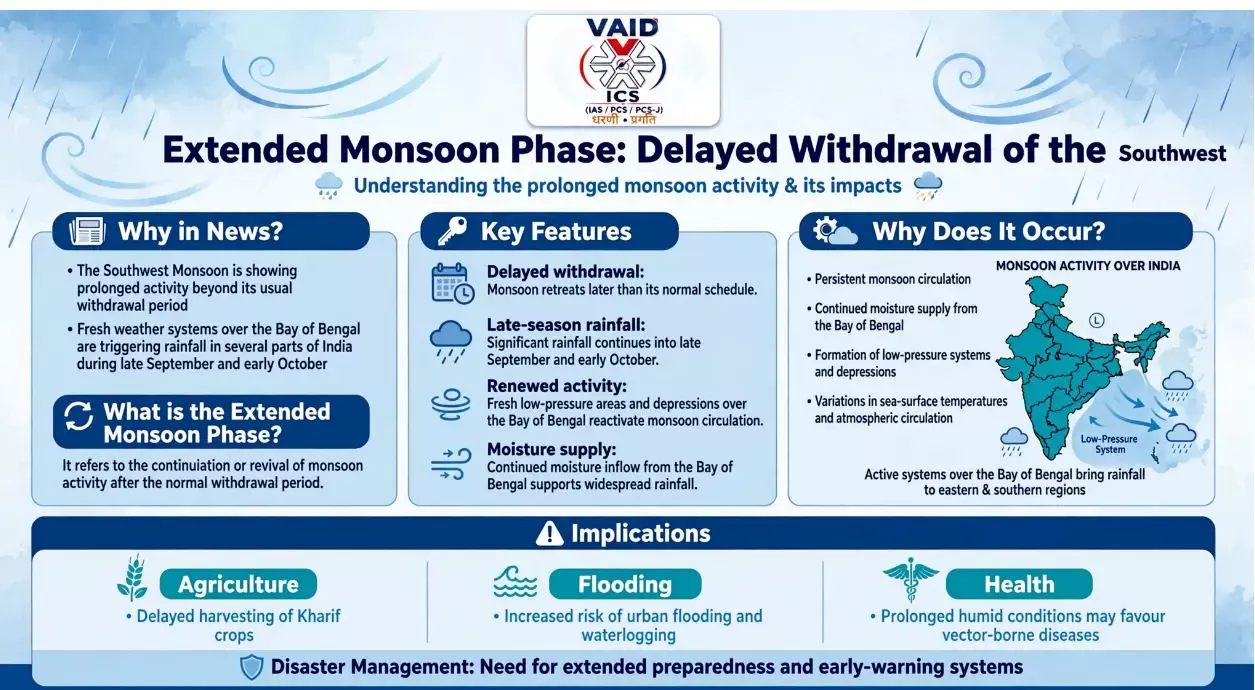
The Southwest Monsoon is showing signs of an extended phase, with rainfall continuing over parts of India even beyond the usual period of monsoon withdrawal. Fresh weather systems developing over the Bay of Bengal can revive monsoon activity and produce significant rainfall during late September and early October.
What is the Normal Monsoon Cycle?
-
Onset: The Southwest Monsoon normally arrives over Kerala around 1 June.
-
It gradually advances northward and covers most parts of India during June–July.
-
Withdrawal: The monsoon normally begins withdrawing from northwestern India in September and progressively retreats southward.
-
By late September–early October, most of India normally enters the post-monsoon transition.
What is the Extended Monsoon Phase?
The Extended Monsoon Phase refers to a situation in which monsoon activity persists or becomes active again beyond its usual withdrawal period.
It may occur when:
-
The monsoon withdrawal is delayed.
-
Moisture continues to flow from the Bay of Bengal.
-
Fresh low-pressure areas, depressions or other weather systems develop over the Bay of Bengal.
-
These systems move inland and produce renewed rainfall over parts of central, eastern and northern India.
Major Features:
Late-season rainfall:
-
Significant rainfall may continue during late September and early October.
-
Some regions may experience rainfall much later than the traditional monsoon withdrawal period.
Renewal of monsoon activity:
-
After a temporary reduction in rainfall, a fresh spell may occur due to new Bay of Bengal weather systems.
-
This may create an impression of a second phase of monsoon activity.
Delayed withdrawal:
-
The monsoon may retreat several days or weeks later than its climatological schedule.
-
Therefore, the transition from the rainy season to the post-monsoon season becomes less predictable.
Why Does It Happen?
The persistence or revival of monsoon activity is associated with:
-
Continued moisture supply from the Bay of Bengal
-
Formation of low-pressure systems and depressions
-
Persistence of favourable monsoon circulation
-
Interaction between tropical weather systems and broader atmospheric circulation
-
Variations in sea-surface temperatures and atmospheric conditions
Significance
The Extended Monsoon Phase can affect:
-
Agriculture: Delayed harvesting of Kharif crops
-
Urban areas: Waterlogging and urban flooding
-
Disaster management: Greater requirement for late-season preparedness
-
Public health: Favourable conditions for some vector-borne diseases
-
Weather forecasting: Greater uncertainty in determining the end of the rainy season
UPSC Prelims Pointers
-
Southwest Monsoon: Normally reaches Kerala around 1 June.
-
Monsoon withdrawal: Begins from northwestern India and progresses southward.
-
Bay of Bengal: Major source of moisture and an important region for formation of low-pressure systems and depressions.
-
Extended Monsoon Phase: Persistence or renewed monsoon activity beyond the normal withdrawal period.
-
It demonstrates that monsoon withdrawal is a gradual atmospheric process, not a fixed-date event.
UPSC Mains Perspective
The Extended Monsoon Phase reflects the highly dynamic nature of the Indian monsoon system. Delayed withdrawal and renewed rainfall can have significant implications for agriculture, disaster management, water resources and public health, highlighting the need for better seasonal forecasting and climate-resilient planning.
विस्तारित मानसून चरण (Extended Monsoon Phase): दक्षिण-पश्चिम मानसून की विलंबित वापसी
चर्चा में क्यों?
हाल के वर्षों में दक्षिण-पश्चिम मानसून की वापसी सामान्य समय से आगे तक जारी रहने के कारण सितंबर के अंतिम सप्ताह तथा अक्टूबर के प्रारंभ में भी देश के कई हिस्सों में वर्षा की स्थिति बनी रहती है। बंगाल की खाड़ी में बनने वाले निम्न दाब क्षेत्र एवं अवदाब मानसूनी गतिविधियों को पुनः सक्रिय कर सकते हैं, जिससे मानसून की वापसी में विलंब होता है।
मानसून का सामान्य चक्र
-
आगमन: दक्षिण-पश्चिम मानसून सामान्यतः 1 जून के आसपास केरल में प्रवेश करता है।
-
इसके बाद यह क्रमशः उत्तर एवं उत्तर-पश्चिम की ओर आगे बढ़ते हुए जून-जुलाई में देश के अधिकांश भागों को प्रभावित करता है।
-
वापसी: मानसून की वापसी सामान्यतः सितंबर में उत्तर-पश्चिमी भारत से प्रारंभ होती है और धीरे-धीरे दक्षिण की ओर बढ़ती है।
-
सितंबर के अंत से अक्टूबर के प्रारंभ तक देश के अधिकांश भाग मानसूनोत्तर संक्रमण की अवस्था में प्रवेश करने लगते हैं।
विस्तारित मानसून चरण क्या है?
विस्तारित मानसून चरण उस स्थिति को कहा जाता है, जब मानसूनी गतिविधियाँ अपनी सामान्य वापसी अवधि के बाद भी जारी रहती हैं अथवा पुनः सक्रिय हो जाती हैं।
इस दौरान:
-
मानसून की वापसी में विलंब होता है।
-
बंगाल की खाड़ी से नमी की निरंतर आपूर्ति बनी रहती है।
-
बंगाल की खाड़ी में नए निम्न दाब क्षेत्र एवं अवदाब विकसित हो सकते हैं।
-
ये मौसमी तंत्र स्थल की ओर बढ़कर मध्य, पूर्वी तथा उत्तरी भारत के कुछ हिस्सों में पुनः वर्षा करा सकते हैं।
प्रमुख विशेषताएँ
देर तक वर्षा:
-
सितंबर के अंतिम सप्ताह तथा अक्टूबर के प्रारंभ में भी महत्त्वपूर्ण वर्षा हो सकती है।
-
कुछ क्षेत्रों में सामान्य मानसूनी अवधि की तुलना में अधिक समय तक वर्षा जारी रह सकती है।
मानसूनी गतिविधि का पुनर्सक्रियण:
-
वर्षा में अस्थायी कमी के बाद बंगाल की खाड़ी में विकसित नए मौसमी तंत्रों के कारण पुनः वर्षा हो सकती है।
-
इससे मानसून के दूसरे चरण जैसी स्थिति दिखाई दे सकती है।
मानसून की विलंबित वापसी:
-
मानसून अपनी सामान्य जलवायवीय समय-सारणी की तुलना में कई दिन या सप्ताह बाद वापस हो सकता है।
-
इससे मानसून से मानसूनोत्तर ऋतु में संक्रमण अधिक अनिश्चित एवं परिवर्तनशील हो जाता है।
इसके प्रमुख कारण
विस्तारित मानसून गतिविधि के पीछे प्रमुख कारक हैं:
-
बंगाल की खाड़ी से निरंतर आर्द्रता की आपूर्ति
-
निम्न दाब क्षेत्रों एवं अवदाबों का निर्माण
-
अनुकूल मानसूनी परिसंचरण का बने रहना
-
उष्णकटिबंधीय मौसम प्रणालियों तथा व्यापक वायुमंडलीय परिसंचरण के बीच अंतःक्रिया
-
समुद्र की सतह के तापमान तथा वायुमंडलीय परिस्थितियों में परिवर्तन
प्रभाव एवं महत्त्व
कृषि:
देर से होने वाली वर्षा से खरीफ फसलों की कटाई एवं भंडारण प्रभावित हो सकते हैं।
बाढ़ एवं जलभराव:
लगातार वर्षा से शहरी जलभराव तथा बाढ़ का जोखिम बढ़ सकता है।
आपदा प्रबंधन:
मानसूनोत्तर अवधि में भी आपदा-प्रबंधन एवं पूर्व चेतावनी तंत्र को सक्रिय रखना आवश्यक हो सकता है।
स्वास्थ्य:
लंबे समय तक आर्द्र परिस्थितियाँ कुछ वेक्टर-जनित रोगों के प्रसार के लिए अनुकूल हो सकती हैं।
मौसम पूर्वानुमान:
मानसून की वास्तविक वापसी का समय अधिक परिवर्तनशील होने से मौसम पूर्वानुमान की जटिलता बढ़ती है।
UPSC Prelims के लिए तथ्य
-
दक्षिण-पश्चिम मानसून सामान्यतः 1 जून के आसपास केरल पहुँचता है।
-
मानसून की वापसी सामान्यतः उत्तर-पश्चिमी भारत से प्रारंभ होती है।
-
बंगाल की खाड़ी निम्न दाब प्रणालियों एवं अवदाबों के निर्माण का प्रमुख क्षेत्र है।
-
बंगाल की खाड़ी से प्राप्त आर्द्रता मानसूनी वर्षा को बनाए रखने में महत्त्वपूर्ण भूमिका निभाती है।
-
विस्तारित मानसून चरण का संबंध सामान्य अवधि के बाद भी मानसूनी गतिविधियों के जारी रहने अथवा पुनः सक्रिय होने से है।
-
मानसून की वापसी निश्चित तिथि की घटना नहीं, बल्कि एक क्रमिक वायुमंडलीय प्रक्रिया है।
UPSC Mains Perspective
विस्तारित मानसून चरण भारतीय मानसून की गतिशील एवं परिवर्तनशील प्रकृति को दर्शाता है। मानसून की विलंबित वापसी और देर से होने वाली वर्षा का कृषि, जल संसाधन, शहरी बाढ़, स्वास्थ्य तथा आपदा प्रबंधन पर व्यापक प्रभाव पड़ सकता है। अतः बेहतर मौसम पूर्वानुमान, पूर्व चेतावनी प्रणाली तथा जलवायु-सहनीय योजना इस बदलते मानसूनी स्वरूप से निपटने के लिए आवश्यक हैं।

May 19, 2026
October 17, 2025
October 16, 2025
October 6, 2025

