May 18, 2026
Ebola Virus Disease (EVD)
The World Health Organization (WHO) has officially declared the ongoing Ebola outbreak in the Democratic Republic of the Congo (DRC) and Uganda a Public Health Emergency of International Concern (PHEIC).
This development is drawing global attention due to several critical factors:
- The Rare Bundibugyo Strain: Unlike the more common Zaire strain responsible for major historical epidemics, this outbreak involves the Bundibugyo virus disease (BVD). This variant is notoriously difficult to detect using standard rapid field tests.
- No Vaccines or Target Therapeutics: While medical science has successfully developed vaccines (like Ervebo) and monoclonal antibodies to treat the Zaire strain, there are currently no approved vaccines or targeted treatments for the Bundibugyo variant.Medical workers are entirely reliant on supportive care.
- Cross-Border Transmission: International spread has already been documented.Cases have traveled from the remote, conflict-laden Ituri province of the DRC into Uganda’s capital city, Kampala, triggering urgent regional coordination by the Africa CDC and WHO.
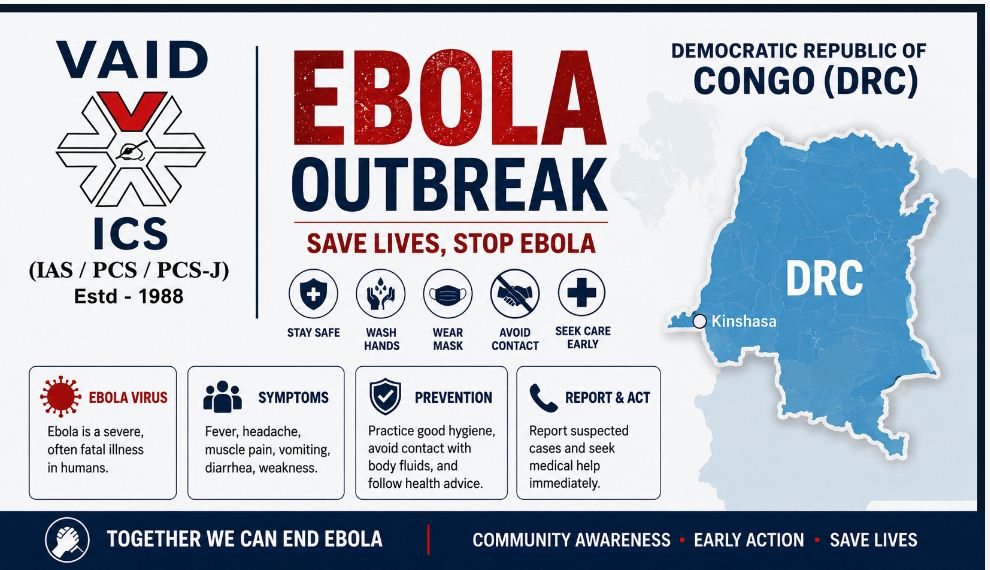
High Risk to Healthcare Workers: Several early casualties included doctors and nurses, indicating severe gaps in local infection prevention and control (IPC) and raising fears of rampant transmission inside medical centers.
Comprehensive Breakdown of Ebola Virus Disease (EVD):
Classification & Natural Host:
- The Pathogen: EVD is a severe, often fatal hemorrhagic illness caused by viruses within the genus Orthoebolavirus.
Strains: Scientists identify six distinct species, though three primary strains drive the deadliest human outbreaks: Zaire, Sudan, and Bundibugyo.
Natural Reservoir: Fruit bats of the Pteropodidae family are the natural asymptomatic hosts, harboring the virus without falling ill.Transmission Mechanisms:
- Zoonotic Spillover: The virus crosses from wildlife to humans via close contact with the blood, secretions, or organs of infected animals (such as fruit bats, chimpanzees, gorillas, and monkeys) found ill or dead in the rainforest.
- Human-to-Human Spread: It spreads rapidly through communities via direct contact (through broken skin or mucous membranes) with:
- Blood, vomit, feces, semen, and other bodily fluids of infected individuals
Surfaces and materials (e.g., bedding, clothing, needles) contaminated with these fluids.
Burial Rituals: Unsafe traditional funeral ceremonies where mourners have direct physical contact with the body of the deceased heavily drive community transmission, as dead bodies retain highly viral fluid loads.Symptoms & Clinical Timeline:
The disease has an incubation period of 2 to 21 days. Individuals do not transmit the virus until they exhibit symptoms.
Diagnosis & Treatment Protocols:
- Diagnostic Tools: Because early symptoms mimic malaria or typhoid, medical professionals rely on specialized laboratory tests, primarily Reverse Transcription Polymerase Chain Reaction (RT-PCR) assays and ELISA tests to confirm the virus.

October 17, 2025
October 16, 2025
October 6, 2025
September 24, 2025

