September 24, 2026
Domestic Tourism in India/भारत में घरेलू पर्यटन
Why in News?
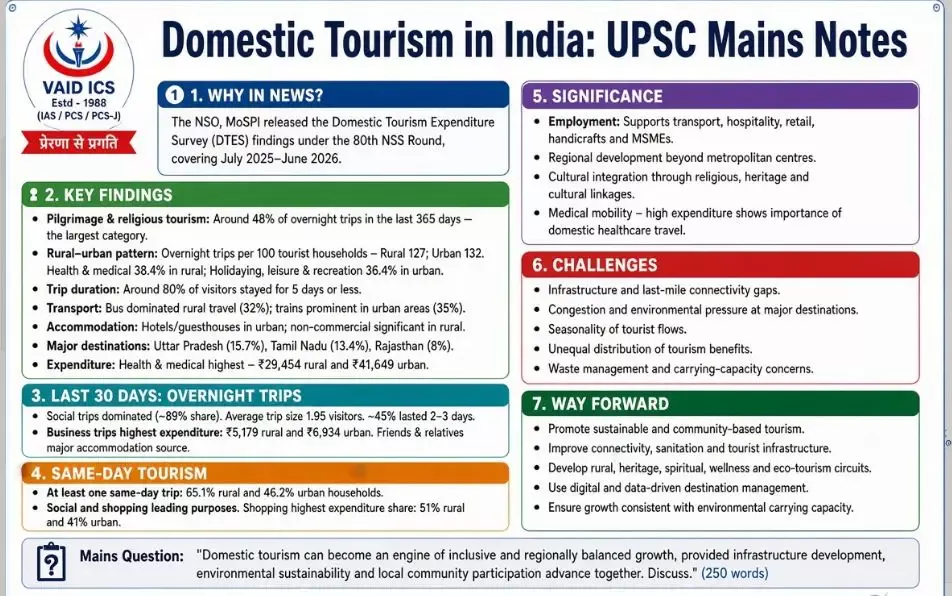
The NSO, MoSPI released the Domestic Tourism Expenditure Survey (DTES) findings under the 80th NSS Round, covering July 2025–June 2026.
Key Findings:
-
Pilgrimage & religious tourism: Around 48% of overnight trips in the last 365 days—the largest category.
-
Rural–urban pattern:
-
Overnight trips per 100 tourist households: Rural 127; Urban 132.
-
Health & medical: 38.4% in rural areas.
-
Holidaying, leisure & recreation: 36.4% in urban areas.
-
-
Trip duration: Around 80% of visitors stayed for 5 days or less.
-
Transport: Bus dominated rural travel (32%); trains were prominent in urban areas (35%).
-
Accommodation: Hotels/guesthouses were prominent in urban areas, while non-commercial accommodation was significant in rural areas.
-
Major destinations: Uttar Pradesh (15.7%), Tamil Nadu (13.4%) and Rajasthan (8%).
-
Expenditure: Health & medical trips recorded the highest average expenditure—₹29,454 rural and ₹41,649 urban.
Last 30 Days: Overnight Trips
-
Social trips: Dominated with around 89% share.
-
Average trip size: 1.95 visitors.
-
Around 45% of visitor-trips lasted 2–3 days.
-
Business trips had the highest expenditure: ₹5,179 rural and ₹6,934 urban.
-
Friends and relatives were the major accommodation source.
Same-Day Tourism:
-
At least one same-day trip was undertaken by 65.1% rural and 46.2% urban households.
-
Social and shopping were the leading purposes.
-
Shopping accounted for the highest expenditure share: 51% rural and 41% urban.
Significance:
-
Employment: Supports transport, hospitality, retail, handicrafts and MSMEs.
-
Regional development: Creates economic opportunities beyond metropolitan centres.
-
Cultural integration: Strengthens religious, heritage and cultural linkages.
-
Medical mobility: High expenditure indicates the importance of domestic healthcare travel.
Challenges:
-
Infrastructure and last-mile connectivity gaps.
-
Congestion and environmental pressure at major destinations.
-
Seasonality of tourist flows.
-
Unequal distribution of tourism benefits.
-
Waste management and carrying-capacity concerns.
Way Forward:
-
Promote sustainable and community-based tourism.
-
Improve connectivity, sanitation and tourist infrastructure.
-
Develop rural, heritage, spiritual, wellness and eco-tourism circuits.
-
Use digital and data-driven destination management.
-
Ensure tourism growth remains consistent with environmental carrying capacity.
Mains Takeaway:
Domestic tourism can become an engine of inclusive and regionally balanced growth, provided infrastructure development, environmental sustainability and local community participation advance together.
भारत में घरेलू पर्यटन:
चर्चा में क्यों?
राष्ट्रीय सांख्यिकी कार्यालय (NSO), MoSPI ने NSS के 80वें दौर के अंतर्गत जुलाई 2025–जून 2026 की अवधि के लिए घरेलू पर्यटन व्यय सर्वेक्षण (DTES) के निष्कर्ष जारी किए।
प्रमुख निष्कर्ष:
-
तीर्थयात्रा एवं धार्मिक पर्यटन: पिछले 365 दिनों में किए गए रात्रि-प्रवास वाले घरेलू पर्यटन दौरों में लगभग 48% की हिस्सेदारी के साथ सर्वाधिक।
-
ग्रामीण-शहरी स्वरूप:
-
प्रति 100 पर्यटक परिवार रात्रि-प्रवास वाले दौरे: ग्रामीण 127; शहरी 132।
-
स्वास्थ्य एवं चिकित्सा संबंधी दौरे: ग्रामीण क्षेत्रों में 38.4%।
-
अवकाश, मनोरंजन एवं पर्यटन: शहरी क्षेत्रों में 36.4%।
-
-
दौरे की अवधि: लगभग 80% आगंतुक 5 दिन या उससे कम अवधि के लिए रुके।
-
परिवहन: ग्रामीण क्षेत्रों में बस प्रमुख साधन (32%), जबकि शहरी क्षेत्रों में रेल प्रमुख रही (35%)।
-
आवास: शहरी क्षेत्रों में होटल एवं अतिथि गृह प्रमुख रहे, जबकि ग्रामीण क्षेत्रों में गैर-वाणिज्यिक आवास का महत्त्व अधिक रहा।
-
प्रमुख गंतव्य: उत्तर प्रदेश (15.7%), तमिलनाडु (13.4%) और राजस्थान (8%)।
-
व्यय: स्वास्थ्य एवं चिकित्सा संबंधी दौरों में औसत व्यय सर्वाधिक रहा—ग्रामीण ₹29,454 तथा शहरी ₹41,649।
पिछले 30 दिनों के रात्रि-प्रवास वाले दौरे:
-
सामाजिक उद्देश्य वाले दौरे: लगभग 89% हिस्सेदारी के साथ सर्वाधिक।
-
औसत दौरा आकार: 1.95 आगंतुक।
-
लगभग 45% आगंतुक-दौरे 2–3 दिनों के रहे।
-
व्यावसायिक दौरों में औसत व्यय सर्वाधिक रहा।
-
मित्रों एवं संबंधियों के यहाँ ठहरना प्रमुख आवास व्यवस्था रही।
एकदिवसीय पर्यटन:
-
कम-से-कम एक एकदिवसीय दौरा करने वाले परिवार:
-
ग्रामीण: 65.1%
-
शहरी: 46.2%
-
-
सामाजिक एवं खरीदारी प्रमुख उद्देश्य रहे।
-
खरीदारी में व्यय की सर्वाधिक हिस्सेदारी:
-
ग्रामीण: 51%
-
शहरी: 41%
-
महत्त्व:
-
रोजगार: परिवहन, आतिथ्य, खुदरा व्यापार, हस्तशिल्प एवं MSMEs को बढ़ावा।
-
क्षेत्रीय विकास: महानगरों से बाहर आर्थिक अवसरों का विस्तार।
-
सांस्कृतिक एकीकरण: धार्मिक, सांस्कृतिक एवं विरासत स्थलों के बीच संपर्क।
-
चिकित्सा पर्यटन: चिकित्सा संबंधी दौरों का उच्च व्यय घरेलू स्वास्थ्य-आधारित आवागमन के आर्थिक महत्त्व को दर्शाता है।
प्रमुख चुनौतियाँ:
-
पर्यटन अवसंरचना एवं अंतिम-मील संपर्क की कमी।
-
प्रमुख गंतव्यों पर भीड़ एवं पर्यावरणीय दबाव।
-
पर्यटन की मौसमी प्रकृति।
-
पर्यटन से होने वाले लाभों का असमान वितरण।
-
अपशिष्ट प्रबंधन एवं वहन क्षमता संबंधी समस्याएँ।
आगे की राह:
-
सतत एवं समुदाय-आधारित पर्यटन को बढ़ावा देना।
-
संपर्क, स्वच्छता एवं पर्यटक अवसंरचना में सुधार।
-
ग्रामीण, विरासत, आध्यात्मिक, स्वास्थ्य एवं पारिस्थितिकी-पर्यटन सर्किट विकसित करना।
-
डिजिटल एवं डेटा-आधारित गंतव्य प्रबंधन को अपनाना।
-
पर्यटन विकास को पर्यावरणीय वहन क्षमता के अनुरूप रखना।
मुख्य परीक्षा हेतु निष्कर्ष:
घरेलू पर्यटन समावेशी एवं संतुलित क्षेत्रीय विकास का महत्त्वपूर्ण साधन बन सकता है, बशर्ते अवसंरचना विकास, पर्यावरणीय स्थिरता और स्थानीय समुदायों की भागीदारी के बीच संतुलन स्थापित किया जाए।

May 19, 2026
October 17, 2025
October 16, 2025
October 6, 2025

