June 2, 2026
Daily UPSC Gist of Article /The Hindu: 2 June , 2026/Gig Economy in India: Exploitation vs. Efficiency
Introduction:
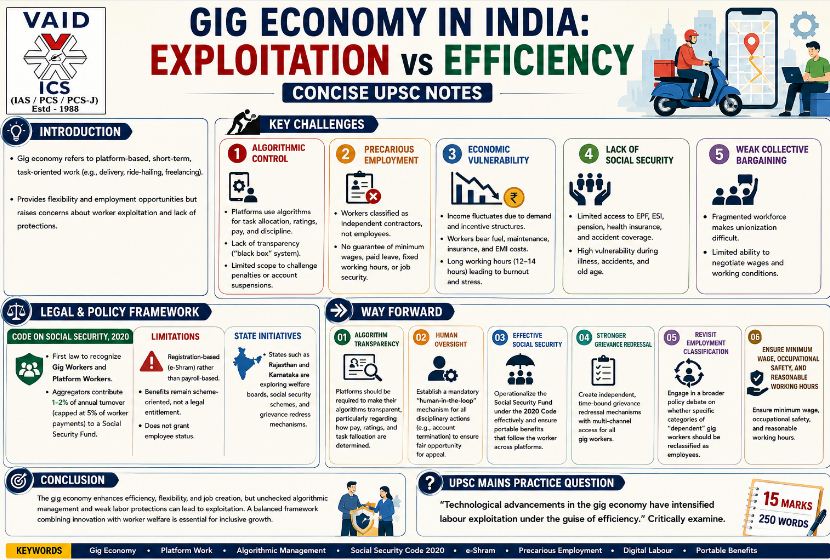
The gig economy, characterized by platform-based, short-term, and task-oriented work, has become a significant driver of India’s labor market. While it promises flexibility and instant earning opportunities, it has increasingly become synonymous with precarious working conditions, algorithmic control, and the absence of traditional social security protections.
Core Challenges Faced by Gig Workers:
-
Algorithmic Management: Platforms use algorithms to assign tasks, monitor performance, determine pay, and enforce discipline. This creates a “black box” system where workers lack transparency, cannot easily appeal penalties (e.g., account suspension), and face intense pressure to meet performance metrics.
-
Precarious Employment Status: Platforms often classify workers as “independent contractors” rather than employees. This classification is used to bypass obligations related to minimum wages, working hours, paid leave, and severance benefits.
-
Economic Vulnerability: * Inconsistent Income: Earnings fluctuate based on demand, dynamic pricing, and shifting incentive structures.
- High Operational Costs: Workers bear the burden of fuel, vehicle EMIs, and maintenance, which eat into their net earnings, especially during periods of rising inflation.
- Debt Traps: Many workers work 12–14+ hours a day to clear performance thresholds (“incentives”) or simply to meet basic subsistence needs, leading to extreme physical exhaustion and mental burnout.
-
Lack of Social Security: Gig workers traditionally fall outside the scope of statutory benefits like Employees’ Provident Fund (EPF) and Employees’ State Insurance (ESI), leaving them vulnerable during accidents, illness, or old age.
-
Limited Collective Bargaining: Due to the fragmented and isolated nature of the work, gig workers struggle to unionize or organize, making it difficult to challenge unfair platform policies or voice collective grievances.
Legal and Policy Framework:
-
Code on Social Security, 2020: This is the first legislation to formally recognize “gig workers” and “platform workers.”
- Key Provision: Mandates that aggregators contribute a percentage of their annual turnover (1-2%, capped at 5% of amounts payable to workers) to a dedicated Social Security Fund.
- Limitation: It is registration-driven (via the e-Shram portal) rather than payroll-linked. Critics argue that social security remains “scheme-based” rather than a fundamental right, and it does not grant them full employee status.
-
State-Level Initiatives: Some states (e.g., Rajasthan, Karnataka) have begun exploring separate legislative frameworks to provide greater protections, welfare funds, and grievance redressal mechanisms for gig workers.
The Way Forward:
-
Transparency in Algorithms: Platforms should be required to make their algorithms transparent, particularly regarding how pay, ratings, and task allocation are determined.
-
Human-in-the-Loop Accountability: Establish a mandatory “human-in-the-loop” mechanism for all disciplinary actions (e.g., account termination) to ensure workers have a fair opportunity for appeal.
-
Strengthening Social Security: Operationalize the Social Security Fund under the 2020 Code effectively and ensure portable benefits that follow the worker across platforms.
-
Redefining Employment: Engage in a broader policy debate on whether specific categories of “dependent” gig workers should be reclassified as employees to guarantee minimum wage and working hour protections.
Mains Practice Questions
Q: “Technological advancements in the gig economy have intensified labor exploitation under the guise of efficiency.” Critically analyze this statement in the context of algorithmic management and the challenges faced by gig workers in India. (250 words, 15 marks).
भारत में गिग अर्थव्यवस्था: शोषण बनाम दक्षता (यूपीएससी मेन्स नोट्स)
परिचय:
गिग अर्थव्यवस्था, जो प्लेटफॉर्म-आधारित, अल्पकालिक और कार्य-उन्मुख कार्य की विशेषता है, भारत के श्रम बाजार का एक महत्वपूर्ण चालक बन गई है। हालाँकि यह लचीलेपन और तत्काल कमाई के अवसर का वादा करती है, लेकिन यह तेजी से अनिश्चित कामकाजी परिस्थितियों, एल्गोरिथम नियंत्रण और पारंपरिक सामाजिक सुरक्षा सुरक्षा के अभाव का पर्याय बन गई है।
गिग श्रमिकों के समक्ष मुख्य चुनौतियाँ:
-
एल्गोरिथम प्रबंधन: प्लेटफॉर्म कार्यों को सौंपने, प्रदर्शन की निगरानी करने, वेतन निर्धारित करने और अनुशासन लागू करने के लिए एल्गोरिदम का उपयोग करते हैं। यह एक “ब्लैक बॉक्स” प्रणाली बनाता है जहाँ श्रमिकों में पारदर्शिता की कमी होती है, वे आसानी से दंड (जैसे खाता निलंबन) के खिलाफ अपील नहीं कर सकते हैं, और प्रदर्शन मानकों को पूरा करने के लिए अत्यधिक दबाव का सामना करते हैं।
-
अनिश्चित रोजगार स्थिति: प्लेटफॉर्म अक्सर श्रमिकों को कर्मचारियों के बजाय “स्वतंत्र ठेकेदार” (independent contractors) के रूप में वर्गीकृत करते हैं। इस वर्गीकरण का उपयोग न्यूनतम मजदूरी, काम के घंटे, सवैतनिक अवकाश और अलगाव लाभ (severance benefits) से संबंधित दायित्वों से बचने के लिए किया जाता है।
-
आर्थिक भेद्यता:
-
असंगत आय: कमाई मांग, गतिशील मूल्य निर्धारण (dynamic pricing) और प्रोत्साहन संरचनाओं के आधार पर बदलती रहती है।
-
उच्च परिचालन लागत: ईंधन, वाहन की ईएमआई और रखरखाव का बोझ श्रमिकों पर होता है, जो उनकी शुद्ध कमाई को कम कर देता है।
-
ऋण जाल: कई श्रमिक प्रोत्साहन (“incentives”) प्राप्त करने या केवल बुनियादी जरूरतों को पूरा करने के लिए प्रतिदिन 12-14 घंटे से अधिक काम करते हैं, जिससे शारीरिक थकावट और मानसिक तनाव होता है।
-
-
सामाजिक सुरक्षा का अभाव: गिग श्रमिक पारंपरिक रूप से कर्मचारी भविष्य निधि (EPF) और कर्मचारी राज्य बीमा (ESI) जैसे वैधानिक लाभों के दायरे से बाहर हैं, जिससे वे दुर्घटना, बीमारी या वृद्धावस्था के दौरान असुरक्षित हो जाते हैं।
-
सीमित सामूहिक सौदेबाजी: काम की विखंडित और अलग-थलग प्रकृति के कारण, गिग श्रमिकों के लिए संगठित होना कठिन है, जिससे अन्यायपूर्ण प्लेटफॉर्म नीतियों को चुनौती देना या अपनी सामूहिक शिकायतों को उठाना मुश्किल हो जाता है।
कानूनी और नीतिगत ढांचा:
-
सामाजिक सुरक्षा संहिता (Code on Social Security), 2020: यह “गिग वर्कर्स” और “प्लेटफॉर्म वर्कर्स” को औपचारिक रूप से मान्यता देने वाला पहला कानून है।
-
मुख्य प्रावधान: एग्रीगेटर्स को अपने वार्षिक टर्नओवर का एक हिस्सा (1-2%, श्रमिकों को देय राशि का 5% तक) एक समर्पित सामाजिक सुरक्षा कोष में योगदान करने का निर्देश देता है।
-
सीमाएं: यह पेरोल-लिंक्ड के बजाय पंजीकरण-संचालित (e-Shram पोर्टल के माध्यम से) है। आलोचकों का तर्क है कि सामाजिक सुरक्षा एक मौलिक अधिकार के बजाय “योजना-आधारित” बनी हुई है, और यह उन्हें पूर्ण कर्मचारी का दर्जा नहीं देती है।
-
-
राज्य-स्तरीय पहल: राजस्थान और कर्नाटक जैसे कुछ राज्यों ने गिग श्रमिकों के लिए अधिक सुरक्षा, कल्याण कोष और शिकायत निवारण तंत्र प्रदान करने के लिए अलग विधायी ढांचे तलाशना शुरू कर दिया है।
आगे की राह:
-
एल्गोरिदम में पारदर्शिता: प्लेटफॉर्मों को अपने एल्गोरिदम को पारदर्शी बनाने के लिए बाध्य किया जाना चाहिए, विशेष रूप से इस बारे में कि वेतन, रेटिंग और कार्य आवंटन कैसे निर्धारित किए जाते हैं।
-
मानवीय जवाबदेही: सभी अनुशासनात्मक कार्रवाई (जैसे खाता समाप्ति) के लिए एक अनिवार्य “मानव-में-लूप” तंत्र स्थापित किया जाना चाहिए ताकि श्रमिकों को अपील करने का उचित अवसर मिल सके।
-
सामाजिक सुरक्षा को मजबूत करना: 2020 संहिता के तहत सामाजिक सुरक्षा कोष को प्रभावी ढंग से संचालित करें और पोर्टेबल लाभ सुनिश्चित करें जो श्रमिक के साथ विभिन्न प्लेटफॉर्मों पर जा सकें।
-
रोजगार की पुनर्परिभाषा: इस बात पर व्यापक नीतिगत बहस शुरू करें कि क्या “आश्रित” गिग श्रमिकों की विशिष्ट श्रेणियों को न्यूनतम मजदूरी और काम के घंटे की सुरक्षा सुनिश्चित करने के लिए कर्मचारियों के रूप में पुनर्वर्गीकृत किया जाना चाहिए।
मेन्स अभ्यास प्रश्न
प्रश्न: “गिग अर्थव्यवस्था में तकनीकी प्रगति ने दक्षता की आड़ में श्रम शोषण को तीव्र कर दिया है।” भारत में गिग श्रमिकों के सामने आने वाली एल्गोरिथम प्रबंधन और चुनौतियों के संदर्भ में इस कथन का आलोचनात्मक विश्लेषण करें। (250 शब्द, 15 अंक)

May 19, 2026
October 17, 2025
October 16, 2025
October 6, 2025

