October 28, 2026
Daily UPSC Current Affairs : 28 Oct 2026-UNSC Reform
𝐁𝐑𝐈𝐂𝐒 𝐏𝐚𝐫𝐥𝐢𝐚𝐦𝐞𝐧𝐭𝐚𝐫𝐲 𝐅𝐨𝐫𝐮𝐦 – 𝟏𝟐𝐭𝐡 𝐄𝐝𝐢𝐭𝐢𝐨𝐧
𝐖𝐡𝐲 𝐢𝐧 𝐍𝐞𝐰𝐬?
The 12th BRICS Parliamentary Forum concluded in New Delhi, adopting a Joint Declaration that strongly condemned the Pahalgam terrorist attack, expressed concern over escalating geopolitical tensions and called for comprehensive reforms of the United Nations (UN), particularly the UN Security Council (UNSC).
𝐀𝐛𝐨𝐮𝐭 𝐭𝐡𝐞 𝐁𝐑𝐈𝐂𝐒 𝐏𝐚𝐫𝐥𝐢𝐚𝐦𝐞𝐧𝐭𝐚𝐫𝐲 𝐅𝐨𝐫𝐮𝐦:
-
𝐍𝐚𝐭𝐮𝐫𝐞: A platform for parliamentary representatives of BRICS countries to discuss global challenges and strengthen parliamentary cooperation.
-
𝐎𝐛𝐣𝐞𝐜𝐭𝐢𝐯𝐞: To promote cooperation on international peace and security, terrorism, sustainable development and global governance.
-
𝐕𝐞𝐧𝐮𝐞: New Delhi, India.
-
𝐃𝐮𝐫𝐚𝐭𝐢𝐨𝐧: Two days.
-
𝐎𝐩𝐞𝐧𝐞𝐝 𝐛𝐲: Lok Sabha Speaker Om Birla.
𝐊𝐞𝐲 𝐇𝐢𝐠𝐡𝐥𝐢𝐠𝐡𝐭𝐬 𝐨𝐟 𝐭𝐡𝐞 𝐅𝐨𝐫𝐮𝐦:
𝐂𝐨𝐧𝐝𝐞𝐦𝐧𝐚𝐭𝐢𝐨𝐧 𝐨𝐟 𝐭𝐡𝐞 𝐏𝐚𝐡𝐚𝐥𝐠𝐚𝐦 𝐓𝐞𝐫𝐫𝐨𝐫𝐢𝐬𝐭 𝐀𝐭𝐭𝐚𝐜𝐤:
-
The Joint Declaration strongly condemned the 22 April 2025 terrorist attack in Pahalgam, Jammu and Kashmir, which resulted in 26 deaths.
-
It reaffirmed the principle of 𝐙𝐞𝐫𝐨 𝐓𝐨𝐥𝐞𝐫𝐚𝐧𝐜𝐞 𝐟𝐨𝐫 𝐓𝐞𝐫𝐫𝐨𝐫𝐢𝐬𝐦 in all its forms and manifestations.
-
It highlighted the need to address:
-
𝐂𝐫𝐨𝐬𝐬-𝐁𝐨𝐫𝐝𝐞𝐫 𝐓𝐞𝐫𝐫𝐨𝐫𝐢𝐬𝐦: Terrorist activities conducted or supported across national borders.
-
𝐓𝐞𝐫𝐫𝐨𝐫 𝐅𝐢𝐧𝐚𝐧𝐜𝐢𝐧𝐠: Raising, collecting or transferring money to support terrorist activities.
-
𝐓𝐞𝐫𝐫𝐨𝐫𝐢𝐬𝐭 𝐒𝐚𝐟𝐞 𝐇𝐚𝐯𝐞𝐧𝐬: Places where terrorists receive shelter, protection or operational support.
-
-
It opposed double standards in counter-terrorism, emphasising that terrorism should not be justified on political grounds.
𝐑𝐞𝐟𝐨𝐫𝐦 𝐨𝐟 𝐭𝐡𝐞 𝐔𝐧𝐢𝐭𝐞𝐝 𝐍𝐚𝐭𝐢𝐨𝐧𝐬:
-
The forum called for comprehensive reforms of the United Nations to make global institutions more representative and effective.
-
It stressed that the existing international system must reflect contemporary geopolitical realities.
-
The proposed reforms aim to promote:
-
𝐑𝐞𝐩𝐫𝐞𝐬𝐞𝐧𝐭𝐚𝐭𝐢𝐨𝐧: Greater participation of underrepresented countries.
-
𝐄𝐪𝐮𝐢𝐭𝐲: Fairer representation of different nations’ interests.
-
𝐃𝐞𝐦𝐨𝐜𝐫𝐚𝐭𝐢𝐜 𝐃𝐞𝐜𝐢𝐬𝐢𝐨𝐧-𝐌𝐚𝐤𝐢𝐧𝐠: More inclusive international institutions.
-
𝐆𝐥𝐨𝐛𝐚𝐥 𝐒𝐨𝐮𝐭𝐡 𝐄𝐦𝐩𝐨𝐰𝐞𝐫𝐦𝐞𝐧𝐭: A stronger voice for developing countries.
-
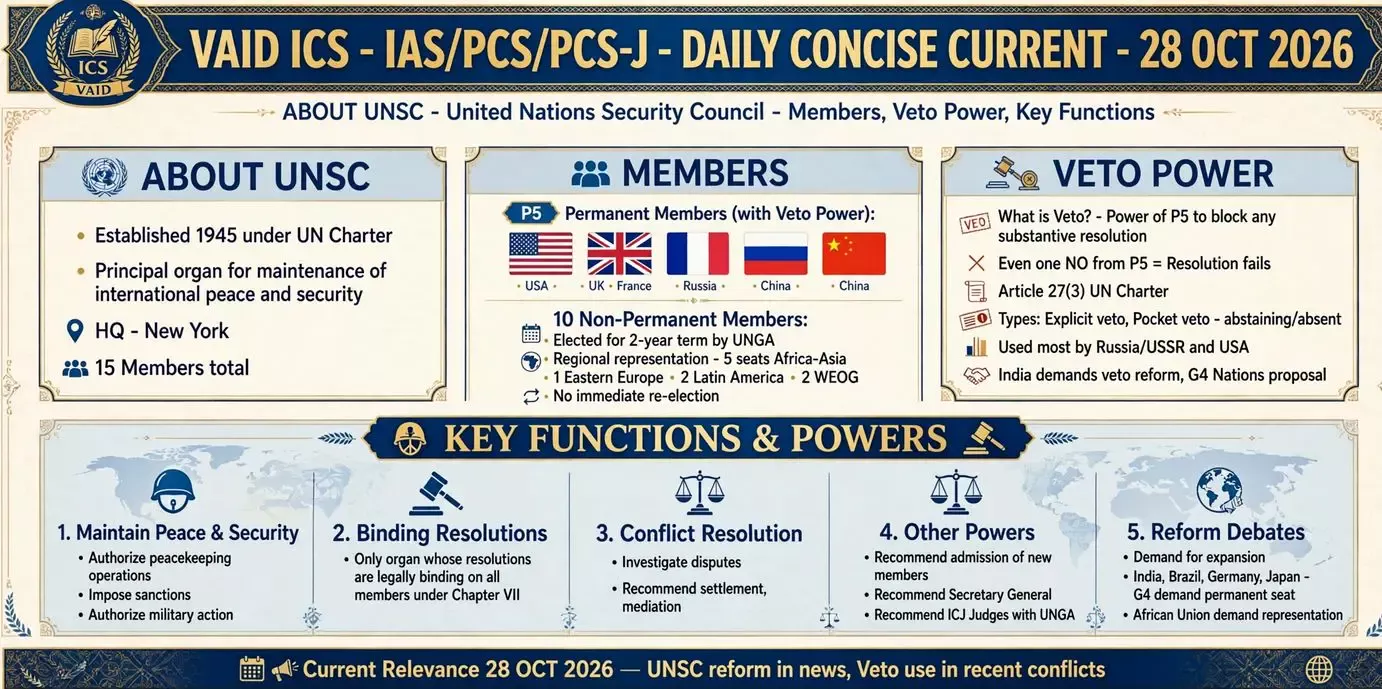
𝐑𝐞𝐟𝐨𝐫𝐦 𝐨𝐟 𝐭𝐡𝐞 𝐔𝐍 𝐒𝐞𝐜𝐮𝐫𝐢𝐭𝐲 𝐂𝐨𝐮𝐧𝐜𝐢𝐥 (𝐔𝐍𝐒𝐂):
-
The forum emphasised the need to reform the UN Security Council, the principal UN body responsible for maintaining international peace and security.
-
The present structure reflects the balance of power that existed at the end of the Second World War, rather than today’s geopolitical realities.
-
𝐎𝐛𝐣𝐞𝐜𝐭𝐢𝐯𝐞𝐬 𝐨𝐟 𝐑𝐞𝐟𝐨𝐫𝐦:
-
Improve the representation of Asia, Africa and Latin America.
-
Strengthen the voice of the Global South.
-
Improve the legitimacy, effectiveness and credibility of the Council.
-
-
𝐈𝐧𝐝𝐢𝐚’𝐬 𝐏𝐨𝐬𝐢𝐭𝐢𝐨𝐧: India supports comprehensive UNSC reform and seeks permanent membership in an expanded Council.
𝐆𝐥𝐨𝐛𝐚𝐥 𝐂𝐨𝐧𝐟𝐥𝐢𝐜𝐭𝐬 𝐚𝐧𝐝 𝐆𝐞𝐨𝐩𝐨𝐥𝐢𝐭𝐢𝐜𝐚𝐥 𝐓𝐞𝐧𝐬𝐢𝐨𝐧𝐬:
-
The declaration expressed concern over escalating tensions in West Asia and the Middle East.
-
It called upon the parties concerned to exercise maximum restraint and avoid further escalation.
-
It emphasised the importance of:
-
𝐃𝐢𝐚𝐥𝐨𝐠𝐮𝐞: Resolving differences through communication.
-
𝐃𝐢𝐩𝐥𝐨𝐦𝐚𝐜𝐲: Using peaceful negotiations to address disputes.
-
𝐏𝐞𝐚𝐜𝐞𝐟𝐮𝐥 𝐑𝐞𝐬𝐨𝐥𝐮𝐭𝐢𝐨𝐧: Avoiding unnecessary conflict and instability.
-
𝐎𝐩𝐩𝐨𝐬𝐢𝐭𝐢𝐨𝐧 𝐭𝐨 𝐔𝐧𝐢𝐥𝐚𝐭𝐞𝐫𝐚𝐥 𝐒𝐚𝐧𝐜𝐭𝐢𝐨𝐧𝐬:
-
The forum criticised unilateral economic sanctions and secondary sanctions that it considered contrary to international law.
-
𝐔𝐧𝐢𝐥𝐚𝐭𝐞𝐫𝐚𝐥 𝐒𝐚𝐧𝐜𝐭𝐢𝐨𝐧𝐬: Economic or other restrictive measures imposed by one country without authorisation through a collective international mechanism.
-
𝐒𝐞𝐜𝐨𝐧𝐝𝐚𝐫𝐲 𝐒𝐚𝐧𝐜𝐭𝐢𝐨𝐧𝐬: Measures targeting third-country individuals or entities for certain dealings with a sanctioned country or person.
-
𝐏𝐨𝐭𝐞𝐧𝐭𝐢𝐚𝐥 𝐈𝐦𝐩𝐚𝐜𝐭𝐬:
-
Disruption of international trade and economic development.
-
Adverse effects on human rights and access to essential goods.
-
Increased difficulties for developing countries.
-
𝐂𝐨𝐦𝐩𝐫𝐞𝐡𝐞𝐧𝐬𝐢𝐯𝐞 𝐂𝐨𝐧𝐯𝐞𝐧𝐭𝐢𝐨𝐧 𝐨𝐧 𝐈𝐧𝐭𝐞𝐫𝐧𝐚𝐭𝐢𝐨𝐧𝐚𝐥 𝐓𝐞𝐫𝐫𝐨𝐫𝐢𝐬𝐦 (𝐂𝐂𝐈𝐓):
-
The member parliaments called for the early finalisation and adoption of the CCIT under the UN framework.
-
𝐎𝐛𝐣𝐞𝐜𝐭𝐢𝐯𝐞: To establish a comprehensive international legal framework for preventing and combating terrorism.
-
𝐌𝐚𝐣𝐨𝐫 𝐂𝐡𝐚𝐥𝐥𝐞𝐧𝐠𝐞: Countries have been unable to reach consensus on certain issues, particularly the definition of terrorism and the treatment of struggles for national liberation.
-
𝐈𝐦𝐩𝐨𝐫𝐭𝐚𝐧𝐜𝐞: A comprehensive convention could strengthen international cooperation, clarify legal obligations and reduce gaps in counter-terrorism law.
𝐖𝐡𝐚𝐭 𝐢𝐬 𝐁𝐑𝐈𝐂𝐒?
-
𝐁𝐑𝐈𝐂𝐒 is a grouping of major emerging economies that promotes cooperation in economic development, international governance and other global issues.
-
The original grouping consisted of Brazil, Russia, India and China. South Africa joined in 2010, giving rise to the name BRICS.
-
The grouping subsequently expanded to include additional members.
𝐂𝐨𝐮𝐧𝐭𝐫𝐢𝐞𝐬 𝐫𝐞𝐩𝐫𝐞𝐬𝐞𝐧𝐭𝐞𝐝 𝐢𝐧 𝐭𝐡𝐞 𝐟𝐨𝐫𝐮𝐦 𝐚𝐜𝐜𝐨𝐫𝐝𝐢𝐧𝐠 𝐭𝐨 𝐭𝐡𝐞 𝐩𝐫𝐨𝐯𝐢𝐝𝐞𝐝 𝐚𝐜𝐜𝐨𝐮𝐧𝐭: Brazil, China, Egypt, Ethiopia, India, Indonesia, Iran, Russia, South Africa and the United Arab Emirates.
𝐒𝐢𝐠𝐧𝐢𝐟𝐢𝐜𝐚𝐧𝐜𝐞 𝐟𝐨𝐫 𝐈𝐧𝐝𝐢𝐚:
-
𝐂𝐨𝐮𝐧𝐭𝐞𝐫-𝐓𝐞𝐫𝐫𝐨𝐫𝐢𝐬𝐦: Strengthens India’s efforts to build international consensus against terrorism and terror financing.
-
𝐆𝐥𝐨𝐛𝐚𝐥 𝐆𝐨𝐯𝐞𝐫𝐧𝐚𝐧𝐜𝐞: Supports India’s demand for more representative international institutions.
-
𝐔𝐍𝐒𝐂 𝐑𝐞𝐟𝐨𝐫𝐦: Reinforces India’s position on expanding the Council’s representation and membership.
-
𝐆𝐥𝐨𝐛𝐚𝐥 𝐒𝐨𝐮𝐭𝐡: Provides a platform to raise the concerns of developing countries.
-
𝐒𝐭𝐫𝐚𝐭𝐞𝐠𝐢𝐜 𝐀𝐮𝐭𝐨𝐧𝐨𝐦𝐲: Enables India to engage with diverse international partners while pursuing its independent foreign-policy priorities.
-
𝐏𝐚𝐫𝐥𝐢𝐚𝐦𝐞𝐧𝐭𝐚𝐫𝐲 𝐃𝐢𝐩𝐥𝐨𝐦𝐚𝐜𝐲: Strengthens dialogue and cooperation between national legislatures.
𝐊𝐞𝐲 𝐂𝐡𝐚𝐥𝐥𝐞𝐧𝐠𝐞𝐬
-
𝐃𝐢𝐯𝐞𝐫𝐠𝐞𝐧𝐭 𝐍𝐚𝐭𝐢𝐨𝐧𝐚𝐥 𝐈𝐧𝐭𝐞𝐫𝐞𝐬𝐭𝐬: BRICS members have different geopolitical priorities and security concerns.
-
𝐋𝐚𝐜𝐤 𝐨𝐟 𝐂𝐨𝐧𝐬𝐞𝐧𝐬𝐮𝐬: Countries differ on the definition of terrorism, sanctions and approaches to international conflicts.
-
𝐔𝐍𝐒𝐂 𝐑𝐞𝐟𝐨𝐫𝐦 𝐃𝐞𝐚𝐝𝐥𝐨𝐜𝐤: Changes to the UN Charter require broad international agreement and ratification.
-
𝐈𝐦𝐩𝐥𝐞𝐦𝐞𝐧𝐭𝐚𝐭𝐢𝐨𝐧 𝐆𝐚𝐩: Joint declarations need concrete follow-up measures to produce results.
-
𝐆𝐞𝐨𝐩𝐨𝐥𝐢𝐭𝐢𝐜𝐚𝐥 𝐑𝐢𝐯𝐚𝐥𝐫𝐢𝐞𝐬: Strategic competition among major powers can constrain cooperation.
𝐖𝐚𝐲 𝐅𝐨𝐫𝐰𝐚𝐫𝐝:
-
Strengthen cooperation against terror financing, cross-border terrorism and terrorist safe havens.
-
Build international consensus on the Comprehensive Convention on International Terrorism.
-
Promote dialogue and diplomacy to resolve international disputes peacefully.
-
Pursue practical reforms of the UN Security Council to improve the representation of developing countries.
-
Strengthen parliamentary exchanges and institutional cooperation among BRICS members.
-
Ensure that international economic measures respect applicable international law and minimise harm to vulnerable populations.
𝐂𝐨𝐧𝐜𝐥𝐮𝐬𝐢𝐨𝐧:
The 12th BRICS Parliamentary Forum highlighted the importance of collective action against terrorism, reform of global governance and peaceful resolution of international conflicts. For India, it offers an important platform to advance counter-terrorism cooperation, UN Security Council reform and a more equitable international order.
ब्रिक्स संसदीय मंच – 12वां संस्करण
समाचार में क्यों:
12वां बीआरआईसीएस संसदीय मंच नई दिल्ली में संपन्न हुआ। इसमें एक संयुक्त घोषणा-पत्र अपनाया गया, जिसमें पहलगाम आतंकी हमले की कड़ी निंदा की गई, बढ़ते भू-राजनीतिक तनावों पर चिंता व्यक्त की गई तथा संयुक्त राष्ट्र (UN), विशेषकर संयुक्त राष्ट्र सुरक्षा परिषद (UNSC) के व्यापक सुधारों की मांग की गई।
बीआरआईसीएस संसदीय मंच के बारे में:
- प्रकृति: बीआरआईसीएस देशों के संसदीय प्रतिनिधियों का मंच, जो वैश्विक चुनौतियों पर चर्चा करता है तथा संसदीय सहयोग को मजबूत बनाता है।
- उद्देश्य: अंतरराष्ट्रीय शांति व सुरक्षा, आतंकवाद, सतत विकास तथा वैश्विक शासन व्यवस्था पर सहयोग को बढ़ावा देना।
- स्थान: नई दिल्ली, भारत।
- अवधि: दो दिन।
- उद्घाटन: लोकसभा अध्यक्ष ओम बिरला द्वारा।
मंच की प्रमुख बातें:
पहलगाम आतंकी हमले की निंदा:
- संयुक्त घोषणा-पत्र में 22 अप्रैल 2025 को जम्मू-कश्मीर के पहलगाम में हुए आतंकी हमले की कड़ी निंदा की गई, जिसमें 26 लोगों की मृत्यु हुई।
- इसमें आतंकवाद के सभी रूपों व अभिव्यक्तियों के प्रति शून्य सहिष्णुता के सिद्धांत की पुनः पुष्टि की गई।
- निम्नलिखित मुद्दों पर ध्यान देने की आवश्यकता पर बल दिया गया:
- सीमा-पार आतंकवाद: राष्ट्रीय सीमाओं के पार संचालित या समर्थित आतंकी गतिविधियाँ।
- आतंक वित्तपोषण: आतंकी गतिविधियों के समर्थन में धन जुटाना, एकत्र करना या स्थानांतरित करना।
- आतंकी सुरक्षित ठिकाने: वे स्थान जहाँ आतंकियों को आश्रय, सुरक्षा या परिचालन सहायता मिलती है।
- आतंकवाद-रोधी कार्रवाई में दोहरे मापदंड का विरोध किया गया तथा इस बात पर जोर दिया गया कि आतंकवाद को राजनीतिक आधार पर उचित नहीं ठहराया जा सकता।
संयुक्त राष्ट्र का सुधार:
- मंच ने वैश्विक संस्थानों को अधिक प्रतिनिधित्वपूर्ण व प्रभावी बनाने के लिए संयुक्त राष्ट्र के व्यापक सुधारों की मांग की।
- वर्तमान अंतरराष्ट्रीय व्यवस्था को समकालीन भू-राजनीतिक वास्तविकताओं को प्रतिबिंबित करना चाहिए।
- प्रस्तावित सुधारों का उद्देश्य:
- प्रतिनिधित्व: कम प्रतिनिधित्व वाले देशों की अधिक भागीदारी।
- समानता: विभिन्न राष्ट्रों के हितों का निष्पक्ष प्रतिनिधित्व।
- लोकतांत्रिक निर्णय-निर्माण: अधिक समावेशी अंतरराष्ट्रीय संस्थान।
- ग्लोबल साउथ का सशक्तिकरण: विकासशील देशों की मजबूत आवाज।
संयुक्त राष्ट्र सुरक्षा परिषद (UNSC) का सुधार:
- मंच ने अंतरराष्ट्रीय शांति व सुरक्षा बनाए रखने वाली प्रमुख संस्था UNSC के सुधार पर जोर दिया।
- वर्तमान संरचना द्वितीय विश्व युद्ध के अंत की शक्ति संतुलन को दर्शाती है, न कि आज की भू-राजनीतिक वास्तविकताओं को।
- सुधार के उद्देश्य:
- एशिया, अफ्रीका व लैटिन अमेरिका का बेहतर प्रतिनिधित्व।
- ग्लोबल साउथ की आवाज को मजबूत करना।
- परिषद की वैधता, प्रभावशीलता व विश्वसनीयता में सुधार।
- भारत की स्थिति: भारत व्यापक UNSC सुधार का समर्थन करता है तथा विस्तारित परिषद में स्थायी सदस्यता चाहता है।
वैश्विक संघर्ष व भू-राजनीतिक तनाव:
- घोषणा-पत्र में पश्चिम एशिया व मध्य पूर्व में बढ़ते तनाव पर चिंता व्यक्त की गई।
- संबंधित पक्षों से अधिकतम संयम बरतने व आगे तनाव बढ़ाने से बचने की अपील की गई।
- निम्नलिखित पर बल दिया गया:
- संवाद: संचार के माध्यम से मतभेदों का समाधान।
- कूटनीति: विवादों को शांतिपूर्ण वार्ता से निपटाना।
- शांतिपूर्ण समाधान: अनावश्यक संघर्ष व अस्थिरता से बचना।
एकपक्षीय प्रतिबंधों का विरोध:
- मंच ने अंतरराष्ट्रीय कानून के विपरीत माने जाने वाले एकपक्षीय आर्थिक प्रतिबंधों व द्वितीयक प्रतिबंधों की आलोचना की।
- एकपक्षीय प्रतिबंध: किसी सामूहिक अंतरराष्ट्रीय तंत्र के बिना एक देश द्वारा लगाए गए आर्थिक या अन्य प्रतिबंधात्मक उपाय।
- द्वितीयक प्रतिबंध: प्रतिबंधित देश या व्यक्ति के साथ कुछ लेन-देन के लिए तीसरे देश के व्यक्तियों या संस्थाओं को लक्षित उपाय।
- संभावित प्रभाव:
- अंतरराष्ट्रीय व्यापार व आर्थिक विकास में व्यवधान।
- मानवाधिकारों व आवश्यक वस्तुओं तक पहुँच पर प्रतिकूल प्रभाव।

May 19, 2026
October 17, 2025
October 16, 2025
October 6, 2025

