May 27, 2026
Daily UPSC Current : 27 May 2026/What is India’s critical national infrastructure:
Why in the news ?
-
National Security Focus: As of May 2026, cybersecurity is recognized as a top-tier national security priority due to the rapid integration of AI and IoT into essential services.
-
Expansion of Attack Surface: Digital transformation has improved efficiency but significantly expanded the “attack horizon,” making systems that were once isolated now vulnerable to remote disruption.
-
Urgency of Policy: There is a growing consensus that India’s current security frameworks must evolve from reactive measures to proactive, AI-driven resilience to combat state-sponsored and automated cyber threats.
What is India’s critical national infrastructure:
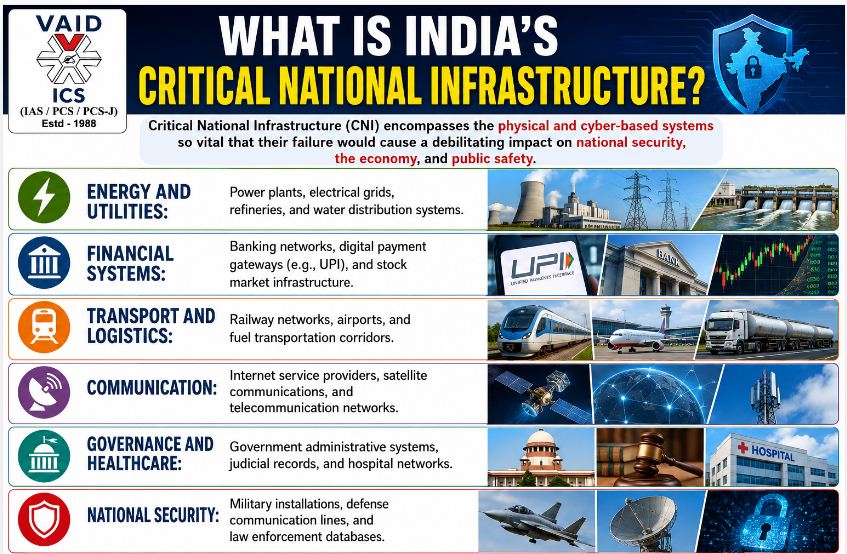
Critical National Infrastructure (CNI) encompasses the physical and cyber-based systems so vital that their failure would cause a debilitating impact on national security, the economy, and public safety.
-
Energy and Utilities: Power plants, electrical grids, refineries, and water distribution systems.
-
Financial Systems: Banking networks, digital payment gateways (e.g., UPI), and stock market infrastructure.
-
Transport and Logistics: Railway networks, airports, and fuel transportation corridors.
-
Communication: Internet service providers, satellite communications, and telecommunication networks.
-
Governance and Healthcare: Government administrative systems, judicial records, and hospital networks.
-
National Security: Military installations, defense communication lines, and law enforcement databases.
Key points of risk and vulnerability:
-
IoT Vulnerabilities: The mass deployment of Internet of Things (IoT) devices in smart grids and industrial systems provides numerous entry points for attackers.
-
Loss of Air-Gapping: Systems that were previously “air-gapped” (physically isolated from the internet for safety) are now being connected to networks for remote monitoring, increasing exposure to remote hacks.
-
AI-Enabled Adversaries: Modern threats use generative AI to develop sophisticated malware, automate attacks, and conduct highly convincing phishing campaigns.
-
Supply Chain Risks: Dependence on third-party software and cloud service providers creates vulnerabilities if those vendors are compromised.
-
Data Aggregation: The centralized nature of digital government services makes them high-value targets for catastrophic data breaches.
The way forward:
-
Implementation of Zero Trust Architecture: Moving toward a security model where no device or user is trusted by default, regardless of whether they are inside or outside the network perimeter.
-
Secure-by-Design Mandates: Requiring that all new infrastructure projects and IoT devices integrate security protocols at the design and development stage rather than as an afterthought.
-
Strengthening NCIIPC: Enhancing the powers and technological capabilities of the National Critical Information Infrastructure Protection Centre (NCIIPC) to provide real-time threat intelligence.
-
Public-Private Partnership: Establishing mandatory information-sharing protocols between critical infrastructure operators (often private) and national intelligence agencies.
-
Continuous Auditing: Regular, automated vulnerability assessments of all critical digital assets to identify and patch security gaps before they are exploited.
यह चर्चा में क्यों है:
-
राष्ट्रीय सुरक्षा प्राथमिकता: मई 2026 तक, साइबर सुरक्षा भारत के लिए शीर्ष-स्तरीय सुरक्षा चिंता बन गई है। इसका मुख्य कारण आवश्यक सेवाओं में AI (कृत्रिम बुद्धिमत्ता) और IoT (इंटरनेट ऑफ थिंग्स) का तेजी से एकीकरण है।
-
आक्रमण के दायरे में वृद्धि: डिजिटल परिवर्तन ने कार्यक्षमता तो बढ़ाई है, लेकिन साथ ही ‘अटैक सरफेस’ (आक्रमण का दायरा) भी बढ़ा दिया है। जो प्रणालियाँ पहले पूरी तरह अलग (Isolated) थीं, वे अब डिजिटल नेटवर्क से जुड़ी हैं, जिससे वे रिमोट हमलों के प्रति संवेदनशील हो गई हैं।
-
नीतिगत आवश्यकता: अब पारंपरिक सुरक्षा उपाय पर्याप्त नहीं हैं। सरकार और विशेषज्ञों के बीच इस बात पर सहमति है कि अब प्रतिक्रियाशील (Reactive) सुरक्षा के बजाय सक्रिय और AI-आधारित सुरक्षा ढांचे की तत्काल आवश्यकता है।
भारत का महत्वपूर्ण राष्ट्रीय बुनियादी ढांचा (CNI) क्या है:
महत्वपूर्ण राष्ट्रीय बुनियादी ढांचा उन भौतिक और साइबर-आधारित प्रणालियों को कहते हैं, जो इतनी महत्वपूर्ण हैं कि यदि वे विफल हो जाएं या नष्ट हो जाएं, तो इससे राष्ट्रीय सुरक्षा, अर्थव्यवस्था, सार्वजनिक स्वास्थ्य या सुरक्षा पर घातक प्रभाव पड़ेगा।
-
ऊर्जा और उपयोगिता: बिजली संयंत्र, स्मार्ट ग्रिड, तेल रिफाइनरी और जल आपूर्ति प्रणालियाँ।
-
वित्तीय प्रणालियाँ: बैंकिंग नेटवर्क, डिजिटल भुगतान गेटवे (जैसे UPI) और शेयर बाजार का बुनियादी ढांचा।
-
परिवहन और लॉजिस्टिक्स: रेलवे नेटवर्क, हवाई अड्डे और ईंधन परिवहन कॉरिडोर।
-
संचार: इंटरनेट सेवा प्रदाता, सैटेलाइट संचार और टेलीकॉम नेटवर्क।
-
शासन और स्वास्थ्य सेवा: सरकारी प्रशासनिक प्रणालियाँ, न्यायिक रिकॉर्ड और अस्पताल नेटवर्क।
-
राष्ट्रीय सुरक्षा: सैन्य प्रतिष्ठान, रक्षा संचार लाइनें और कानून प्रवर्तन डेटाबेस।
जोखिम और भेद्यता के प्रमुख बिंदु:
-
IoT की कमियाँ: स्मार्ट ग्रिड और औद्योगिक प्रणालियों में बड़ी संख्या में IoT उपकरणों के उपयोग से हैकर्स के लिए प्रवेश के कई रास्ते खुल गए हैं।
-
‘एयर-गैपिंग’ का अंत: पहले सुरक्षा के लिए महत्वपूर्ण प्रणालियाँ इंटरनेट से पूरी तरह अलग (Air-gapped) रखी जाती थीं, लेकिन अब रिमोट मॉनिटरिंग के लिए उन्हें नेटवर्क से जोड़ा जा रहा है।
-
AI-सक्षम खतरे: आधुनिक हमलावर अब जेनेरेटिव AI का उपयोग परिष्कृत मैलवेयर बनाने, हमलों को स्वचालित (Automate) करने और बड़े पैमाने पर फिशिंग अभियान चलाने के लिए कर रहे हैं।
-
आपूर्ति श्रृंखला का जोखिम: थर्ड-पार्टी सॉफ्टवेयर और क्लाउड सेवा प्रदाताओं पर अत्यधिक निर्भरता से जोखिम बढ़ गया है, क्योंकि किसी भी वेंडर के साथ समझौता होने पर पूरा ढांचा खतरे में पड़ सकता है।
-
डेटा का केंद्रीकरण: डिजिटल सरकारी सेवाओं के केंद्रीकृत स्वरूप के कारण ये डेटा उल्लंघन (Data Breach) के लिए सबसे बड़े लक्ष्य बन गए हैं।
आगे की राह:
-
ज़ीरो ट्रस्ट आर्किटेक्चर (Zero Trust Architecture): एक ऐसी सुरक्षा प्रणाली लागू करना जहाँ किसी भी डिवाइस या उपयोगकर्ता पर डिफ़ॉल्ट रूप से भरोसा न किया जाए, चाहे वह नेटवर्क के अंदर हो या बाहर।
-
‘सुरक्षित डिज़ाइन’ (Secure-by-Design) जनादेश: नई बुनियादी ढांचा परियोजनाओं और IoT उपकरणों में विकास के शुरुआती चरण से ही सुरक्षा प्रोटोकॉल को अनिवार्य बनाना।
-
NCIIPC को मजबूती: ‘नेशनल क्रिटिकल इंफॉर्मेशन इंफ्रास्ट्रक्चर प्रोटेक्शन सेंटर’ (NCIIPC) की शक्तियों और तकनीकी क्षमताओं को बढ़ाना ताकि वास्तविक समय (Real-time) में खतरों की जानकारी मिल सके।
-
सार्वजनिक-निजी साझेदारी: महत्वपूर्ण बुनियादी ढांचे के ऑपरेटरों (अक्सर निजी) और राष्ट्रीय खुफिया एजेंसियों के बीच सूचना साझा करने के प्रोटोकॉल अनिवार्य करना।
-
निरंतर ऑडिटिंग: सभी महत्वपूर्ण डिजिटल संपत्तियों का नियमित और स्वचालित भेद्यता मूल्यांकन (Vulnerability Assessment) करना ताकि कमियों का पता पहले ही लगाया जा सके।

May 19, 2026
October 17, 2025
October 16, 2025
October 6, 2025

