November 13, 2026
Daily UPSC Current : 13 Nov 2026/URBAN MICROBIOME AND ANTIMICROBIAL RESISTANCE (AMR)
Why in News?
Researchers from IIT Madras conducted a study on the Urban Microbiome and Antimicrobial Resistance (AMR) in the Chennai Metro Rail system.
Key Findings of the Study:
- Transit Biome: Researchers identified a distinct microbial ecosystem in Chennai Metro, influenced by its coastal climate, humidity and urban population density.
- AMR Genes: Antibiotic resistance genes were detected in over 80% of the samples, particularly those associated with resistance to sulfonamides and rifamycin. However, their abundance was low.
- Microbial Diversity: Nine unique core microbial species were identified, including salt-tolerant bacteria and bacteria associated with human skin.
- Sample Collection: Researchers collected 96 samples from 12 metro stations and trains on the Blue and Green Lines.
- Most Diverse Surface: Ticket-vending kiosks showed greater microbial diversity than train handrails.
- Research Method: Whole-genome metagenomic sequencing was used to analyse the microbial communities. The analysis covered 47 quality-controlled samples.
- Public Health Concern: The presence of AMR genes, even at low levels, highlights the potential risk of spreading antimicrobial resistance in crowded public spaces.
Global Initiatives:
- PathoMap Project: Maps microbial communities in public spaces in New York City.
- MetaSUB International Consortium (2013): A global initiative to create geospatial maps of urban microbiomes and monitor antimicrobial resistance markers.
Significance of the Study:
- Helps understand the spread of microorganisms in crowded public places.
- Supports monitoring of antibiotic-resistant genes in urban environments.
- Helps identify potential public health risks and disease transmission pathways.
- Provides baseline data for future microbial surveillance in Indian cities.
- Can support better public health policies and infection-control measures.
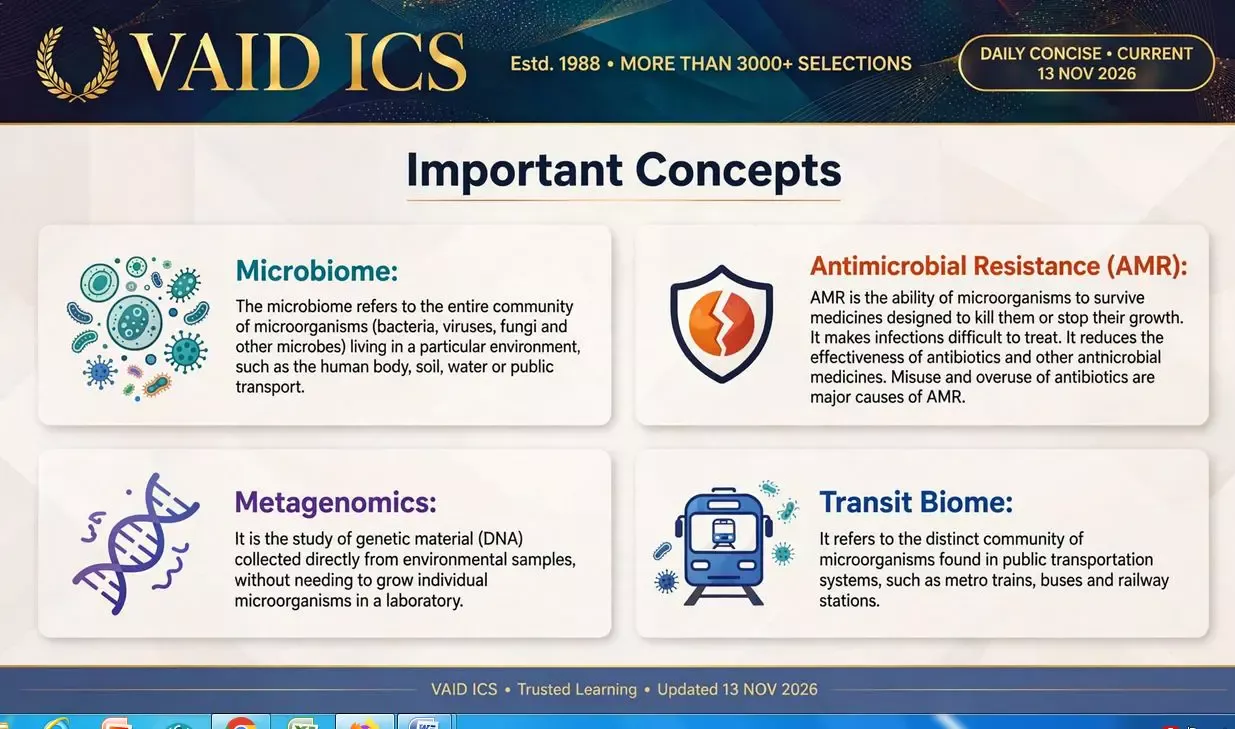
IMPORTANT CONCEPTS:
Microbiome:
The microbiome refers to the entire community of microorganisms, including bacteria, viruses, fungi and other microbes, living in a particular environment, such as the human body, soil, water or public transport.
Antimicrobial Resistance (AMR):
AMR is the ability of microorganisms to survive medicines designed to kill them or stop their growth.
- Makes infections difficult to treat.
- Reduces the effectiveness of antibiotics and other antimicrobial medicines.
- Misuse and overuse of antibiotics are major causes of AMR.
Metagenomics:
Metagenomics is the study of genetic material (DNA) collected directly from environmental samples to identify and analyse different microorganisms without growing them individually in laboratories.
Transit Biome:
Transit Biome refers to the distinct community of microorganisms found in public transportation systems, such as metro trains, buses and railway stations.
Conclusion:
Regular monitoring of urban microbiomes can help identify potential public health risks, track antimicrobial resistance and strengthen public health preparedness in densely populated cities.

May 19, 2026
October 17, 2025
October 16, 2025
October 6, 2025

