January 29, 2026
Daily Current Affairs for UPSC : 29 Jan 2026/ UGC Issues / Solution
Why India Needs Universal Campus Rules Rather Than Over-Specific Regulations
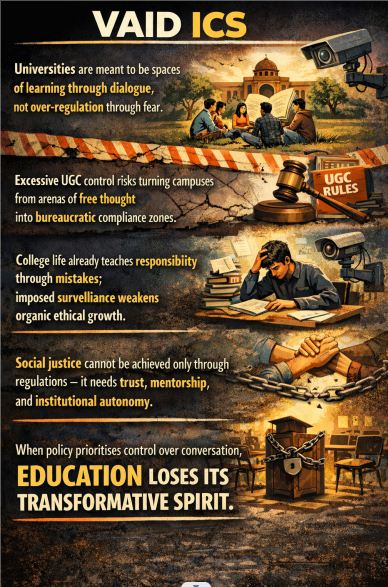
1. The Core Problem: Over-Specific Regulation Creates Fear, Not Fairness
Overly detailed and rigid UGC rules attempt to micromanage campus life. While the intention may be to ensure equity or discipline, excessive specificity often results in:
-
Fear of punishment rather than ethical understanding
-
Administrative overload and selective enforcement
-
Reduced academic freedom and open dialogue
Education thrives in trust-based environments, not compliance-driven ones.
2. What Are Universal Campus Rules?
Universal campus rules are broad, principle-based norms applicable to all institutions, such as:
-
Dignity of every student
-
Zero tolerance for discrimination
-
Freedom of expression within constitutional limits
-
Due process and natural justice
-
Institutional accountability with autonomy
These rules define values, not micromanaged procedures.
3. Why Universal Rules Are Better Than Specific Rules
A. Flexibility Across India’s Diverse Campuses
India’s higher education system includes:
-
Central universities
-
State universities
-
Private colleges
-
Rural, urban, elite, and under-resourced institutions
One rigid rule cannot fit all. Universal rules allow local adaptation while protecting core values.
B. Encourages Moral Growth Instead of Mechanical Obedience
College life is meant to teach:
-
Responsibility
-
Ethical reasoning
-
Conflict resolution
When rules become excessively specific, students focus on avoiding punishment rather than internalising values. Universal rules encourage moral maturity, not fear-based compliance.
C. Prevents Misuse and Selective Targeting
Highly detailed regulations:
-
Increase discretionary power of authorities
-
Enable selective interpretation
-
Risk being used against dissenting voices
Universal rules reduce arbitrariness and uphold procedural fairness.
D. Strengthens Institutional Autonomy
Universities are not police stations; they are intellectual communities.
Universal rules:
-
Set national ethical standards
-
Allow universities to design context-specific mechanisms
-
Preserve academic freedom
Autonomy with accountability is the cornerstone of global universities.
4. The Ideal Model: Principle-Based Regulation + Local Implementation
National Level (UGC / Government)
-
Define core constitutional values
-
Set minimum safeguards
-
Ensure transparency and oversight
Institutional Level (Universities / Colleges)
-
Frame internal codes of conduct
-
Establish grievance redressal systems
-
Promote dialogue, counselling, and mentorship
This creates a balanced ecosystem.
5. Learning from Global Best Practices
Leading universities worldwide follow:
-
Broad codes of ethics
-
Ombudsman-based grievance systems
-
Dialogue-first approaches
They regulate outcomes, not every action.
India must move from control-centric governance to trust-centric governance in education.
6. Conclusion: Education Needs Principles, Not Panic
Universal campus rules:
-
Protect dignity without suffocating freedom
-
Ensure justice without bureaucratic excess
-
Promote learning through dialogue, not surveillance
When education is governed by principles, universities produce thinkers.
When governed by fear, they produce conformists.

October 17, 2025
October 16, 2025
October 6, 2025
September 24, 2025

