January 23, 2026
Daily Current Affairs for UPSC : 23 Jan 2026/Should India join the ‘Board of Peace’ (BoP)?
In January 2026, India is weighing an invitation from U.S. President Donald Trump to join the Board of Peace (BoP), a new international body designed to oversee post-war governance, reconstruction, and security in Gaza. The proposal has sparked intense debate regarding India’s role in global governance and its long-standing principles.
Pros: Reasons to Join:
- Global Leadership Role: Joining would signal India’s ambition to be a major player in conflict resolution and give it a seat at a high-stakes table alongside powers like the UAE, Saudi Arabia, and Israel.
- Humanitarian Impact: It provides a direct channel for India to offer its medical expertise and reconstruction aid to the Palestinian people.
- Managing Pakistan’s Presence: Since Pakistan has already accepted the invitation, some argue India must join to prevent Pakistan from using the forum to internationalize issues like Kashmir.
- Economic Diplomacy: Participation could help stabilize trade negotiations with a “mercurial” Trump administration and avoid potential retaliatory tariffs.
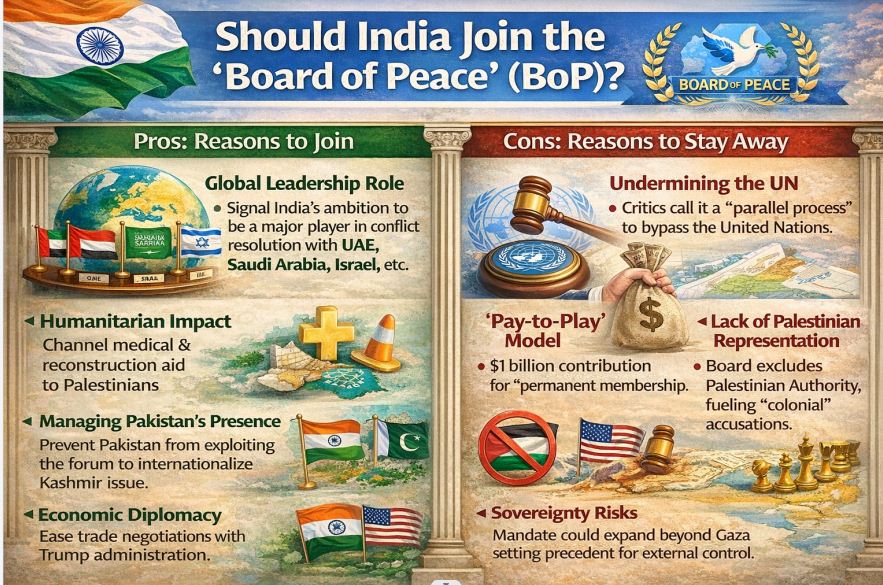
Cons: Reasons to Stay Away:
- Undermining the UN: Critics and opposition parties warn the board is a “parallel process” designed to bypass the United Nations and its charter.
- “Pay-to-Play” Model: The charter requires a $1 billion contribution for “permanent membership,” which many see as a Troubling corporate-style governance model.
- Lack of Palestinian Representation: While it includes Israeli leadership, the board currently excludes the Palestinian Authority, leading to accusations that it is a “new colonial” structure.
- Sovereignty Risks: The board’s mandate may expand beyond Gaza to other conflicts, potentially setting a precedent for external intervention in India’s own territorial disputes.
The Way Forward:
India has currently adopted a “wait and watch” approach, skipping the initial charter announcement in Davos to further analyze the implications.
- Consulting Regional Partners: New Delhi is expected to consult with the League of Arab States and other close partners like the UAE and Saudi Arabia before deciding.
- Demanding Clarity: Experts suggest India should seek a more defined and limited mandate for the board that respects international law and existing multilateral frameworks.
- Calibrated Engagement: A potential middle ground involves engaging diplomatically or providing humanitarian support without endorsing the board’s permanent, fee-based structure.
India is unlikely to join as a “Permanent Member” under the current financial terms but will likely seek a role that allows it to contribute to peace without abandoning its core diplomatic values.
क्या भारत को बोर्ड ऑफ पीस’ (BoP) में शामिल होना चाहिए ?
यह भारत की वैश्विक राजनीति और कूटनीति से जुड़ा एक अत्यंत महत्वपूर्ण विषय है। जनवरी 2026 में, भारत के सामने अमेरिकी राष्ट्रपति डोनाल्ड ट्रंप द्वारा गठित ‘बोर्ड ऑफ पीस‘ (BoP) में शामिल होने का प्रस्ताव एक बड़ी चुनौती और अवसर दोनों बनकर उभरा है।
प्रस्ताव की पृष्ठभूमि:
‘बोर्ड ऑफ पीस’ (BoP) एक नया अंतरराष्ट्रीय निकाय है, जिसे गाजा में युद्ध के बाद शासन व्यवस्था, पुनर्निर्माण और सुरक्षा की देखरेख के लिए बनाया गया है। भारत को इसमें शामिल होने का निमंत्रण मिला है, जिस पर देश के भीतर और बाहर व्यापक चर्चा जारी है।
पक्ष में तर्क (जुड़ने के लाभ):
- वैश्विक नेतृत्व की भूमिका: इसमें शामिल होना भारत की उस महत्वाकांक्षा का प्रतीक होगा जहाँ वह संघर्ष समाधान में एक प्रमुख खिलाड़ी बनना चाहता है। इससे भारत को यूएई, सऊदी अरब और इजरायल जैसी शक्तियों के साथ एक उच्च-स्तरीय मंच प्राप्त होगा।
- मानवीय प्रभाव: यह निकाय भारत को फिलिस्तीनी लोगों को सीधे चिकित्सा सहायता और पुनर्निर्माण में मदद प्रदान करने का एक प्रभावी माध्यम देगा।
- पाकिस्तान की उपस्थिति का प्रबंधन: चूँकि पाकिस्तान पहले ही इस निमंत्रण को स्वीकार कर चुका है, इसलिए कुछ विशेषज्ञों का मानना है कि भारत को इस मंच पर मौजूद रहना चाहिए ताकि पाकिस्तान इसका उपयोग कश्मीर जैसे मुद्दों को अंतरराष्ट्रीय मंच पर उछालने के लिए न कर सके।
- आर्थिक कूटनीति: ट्रंप प्रशासन के साथ व्यापार वार्ताओं को स्थिर करने और संभावित आयात शुल्कों (tariffs) से बचने के लिए इस बोर्ड में भागीदारी एक रणनीतिक कदम हो सकती है।
विपक्ष में तर्क (चुनौतियां और जोखिम):
- संयुक्त राष्ट्र (UN) की अनदेखी: आलोचकों का तर्क है कि यह बोर्ड संयुक्त राष्ट्र और उसके चार्टर को दरकिनार करने के लिए एक “समानांतर प्रक्रिया” है, जो वैश्विक नियमों के विरुद्ध जा सकती है।
- ‘पे–टू–प्ले‘ (Pay-to-Play) मॉडल: बोर्ड की स्थायी सदस्यता के लिए $1 बिलियन (लगभग 8,300 करोड़ रुपये) के योगदान की शर्त है। इसे एक “कॉर्पोरेट-शैली” की शासन व्यवस्था माना जा रहा है जो कूटनीति के लिए एक चिंताजनक मिसाल है।
- फिलिस्तीनी प्रतिनिधित्व का अभाव: जहाँ बोर्ड में इजरायली नेतृत्व शामिल है, वहीं फिलिस्तीनी प्राधिकरण को इससे बाहर रखा गया है। इसके कारण इसे “नव-औपनिवेशिक” संरचना के रूप में देखा जा रहा है।
- संप्रभुता का जोखिम: यह आशंका है कि इस बोर्ड का अधिकार क्षेत्र भविष्य में गाजा से बाहर अन्य विवादों तक फैल सकता है, जिससे भारत के अपने क्षेत्रीय विवादों में बाहरी हस्तक्षेप का मार्ग प्रशस्त हो सकता है।
भावी रणनीति (The Way Forward):
वर्तमान में भारत ने “प्रतीक्षा करो और देखो” (Wait and Watch) की नीति अपनाई है। भारत की आगामी रणनीति निम्नलिखित बिंदुओं पर आधारित हो सकती है:
- क्षेत्रीय भागीदारों से परामर्श: नई दिल्ली कोई भी अंतिम निर्णय लेने से पहले अरब लीग, यूएई और सऊदी अरब जैसे अपने करीबी सहयोगियों के साथ चर्चा करेगी।
- स्पष्टता की मांग: विशेषज्ञ सुझाव देते हैं कि भारत को बोर्ड के लिए एक अधिक परिभाषित और सीमित जनादेश (mandate) की मांग करनी चाहिए जो अंतरराष्ट्रीय कानूनों का सम्मान करे।
- संतुलित जुड़ाव (Calibrated Engagement): एक बीच का रास्ता यह हो सकता है कि भारत इस शुल्क-आधारित स्थायी ढांचे का समर्थन किए बिना कूटनीतिक और मानवीय सहायता के माध्यम से अपना योगदान दे।
निष्कर्ष:
भारत द्वारा वर्तमान वित्तीय शर्तों के तहत “स्थायी सदस्य” के रूप में शामिल होने की संभावना कम है। हालांकि, भारत एक ऐसी भूमिका की तलाश करेगा जहाँ वह अपने मूल कूटनीतिक मूल्यों और रणनीतिक स्वायत्तता से समझौता किए बिना विश्व शांति में अपना योगदान दे सके।

October 17, 2025
October 16, 2025
October 6, 2025
September 24, 2025

