January 6, 2026
Cocaine and “Narco-Terrorism” : What is Fentanyl?
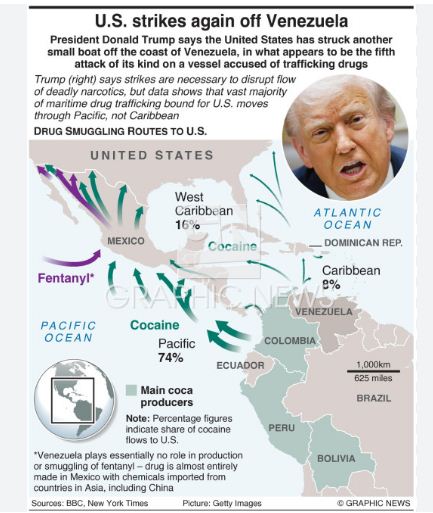
According to current U.S. indictments and official statements as of January 2026, the primary drugs linked to Venezuela and Mexico are Cocaine and Fentanyl, respectively. The U.S. government distinguishes between the two countries based on the type of narcotic and the level of alleged state involvement.
Venezuela: Cocaine and “Narco-Terrorism”
The U.S. Department of Justice and the Trump administration have specifically targeted the Maduro government for its alleged role in the cocaine trade.
- Type of Drug: Cocaine. The U.S. claims Venezuela is a “major drug-transit country” for Colombian cocaine moving toward the U.S. and Europe.
- The “Cartel of the Suns”: The U.S. alleges that Nicolás Maduro leads a criminal network known as the Cartel de los Soles (Cartel of the Suns), comprised of high-ranking Venezuelan military and political officials.
- Key Claims:
-
- Strategic Alliance: The U.S. claims Maduro partnered with the FARC (Colombian rebels) to use cocaine as a “weapon” to “flood” the United States.
- Diplomatic Cover: The 2026 indictment alleges Maduro used diplomatic passports and state aircraft to repatriate drug proceeds from Mexico to Venezuela.
- Volume: U.S. reports estimate that 200 to 250 metric tons of cocaine are trafficked through Venezuela annually.
Mexico: Fentanyl and Synthetic Opioids
While Venezuela is linked to cocaine transit, the U.S. identifies Mexico as the primary source of the fentanyl crisis.
- Type of Drug: Fentanyl and Methamphetamine.
- Key Claims:
-
- Production Hub: The DEA asserts that fentanyl is produced overwhelmingly in clandestine labs in Mexico using precursor chemicals sourced primarily from China.
- Cartel Dominance: The Sinaloa Cartel and the Jalisco New Generation Cartel (CJNG) are identified as the main organizations smuggling these synthetic drugs across the southwest border.
- The “Intolerable Alliance”: The Trump administration has claimed an “intolerable alliance” exists between the Mexican government and organized crime, asserting that cartels effectively “run” the country.
International Body :
UNODC (The Operational Body):
The United Nations Office on Drugs and Crime (UNODC) is the main office responsible for “on-the-ground” work.
- Role: It helps countries implement drug laws and monitors the global drug situation.
- Key Action: It publishes the World Drug Report every year and assists governments in fighting drug trafficking, money laundering, and terrorism.
CND (The Policy-Making Body):
The Commission on Narcotic Drugs (CND) is a group of 53 member nations that makes the “rules.”
- Role: It decides which drugs should be banned or controlled internationally.
- Key Action: If a new synthetic drug appears, the CND votes on whether to add it to the “schedules” (the list of illegal substances) based on advice from the World Health Organization (WHO).
INCB (The Monitoring Body):
The International Narcotics Control Board (INCB) is an independent, “quasi-judicial” body.
- Role: It acts as a “watchdog” to ensure countries are following the UN drug treaties.
- Key Action: It monitors the legal trade of medicines (to make sure they aren’t stolen for illegal use) and can “name and shame” countries that fail to control drug production within their borders.
The Three Main International Drug Treaties:
These bodies get their power from three major international agreements that almost every country in the world has signed:
- Single Convention on Narcotic Drugs (1961): Bans the use of plants like poppy (opium), coca, and cannabis for anything other than medicine or science.
- Convention on Psychotropic Substances (1971): Controls synthetic drugs like LSD, MDMA, and amphetamines.
- Convention Against Illicit Traffic (1988): Focuses on catching traffickers, stopping money laundering, and controlling the chemicals used to make drugs (precursors).
The Role of Interpol:
While the UN makes the rules, INTERPOL (International Criminal Police Organization) is the body that helps national police forces coordinate arrests and seizures across borders. They share “Purple Notices” to alert police about new smuggling methods.

October 17, 2025
October 16, 2025
October 6, 2025
September 24, 2025

