September 8, 2026
Building Safety Regulation in India/National Building Code (NBC), 2016:
Why in News?
Recent building collapses and structural failures in different parts of India have raised concerns about the effectiveness of building safety regulations, construction quality and enforcement.
The issue is important because rapid urbanisation, high-rise construction and expansion of cities are increasing the need for strong systems to ensure that buildings are structurally safe and properly maintained.
Why is Building Safety Important?
-
Protects lives: Prevents deaths and injuries due to structural failure.
-
Ensures construction quality: Promotes safe design, materials and construction practices.
-
Controls unauthorised construction: Prevents buildings from violating approved plans and safety norms.
-
Reduces disaster risk: Makes buildings safer against earthquakes, floods, fires and other hazards.
-
Protects public property: Reduces economic losses caused by building failures.
-
Ensures planned urbanisation: Supports safe and sustainable growth of cities.
Major Problems in India:
Weak enforcement → Rules exist but inspections may be inadequate.
Unauthorised construction → Buildings may be constructed without proper approval.
Poor-quality materials → Substandard construction can weaken structures.
Lack of maintenance → Old buildings may become unsafe without regular inspection and repair.
Multiple authorities → Municipal bodies, development authorities and other agencies may have overlapping responsibilities.
Key Regulatory Framework:
-
National Building Code (NBC), 2016 → Provides standards for safe building design and construction.
-
State building bye-laws → Regulate construction at the local level.
-
Municipal authorities → Approve building plans and conduct inspections.
-
Disaster Management framework → Promotes disaster-resilient construction.
-
Fire safety regulations → Address fire prevention and emergency safety.
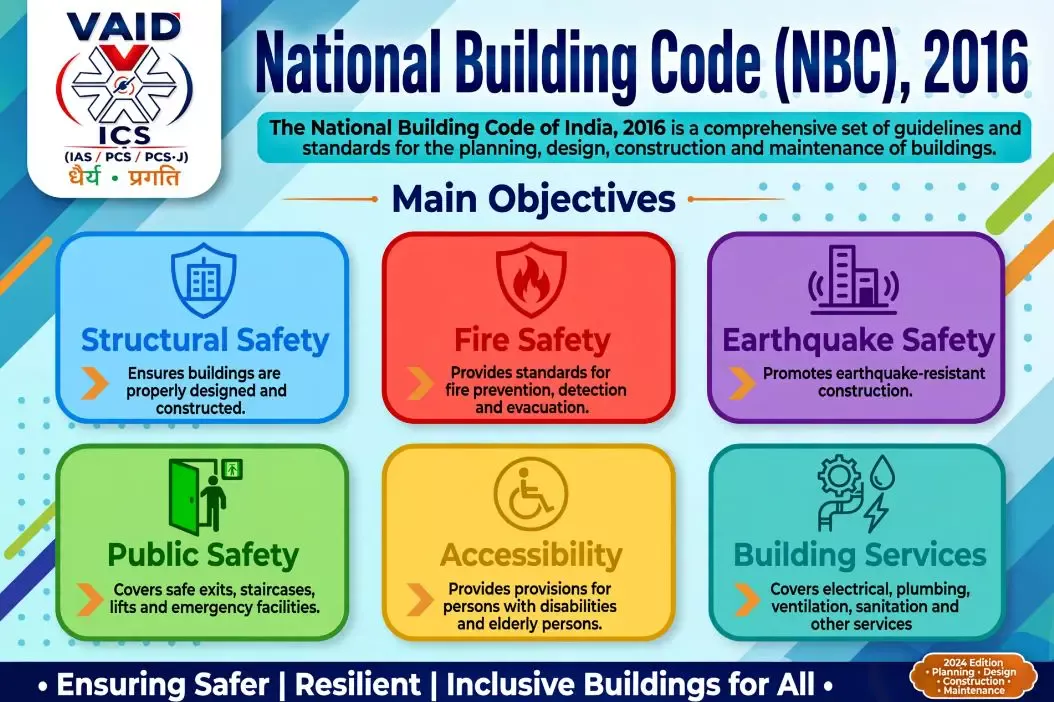
National Building Code (NBC), 2016:
The National Building Code of India, 2016 is a comprehensive set of guidelines and standards for the planning, design, construction and maintenance of buildings.
Main Objectives
-
Structural Safety → Ensures buildings are properly designed and constructed.
-
Fire Safety → Provides standards for fire prevention, detection and evacuation.
-
Earthquake Safety → Promotes earthquake-resistant construction.
-
Public Safety → Covers safe exits, staircases, lifts and emergency facilities.
-
Accessibility → Provides provisions for persons with disabilities and elderly persons.
-
Building Services → Covers electrical, plumbing, ventilation, sanitation and other services.
-
Construction Quality → Provides standards for materials and construction practices.
Way Forward:
Strict implementation of building codes
↓
Regular structural safety audits
↓
Better municipal inspections
↓
Use of certified construction materials
↓
Digital building approvals and monitoring
↓
Accountability of builders, engineers and officialIndia’s challenge is not merely the absence of building safety standards, but their effective implementation, monitoring and enforcement. Strengthening local institutions, regular safety audits and accountability can make India’s rapidly growing cities safer and more resilient.
भारत में भवन सुरक्षा विनियमन — UPSC Notes
Why in News?
भारत के विभिन्न हिस्सों में हालिया भवन ढहने और संरचनात्मक विफलता की घटनाओं ने भवन सुरक्षा नियमों, निर्माण गुणवत्ता और उनके प्रभावी क्रियान्वयन पर चिंता बढ़ाई है।
यह मुद्दा महत्वपूर्ण है क्योंकि तेजी से बढ़ते शहरीकरण, ऊँची इमारतों और शहरों के विस्तार के कारण ऐसे मजबूत तंत्र की आवश्यकता बढ़ रही है, जो यह सुनिश्चित करे कि इमारतें संरचनात्मक रूप से सुरक्षित और उचित रूप से अनुरक्षित हों।
भवन सुरक्षा क्यों महत्वपूर्ण है?
-
जीवन की सुरक्षा: संरचनात्मक विफलता से होने वाली मृत्यु और चोटों को रोकना।
-
निर्माण गुणवत्ता: सुरक्षित डिजाइन, बेहतर सामग्री और उचित निर्माण तकनीकों को बढ़ावा देना।
-
अनधिकृत निर्माण पर नियंत्रण: स्वीकृत नक्शे और सुरक्षा मानकों के उल्लंघन को रोकना।
-
आपदा जोखिम में कमी: इमारतों को भूकंप, बाढ़, आग और अन्य खतरों के प्रति सुरक्षित बनाना।
-
सार्वजनिक संपत्ति की सुरक्षा: भवन दुर्घटनाओं से होने वाले आर्थिक नुकसान को कम करना।
-
नियोजित शहरीकरण: शहरों के सुरक्षित और सतत विकास को बढ़ावा देना।
भारत में प्रमुख समस्याएँ:
कमजोर क्रियान्वयन: नियम मौजूद हैं, लेकिन निरीक्षण पर्याप्त नहीं हो सकता है।
अनधिकृत निर्माण: उचित अनुमति के बिना भवनों का निर्माण।
निम्न गुणवत्ता वाली सामग्री: घटिया निर्माण सामग्री से संरचना कमजोर हो सकती है।
रखरखाव की कमी: नियमित निरीक्षण और मरम्मत के अभाव में पुरानी इमारतें असुरक्षित हो सकती हैं।
अनेक प्राधिकरण: नगर निकाय, विकास प्राधिकरण और अन्य एजेंसियों के बीच जिम्मेदारियों का अतिव्यापन हो सकता है।
प्रमुख नियामक ढाँचा:
-
राष्ट्रीय भवन संहिता (NBC), 2016 → सुरक्षित भवन डिजाइन और निर्माण के मानक।
-
राज्य भवन उपविधियाँ (Building Bye-laws) → स्थानीय स्तर पर निर्माण को नियंत्रित करती हैं।
-
नगर निकाय → भवन नक्शों को मंजूरी और निरीक्षण।
-
आपदा प्रबंधन ढाँचा → आपदा-रोधी निर्माण को बढ़ावा।
-
अग्नि सुरक्षा नियम → आग की रोकथाम और आपातकालीन सुरक्षा।
राष्ट्रीय भवन संहिता (NBC), 2016:
राष्ट्रीय भवन संहिता, 2016 भारत में भवनों के नियोजन, डिजाइन, निर्माण और रखरखाव के लिए व्यापक दिशा-निर्देश और मानक प्रदान करती है।
मुख्य उद्देश्य:
-
संरचनात्मक सुरक्षा → भवनों के उचित डिजाइन और सुरक्षित निर्माण को सुनिश्चित करना।
-
अग्नि सुरक्षा → आग की रोकथाम, पहचान और सुरक्षित निकासी के मानक।
-
भूकंप सुरक्षा → भूकंप-रोधी निर्माण को बढ़ावा देना।
-
जन सुरक्षा → सुरक्षित निकास, सीढ़ियाँ, लिफ्ट और आपातकालीन सुविधाएँ।
-
सुगम्यता → दिव्यांगजन और बुजुर्गों के लिए आवश्यक प्रावधान।
-
भवन सेवाएँ → विद्युत, प्लंबिंग, वेंटिलेशन, स्वच्छता आदि के मानक।
-
निर्माण गुणवत्ता → निर्माण सामग्री और निर्माण प्रक्रियाओं के लिए मानक।
Way Forward:
भवन संहिताओं का सख्त क्रियान्वयन
↓
नियमित संरचनात्मक सुरक्षा ऑडिट
↓
बेहतर नगर निकाय निरीक्षण
↓
प्रमाणित निर्माण सामग्री का उपयोग
↓
डिजिटल भवन मंजूरी एवं निगरानी
↓
बिल्डर, इंजीनियर और अधिकारियों की जवाबदेही
निष्कर्ष:
भारत की चुनौती केवल भवन सुरक्षा मानकों की उपलब्धता नहीं, बल्कि उनका प्रभावी क्रियान्वयन, निगरानी और अनुपालन सुनिश्चित करना है।
मजबूत स्थानीय संस्थाएँ, नियमित सुरक्षा ऑडिट और स्पष्ट जवाबदेही भारत के तेजी से बढ़ते शहरों को अधिक सुरक्षित और आपदा-रोधी बना सकती हैं।

May 19, 2026
October 17, 2025
October 16, 2025
October 6, 2025

