December 31, 2025
99 % Indian Railways network electrified/International Union of Railways (UIC)
Why in news > With over 99% of its broad gauge railway network electrified, India is now only behind Switzerland (100%).
- Out of over 69,000 route km network of Indian Railways, almost 68,700 route km is now electrified, with the remaining tracks scheduled to be completed by 2026.
- According to the International Union of Railways (UIC) report of 2025, major countries like China, Japan and Russia have electrified 82%, 64% and 52% of their network, respectively.
About the International Union of Railways (UIC) :
The International Union of Railways (UIC) is a global organisation based in Paris, France, founded in 1922. It represents the railway sector worldwide, with over 220 members (including Indian Railways) from more than 100 countries across all continents. Its main goals are:
- Promoting rail transport globally.
- Developing international standards and cooperation.
- Sharing knowledge on technical, safety, sustainability, and statistical matters.
- Advocating for rail as a sustainable, efficient mode of transport.
- Total members: Approximately 223 (including some suspended ones).
- This covers members across five continents (Europe, Asia, Africa, Americas, and Oceania).
- Earlier figures often cited “over 200 members” or “around 205 in 100 countries,” but the latest data points to 223.
Types of Members:
- Active/Full Members: Major national railways and large operators (the core voting members).
- Associate Members: Smaller companies, regional operators, or affiliated entities (around 61 as per recent breakdowns).
- Affiliate Members: Other related organisations or companies.
UIC collects data from its members and publishes reports, statistics, and tools like:
- RAILISA: An online database with railway stats (network length, traffic, electrification, etc.) from over 100 companies.
- Annual Railway Statistics Synopsis.
- Global Rail Sustainability Reports (focusing on environment, energy, CO2 emissions).
The “UIC Report of 2025”:
Key points from the report/data cited:
- India has electrified over 99% (specifically around 99.2–99.4% as of late 2025) of its broad gauge (BG) network — the main network used for most trains.
- Total BG route km: Over 69,000 km.
- Electrified: About 68,700+ km.
- Remaining small stretches expected to finish by 2026.
- Switzerland: 100% electrified (the only major country at full 100%).
- India ranks second globally in electrification percentage among large networks.
- Comparisons with other major countries:
- China: 82%
- Japan: 64%
- Russia: 52%
-
- Others mentioned in related reports: UK (39%), France (60%), Spain (67%).
What is the Significance of Railway Electrification?
Railway electrification means replacing diesel (or older steam) engines with electric trains that draw power from overhead wires or a third rail. This is a big shift towards modern, efficient rail transport. Here’s why it’s so important, explained simply:
1. Environmental Benefits (Greener and Cleaner)
- Electric trains produce zero direct emissions – no smoke or exhaust from the train itself, unlike diesel engines.
- Reduces air pollution (like nitrogen oxides and particulate matter) and noise pollution – electric trains are much quieter.
- Lowers carbon footprint: Rail is already the most eco-friendly land transport, and electrification makes it even better (20-35% less CO2 per passenger or tonne-km compared to diesel).
- Helps fight climate change: Countries like India aim for “net zero” emissions by using more renewables (solar/wind) to generate the electricity.
- In India, recent electrification has cut diesel use massively, saving billions in imports and reducing harmful emissions.
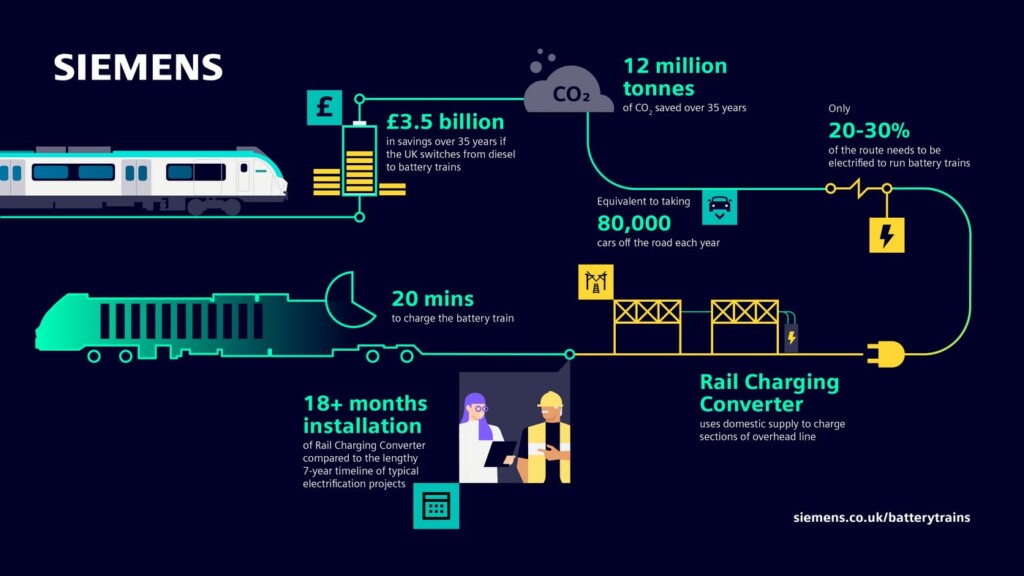
2. Economic Benefits (Saves Money in the Long Run)
- Cheaper to run: Electricity is often less expensive than diesel fuel. In India, line-haul costs for electric freight are about 1/3rd of diesel.
- Lower maintenance: Electric locomotives are simpler, last longer, and need fewer repairs.
- Huge savings on fuel imports: India has reduced diesel consumption by over 136 crore litres in recent years.
- Boosts efficiency: Allows heavier freight trains and longer passenger trains, increasing capacity without more tracks.
- Overall, operational costs drop by 30-50%, leading to better financial health for railways.
3. Operational and Performance Benefits (Faster and More Reliable)
- Higher speeds and power: Electric trains accelerate faster, run at higher speeds, and haul heavier loads – great for busy routes.
- More reliable: No fuel refueling stops; better energy efficiency (up to 95% of power reaches the wheels vs. ~30% in diesel).
- Improved passenger experience: Smoother, quieter rides with modern features.
- Enables advanced tech: Like regenerative braking (sends energy back to the grid) and integration with optical fiber for better communication.


Why it Matters Globally and in India Especially?
- Many countries (Switzerland 100%, China 82%) have electrified for sustainability. India’s push to 99%+ makes it a world leader among large networks – a massive achievement from just ~34% in 2014.
- Supports energy independence (less oil import reliance) and job creation in infrastructure.
- Initial setup is costly (wires, substations), but long-term gains in environment, economy, and efficiency make it worthwhile.

October 17, 2025
October 16, 2025
October 6, 2025
September 24, 2025

