July 28, 2026
1996 Ganges Water Treaty (India–Bangladesh):
Why in News?
Bangladesh recently announced that it expects India’s support for the renewal of the landmark 1996 Ganges Water Treaty, which is officially set to expire in December 2026. Bilateral talks between New Delhi and Dhaka are currently underway. While Bangladesh’s Minister of State for Foreign Affairs, Shama Obaed Islam, noted that discussions are progressing positively, she emphasized that the final decision rests with India, underscoring water sharing as a crucial pillar in diplomatic ties between the two neighbors.
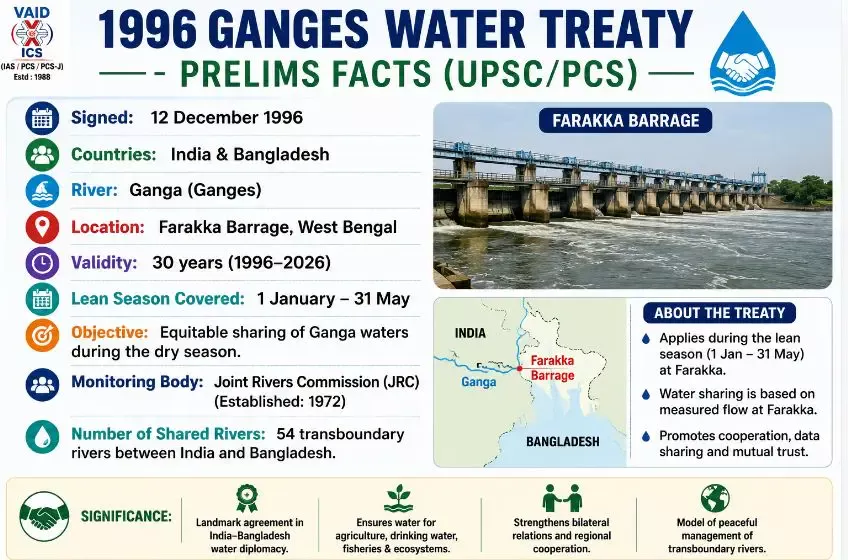
Key Points:
-
Expiry of the 30-Year Pact: The historic 30-year bilateral treaty, signed in December 1996 to govern the dry-season sharing of the Ganges River water, is reaching the end of its designated tenure.
-
Bangladesh’s Stance: Dhaka has expressed strong optimism regarding the renewal of the treaty, citing its vital importance for the country’s water security, agriculture, and livelihoods during lean seasons.
-
Ongoing Negotiations: Discussions involving relevant ministries and diplomatic channels from both nations are actively ongoing to address potential frameworks for renewal or renegotiation.
-
Geopolitical Significance: Water diplomacy remains one of the most sensitive and essential components of India-Bangladesh relations, influencing regional cooperation, trust, and resource management.
History of the Ganges Water Treaty in Detail:
The dispute over the sharing of the Ganges waters dates back to the commissioning of the Farakka Barrage by India in 1975, located just 10 kilometers upstream from the Bangladesh border. India built the barrage to divert water into the Hooghly River to flush out silt and keep the Kolkata Port operational, which drastically reduced downstream water flow into East Pakistan (later Bangladesh) during the dry summer months.
Key historical milestones include:
-
Early Interim Agreements (1977–1988): Several short-term agreements and Memorandums of Understanding (MoUs) were signed between India and Bangladesh to allocate dry-season flows, but these repeatedly lapsed without achieving a permanent resolution.
-
The 1996 Breakthrough: After years of deadlock, Indian Prime Minister H.D. Deve Gowda and Bangladeshi Prime Minister Sheikh Hasina signed the Ganges Water Treaty on December 12, 1996, in New Delhi.
-
Core Formula of the 1996 Treaty:
-
The treaty applies specifically to the lean period from January 1 to May 31 every year.
-
It is based on a 36-year hydrological cycle recorded at the Farakka barrage.
-
It guarantees specific water-sharing formulas based on actual availability at Farakka, ensuring that both countries receive fixed shares when total flows drop below specific thresholds (e.g., a 50:50 sharing arrangement when water availability falls below 70,000 cusecs).
-
-
The 30-Year Sunset Clause: The agreement included a binding provision stating that it would remain in force for 30 years and be renewable by mutual consent, bringing the treaty to its critical review and renewal milestone in December 2026.
1996 Ganges Water Treaty (India–Bangladesh):
Why in News?
The 1996 Ganges Water Treaty frequently comes into focus whenever India and Bangladesh discuss water sharing, the Farakka Barrage, Teesta River negotiations, or transboundary river management.
Background:
-
The Ganga River enters Bangladesh after flowing through India.
-
Construction of the Farakka Barrage (West Bengal) in 1975 to divert water into the Hooghly River for flushing silt and improving the Kolkata Port led to disputes over dry-season water availability in Bangladesh.
-
To resolve the dispute, India and Bangladesh signed the Ganges Water Treaty on 12 December 1996.
Key Features:
1. Duration
-
Valid for 30 years (1996–2026).
-
Renewable through mutual agreement.
2. Objective
-
Ensure equitable sharing of Ganga waters at Farakka during the dry season.
-
Promote cooperation and mutual trust.
3. Water Sharing Period
-
Applicable from 1 January to 31 May every year (lean season).
4. Sharing Formula
-
Water is shared based on measured river flow at Farakka.
-
Different allocation formulas apply depending on the volume of available water.
5. Joint Monitoring
-
The Joint Rivers Commission (JRC) monitors river flow, data collection, and implementation.
6. Consultation Mechanism
-
If water availability falls below expected levels, both countries must consult each other to reach a mutually acceptable arrangement.
Importance
-
Strengthened India–Bangladesh bilateral relations.
-
Reduced long-standing disputes over the Ganga.
-
Ensured water availability for agriculture, drinking water, fisheries, and ecosystems.
-
Promoted peaceful management of transboundary rivers.
-
Considered a model of water diplomacy in South Asia.
Challenges:
-
Declining dry-season flow due to climate change.
-
Increasing demand for irrigation and domestic use.
-
Absence of a comprehensive agreement on all shared rivers, particularly the Teesta River.
-
Need for basin-wide and climate-resilient water management.
Joint Rivers Commission (JRC):
-
Established: 1972
-
Members: India and Bangladesh
-
Function: Cooperation on the management of 54 transboundary rivers, flood control, water sharing, and data exchange.
Significance for UPSC:
-
GS-II: India–Bangladesh Relations, Water Diplomacy.
-
GS-III: Water Resources, Environment, Climate Change.
-
Prelims: Farakka Barrage, Joint Rivers Commission, Transboundary Rivers, Ganges Water Treaty.
Prelims Facts:
-
Signed: 12 December 1996
-
Countries: India & Bangladesh
-
Validity: 30 years (1996–2026)
-
River: Ganga (Ganges)
-
Location: Farakka Barrage, West Bengal
-
Implementing Body: Joint Rivers Commission (JRC)
यह खबरों में क्यों है:
बांग्लादेश ने हाल ही में घोषणा की है कि उसे ऐतिहासिक 1996 की गंगा जल संधि (Ganges Water Treaty) के नवीनीकरण के लिए भारत के समर्थन की उम्मीद है, जो आधिकारिक रूप से दिसंबर 2026 में समाप्त होने वाली है। नई दिल्ली और ढाका के बीच द्विपक्षीय बातचीत वर्तमान में जारी है। हालांकि बांग्लादेश की विदेश राज्य मंत्री शमा ओबैद इस्लाम ने उल्लेख किया कि चर्चा सकारात्मक रूप से आगे बढ़ रही है, लेकिन उन्होंने इस बात पर जोर दिया कि अंतिम निर्णय भारत को लेना है, जो दोनों पड़ोसियों के बीच राजनयिक संबंधों में जल साझा करने को एक महत्वपूर्ण स्तंभ के रूप में रेखांकित करता है।
मुख्य बिंदु:
-
30 वर्षीय समझौते की समाप्ति: गंगा नदी के शुष्क मौसम (dry-season) के पानी को साझा करने के लिए दिसंबर 1996 में हस्ताक्षरित ऐतिहासिक 30 वर्षीय द्विपक्षीय संधि अपने निर्धारित कार्यकाल के अंत तक पहुंच रही है।
-
बांग्लादेश का रुख: ढाका ने संधि के नवीनीकरण को लेकर मजबूत आशावाद व्यक्त किया है, और दुबले महीनों (lean seasons) के दौरान देश की जल सुरक्षा, कृषि और आजीविका के लिए इसके अत्यधिक महत्व का हवाला दिया है।
-
चल रही बातचीत: संभावित नवीनीकरण या पुनर्निधारण रूपरेखा को संबोधित करने के लिए दोनों देशों के संबंधित मंत्रालयों और राजनयिक चैनलों के बीच चर्चा सक्रिय रूप से चल रही है।
-
भू-राजनीतिक महत्व: जल कूटनीति भारत-बांग्लादेश संबंधों के सबसे संवेदनशील और आवश्यक घटकों में से एक बनी हुई है, जो क्षेत्रीय सहयोग, विश्वास और संसाधन प्रबंधन को प्रभावित करती है।
गंगा जल संधि का इतिहास :
गंगा के पानी के बंटवारे को लेकर विवाद की शुरुआत भारत द्वारा 1975 में बांग्लादेश सीमा से ठीक 10 किलोमीटर ऊपर की ओर फरक्का बैराज (Farakka Barrage) के चालू होने से हुई थी। भारत ने गाद को बाहर निकालने और कोलकाता बंदरगाह को चालू रखने के लिए हुगली नदी में पानी मोड़ने के लिए बैराज का निर्माण किया था, जिससे शुष्क गर्मियों के महीनों के दौरान पूर्वी पाकिस्तान (बाद में बांग्लादेश) में नीचे की ओर पानी का प्रवाह काफी कम हो गया था।
प्रमुख ऐतिहासिक मील के पत्थर:
-
प्रारंभिक अंतरिम समझौते (1977–1988): शुष्क मौसम के प्रवाह को आवंटित करने के लिए भारत और बांग्लादेश के बीच कई अल्पकालिक समझौतों और समझौता ज्ञापनों (MoUs) पर हस्ताक्षर किए गए थे, लेकिन एक स्थायी समाधान प्राप्त किए बिना ये बार-बार समाप्त हो गए।
-
1996 की सफलता: वर्षों के गतिरोध के बाद, भारतीय प्रधानमंत्री एच.डी. देवेगौड़ा और बांग्लादेशी प्रधानमंत्री शेख हसीना ने 12 दिसंबर 1996 को नई दिल्ली में गंगा जल संधि पर हस्ताक्षर किए।
-
1996 की संधि का मुख्य फॉर्मूला:
-
यह संधि विशेष रूप से हर साल 1 जनवरी से 31 मई की अवधि (लीन पीरियड) पर लागू होती है।
-
यह फरक्का बैराज पर दर्ज 36-वर्षीय जलवैज्ञानिक चक्र (hydrological cycle) पर आधारित है।
-
यह फरक्का पर वास्तविक उपलब्धता के आधार पर विशिष्ट जल-बंटवारे के फॉर्मूलों की गारंटी देती है, जिससे यह सुनिश्चित होता है कि जब कुल प्रवाह विशिष्ट सीमा से नीचे गिर जाए तो दोनों देशों को निश्चित हिस्से मिलें (जैसे, जब पानी की उपलब्धता 70,000 क्यूसेक से कम हो जाती है, तो 50:50 का साझा करने का प्रावधान)।
-
-
30-वर्षीय सनसेट क्लॉज: समझौते में एक बाध्यकारी प्रावधान शामिल था जिसमें कहा गया था कि यह 30 वर्षों तक लागू रहेगा और आपसी सहमति से नवीकरणीय होगा, जिससे यह संधि दिसंबर 2026 में अपने महत्वपूर्ण समीक्षा और नवीनीकरण मील के पत्थर पर पहुंच गई है।
1996 गंगा जल संधि (भारत–बांग्लादेश):
-
यह चर्चा में क्यों है: जब भी भारत और बांग्लादेश जल साझा करने, फरक्का बैराज, तीस्ता नदी वार्ताओं या सीमा पार नदी प्रबंधन पर चर्चा करते हैं, तो 1996 की गंगा जल संधि अक्सर केंद्र में आ जाती है।
-
पृष्ठभूमि:
-
गंगा नदी भारत से बहने के बाद बांग्लादेश में प्रवेश करती है।
-
हुगली नदी में पानी मोड़ने और कोलकाता बंदरगाह में सुधार के लिए 1975 में पश्चिम बंगाल में फरक्का बैराज के निर्माण से बांग्लादेश में शुष्क मौसम में पानी की उपलब्धता को लेकर विवाद पैदा हो गया था।
-
इस विवाद को सुलझाने के लिए, भारत और बांग्लादेश ने 12 दिसंबर 1996 को गंगा जल संधि पर हस्ताक्षर किए।
-
मुख्य विशेषताएं:
-
अवधि: 30 वर्ष (1996–2026) के लिए वैध; आपसी समझौते से नवीकरणीय।
-
उद्देश्य: शुष्क मौसम के दौरान फरक्का में गंगा के पानी का न्यायसंगत बंटवारा सुनिश्चित करना; सहयोग और आपसी विश्वास को बढ़ावा देना।
-
जल साझा करने की अवधि: हर साल 1 जनवरी से 31 मई तक लागू (लीन सीजन)।
-
बंटवारे का फॉर्मूला: फरक्का में मापे गए नदी के प्रवाह के आधार पर पानी साझा किया जाता है।
-
संयुक्त निगरानी: संयुक्त नदी आयोग (JRC) नदी के प्रवाह, डेटा संग्रह और कार्यान्वयन की निगरानी करता है।
-
परामर्श तंत्र: यदि पानी की उपलब्धता अपेक्षित स्तर से कम हो जाती है, तो दोनों देशों को परस्पर स्वीकार्य व्यवस्था तक पहुंचने के लिए एक-दूसरे से परामर्श करना होगा।
महत्व:
-
भारत-बांग्लादेश द्विपक्षीय संबंधों को मजबूत किया।
-
गंगा को लेकर लंबे समय से चले आ रहे विवादों को कम किया।
-
कृषि, पेयजल, मत्स्य पालन और पारिस्थितिकी तंत्र के लिए पानी की उपलब्धता सुनिश्चित की।
-
दक्षिण एशिया में जल कूटनीति के एक आदर्श के रूप में माना जाता है।
चुनौतियां:
-
जलवायु परिवर्तन के कारण शुष्क मौसम के प्रवाह में गिरावट।
-
सिंचाई और घरेलू उपयोग के लिए बढ़ती मांग।
-
सभी साझा नदियों, विशेष रूप से तीस्ता नदी पर एक व्यापक समझौते का अभाव।
-
बेसिन-व्यापी और जलवायु-लचीले जल प्रबंधन की आवश्यकता।
संयुक्त नदी आयोग (JRC):
-
स्थापित: 1972
-
सदस्य: भारत और बांग्लादेश
-
कार्य: 54 सीमा पार नदियों के प्रबंधन, बाढ़ नियंत्रण, जल साझा करने और डेटा विनिमय पर सहयोग।
मुख्य तथ्य (Prelims Facts):
-
हस्ताक्षरित: 12 दिसंबर 1996
-
देश: भारत और बांग्लादेश
-
वैधता: 30 वर्ष (1996–2026)
-
नदी: गंगा
-
स्थान: फरक्का बैराज, पश्चिम बंगाल
-
कार्यान्वयन निकाय: संयुक्त नदी आयोग (JRC)

May 19, 2026
October 17, 2025
October 16, 2025
October 6, 2025

