November 23, 2026
What is Lethal Autonomous Weapons Systems (LAWS)? Killer Robots
Lethal Autonomous Weapons Systems (LAWS): Global Efforts to Regulate Killer Robots
Why in News?
-
United Nations (UN) discussions on regulating Lethal Autonomous Weapons Systems (LAWS), commonly known as Killer Robots, concluded with an agreement to continue negotiations.
-
Member states committed to developing new international rules within the next two years.
-
However, the outcome was weakened by Russia’s opposition to legally binding regulations.
-
Approximately 100 countries supported legally binding international rules, while major arms-producing countries, including the United States, Russia and Israel, opposed such measures.
-
The discussions took place in Geneva, Switzerland, among member states of the Convention on Certain Conventional Weapons (CCW).
-
Growing concerns over the use of autonomous weapons in conflicts such as Ukraine, Sudan and West Asia have accelerated international efforts to regulate these technologies.
What are Lethal Autonomous Weapons Systems (LAWS)?
-
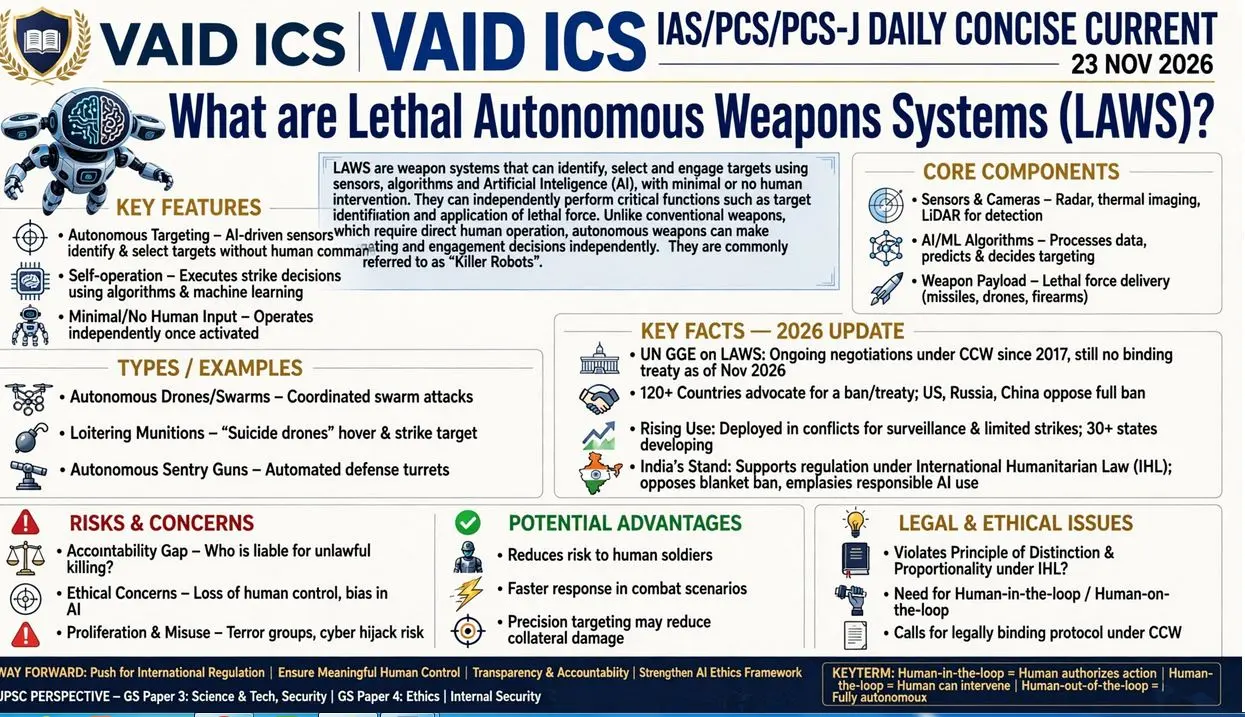
LAWS are weapon systems that can identify, select and engage targets using sensors, algorithms and Artificial Intelligence (AI), with minimal or no human intervention.
-
They can independently perform critical functions such as target identification and the application of lethal force.
-
Unlike conventional weapons, which generally require direct human operation, autonomous weapons can make certain targeting and engagement decisions independently.
-
They are commonly referred to as Killer Robots.
Key Features of LAWS:
-
Autonomous Target Selection: Capable of identifying and selecting targets without direct human commands.
-
Artificial Intelligence: Uses AI, sensors and algorithms to process information and make operational decisions.
-
Reduced Human Intervention: Can operate with limited or no human involvement in critical targeting decisions.
-
Rapid Response: Can process battlefield information and respond faster than human operators.
-
Military Applications: Potential applications include autonomous drones, robotic combat systems and automated defence platforms.
Major Developments in International Negotiations:
-
The negotiations aimed to establish international standards for weapons capable of identifying and engaging targets with minimal or no human oversight.
-
Around 100 countries supported the development of legally binding international regulations.
-
Major arms-producing countries, including the United States, Russia and Israel, opposed legally binding restrictions.
-
Russia’s opposition weakened the possibility of reaching a strong international agreement.
-
The UN Secretary-General, the Pope and the International Committee of the Red Cross (ICRC) have repeatedly called for strong and legally binding international rules.
-
The Swiss chair of the meeting, Julien Thoeni, described the agreement as an important achievement for humanitarian disarmament after more than a decade of discussions.
-
However, human rights organisations criticised the outcome, arguing that technological advancements in autonomous weapons could outpace diplomatic efforts to regulate them.
Convention on Certain Conventional Weapons (CCW):
-
The Convention on Certain Conventional Weapons (CCW) is an international treaty adopted in 1980 and entered into force in 1983.
-
It operates within the framework of International Humanitarian Law (IHL).
-
Its primary objective is to prohibit or restrict the use of conventional weapons that cause excessive suffering or have indiscriminate effects.
-
It provides a platform for international discussions on emerging conventional weapons technologies, including LAWS.
-
It consists of a framework convention supported by specific protocols addressing different categories of conventional weapons.
Examples of Weapons Regulated under CCW Protocols:
-
Protocol I: Prohibits weapons designed to injure through fragments that are undetectable by X-rays in the human body.
-
Protocol II: Restricts or prohibits the use of mines, booby traps and other devices.
-
Protocol III: Restricts the use of incendiary weapons.
-
Protocol IV: Prohibits the use of blinding laser weapons.
-
Protocol V: Deals with explosive remnants of war.
Major Concerns Associated with LAWS:
-
Loss of Human Control: Machines may make life-and-death decisions without meaningful human intervention.
-
Civilian Casualties: Errors in target identification may result in the killing of innocent civilians.
-
Accountability Gap: It may become difficult to determine whether responsibility lies with the programmer, manufacturer, military commander or state.
-
Violation of International Humanitarian Law: Autonomous weapons may fail to properly distinguish between civilians and combatants.
-
Escalation of Conflicts: Faster automated attacks may increase the risk of unintended military escalation.
-
Arms Race: Development of autonomous weapons may encourage competition among major military powers.
-
Cybersecurity Risks: Hacking or manipulation of AI systems may cause weapons to attack unintended targets.
-
Ethical Concerns: Delegating life-and-death decisions to machines raises fundamental questions about human dignity and morality.
Key Concepts Involved:
Lethal Autonomous Weapons Systems (LAWS):
-
Weapons systems capable of identifying, selecting and engaging targets through autonomous processes with minimal or no human intervention.
-
They raise concerns regarding human control, accountability and compliance with international humanitarian law.
Convention on Certain Conventional Weapons (CCW):
-
An international treaty that prohibits or restricts the use of specific conventional weapons considered excessively injurious or indiscriminate.
-
It provides the institutional framework for discussions on regulating autonomous weapons.
Humanitarian Disarmament:
-
A people-centred approach to disarmament that prioritises the protection of human life and dignity.
-
It seeks to prevent and reduce human suffering, civilian casualties and environmental damage caused by weapons.
-
It focuses on regulating or prohibiting weapons that pose unacceptable humanitarian risks.
International Humanitarian Law (IHL):
-
Also known as the law of armed conflict.
-
It regulates the conduct of parties during armed conflicts.
-
Its primary objective is to protect civilians and persons who are not participating in hostilities and to restrict the methods and means of warfare.
Important Principles of International Humanitarian Law:
-
Principle of Distinction: Parties must distinguish between civilians and combatants.
-
Principle of Proportionality: Attacks must not cause excessive civilian harm in relation to the anticipated concrete and direct military advantage.
-
Principle of Precaution: All feasible precautions must be taken to minimise civilian casualties and damage to civilian objects.
-
Principle of Humanity: Unnecessary suffering and superfluous injury must be avoided.
Why is Regulation of LAWS Necessary?
-
To ensure meaningful human control over decisions involving the use of lethal force.
-
To prevent indiscriminate attacks and protect civilian populations.
-
To establish clear legal responsibility for the consequences of autonomous weapon systems.
-
To prevent an uncontrolled global arms race in AI-based military technologies.
-
To ensure that emerging military technologies comply with international humanitarian law.
Way Forward:
-
Legally Binding Rules: Countries should work towards a legally binding international instrument regulating or prohibiting unacceptable autonomous weapons.
-
Meaningful Human Control: Human oversight should be maintained over critical decisions involving the use of lethal force.
-
International Cooperation: UN member states should strengthen negotiations under the CCW framework.
-
Accountability: Clear responsibility should be established for the development, deployment and use of autonomous weapons.
-
Ethical AI: Military AI systems should follow internationally accepted humanitarian and ethical standards.
-
Transparency: Countries should disclose relevant information about the development and deployment of autonomous weapons.
Conclusion:
The debate over Lethal Autonomous Weapons Systems highlights the growing challenge of balancing military technological advancement with human rights, ethical responsibility and international humanitarian law. International cooperation and legally binding regulations are essential to ensure that machines do not exercise unchecked control over life-and-death decisions in armed conflicts.
घातक स्वायत्त हथियार प्रणालियाँ (Lethal Autonomous Weapons Systems – LAWS)
समाचारों में क्यों?
-
जिनेवा में संयुक्त राष्ट्र के तत्वावधान में घातक स्वायत्त हथियार प्रणालियों (LAWS) के नियमन को लेकर हुई वार्ता में देशों ने आगामी दो वर्षों के भीतर इनके लिए नियम विकसित करने की दिशा में वार्ता जारी रखने पर सहमति व्यक्त की।
-
हालाँकि, इन हथियारों पर कानूनी रूप से बाध्यकारी अंतरराष्ट्रीय नियम बनाने को लेकर देशों के बीच मतभेद बने हुए हैं।
-
लगभग 100 देशों ने बाध्यकारी नियमों का समर्थन किया, जबकि रूस ने ऐसे उपायों का विरोध किया।
-
अमेरिका, रूस और इज़राइल सहित कुछ देशों ने कठोर अंतरराष्ट्रीय प्रतिबंधों का समर्थन नहीं किया।
-
यूक्रेन, सूडान और पश्चिम एशिया में जारी संघर्षों में स्वायत्त एवं कृत्रिम बुद्धिमत्ता आधारित सैन्य तकनीकों के बढ़ते उपयोग ने इस विषय को और अधिक महत्त्वपूर्ण बना दिया है।
घातक स्वायत्त हथियार प्रणालियों (LAWS) के बारे में:
-
घातक स्वायत्त हथियार प्रणालियाँ ऐसी हथियार प्रणालियाँ हैं, जो मानवीय हस्तक्षेप के बिना या अत्यंत सीमित मानवीय नियंत्रण में लक्ष्य की पहचान करने, उसका चयन करने और उस पर हमला करने में सक्षम होती हैं।
-
ये प्रणालियाँ मुख्य रूप से कृत्रिम बुद्धिमत्ता (AI), संवेदकों (Sensors), कंप्यूटर एल्गोरिदम और स्वचालित निर्णय लेने वाली तकनीकों पर आधारित होती हैं।
प्रमुख विशेषताएँ:
-
स्वायत्त लक्ष्य चयन: मानवीय निर्देश के बिना लक्ष्य की पहचान और चयन करने की क्षमता।
-
स्वचालित आक्रमण: निर्धारित परिस्थितियों में स्वयं हमला करने की क्षमता।
-
तीव्र प्रतिक्रिया: बहुत कम समय में परिस्थितियों का विश्लेषण करके निर्णय लेना।
-
मानवीय नियंत्रण में कमी: लक्ष्य चयन और आक्रमण की प्रक्रिया में मानवीय हस्तक्षेप सीमित हो सकता है।
-
तकनीकी निर्भरता: कृत्रिम बुद्धिमत्ता, मशीन लर्निंग, संवेदकों और डेटा विश्लेषण पर आधारित संचालन।
अंतरराष्ट्रीय वार्ताओं में प्रमुख घटनाक्रम:
-
संयुक्त राष्ट्र के सदस्य देश इन हथियारों के विकास और उपयोग के लिए अंतरराष्ट्रीय मानदंड स्थापित करने पर चर्चा कर रहे हैं।
-
लगभग 100 देशों ने कानूनी रूप से बाध्यकारी नियमों की आवश्यकता का समर्थन किया है।
-
रूस ने ऐसे बाध्यकारी उपायों का विरोध किया है।
-
संयुक्त राष्ट्र महासचिव, पोप और अंतरराष्ट्रीय रेड क्रॉस समिति (ICRC) ने स्वायत्त हथियारों के संबंध में मानवीय नियंत्रण सुनिश्चित करने तथा बाध्यकारी नियम बनाने की आवश्यकता पर बल दिया है।
-
वार्ता के अध्यक्ष जूलियन थॉएनी (Julien Thoeni) ने समझौते को मानवीय निरस्त्रीकरण की दिशा में एक उपलब्धि बताया।
-
हालाँकि, मानवाधिकार संगठनों ने वार्ता में ठोस और बाध्यकारी निर्णय न हो पाने पर चिंता व्यक्त की है।
पारंपरिक हथियार अभिसमय (Convention on Certain Conventional Weapons – CCW):
-
अभिसमय को 1980 में अपनाया गया तथा यह 1983 में प्रभावी हुआ।
-
इसका उद्देश्य ऐसे पारंपरिक हथियारों के उपयोग को प्रतिबंधित या सीमित करना है, जो अनावश्यक पीड़ा पहुँचाते हैं अथवा अंधाधुंध प्रभाव उत्पन्न करते हैं।
-
यह अंतरराष्ट्रीय मानवीय कानून (International Humanitarian Law – IHL) के ढाँचे के अंतर्गत कार्य करता है।
-
घातक स्वायत्त हथियार प्रणालियों के नियमन पर अंतरराष्ट्रीय चर्चा भी इसी अभिसमय के अंतर्गत चल रही है।
CCW के प्रमुख प्रोटोकॉल:
-
प्रोटोकॉल-I: ऐसे टुकड़ों पर प्रतिबंध, जिन्हें मानव शरीर में प्रवेश करने के बाद एक्स-रे द्वारा पहचाना नहीं जा सकता।
-
प्रोटोकॉल-II: बारूदी सुरंगों, विस्फोटक जालों और अन्य समान उपकरणों के उपयोग पर प्रतिबंध एवं नियंत्रण।
-
प्रोटोकॉल-III: आग लगाने वाले हथियारों के उपयोग पर प्रतिबंध और नियंत्रण।
-
प्रोटोकॉल-IV: अंधा करने वाले लेज़र हथियारों पर प्रतिबंध।
-
प्रोटोकॉल-V: युद्ध के विस्फोटक अवशेषों से उत्पन्न खतरों को कम करने के उपाय।
घातक स्वायत्त हथियार प्रणालियों से संबंधित प्रमुख चिंताएँ:
मानवीय नियंत्रण का अभाव:
– जीवन और मृत्यु से जुड़े निर्णयों में मशीनों की भूमिका बढ़ने से मानवीय विवेक तथा उत्तरदायित्व कमजोर हो सकता है।
नागरिकों की सुरक्षा:
-
स्वायत्त प्रणालियाँ युद्धरत सैनिकों और आम नागरिकों के बीच सही अंतर करने में विफल हो सकती हैं।
-
इससे नागरिकों की मृत्यु और मानवीय क्षति का जोखिम बढ़ सकता है।
उत्तरदायित्व निर्धारित करने की समस्या:
– यदि स्वायत्त हथियार किसी निर्दोष व्यक्ति की हत्या करते हैं, तो उसकी जिम्मेदारी किसकी होगी—निर्माता, प्रोग्रामर, सैन्य कमांडर या हथियार का उपयोग करने वाले देश की—यह एक जटिल प्रश्न है।
अंतरराष्ट्रीय मानवीय कानून का उल्लंघन:
-
स्वायत्त हथियारों के लिए अंतरराष्ट्रीय मानवीय कानून के प्रमुख सिद्धांतों का पालन करना कठिन हो सकता है।
-
इससे युद्ध अपराधों और मानवाधिकार उल्लंघनों का खतरा बढ़ सकता है।
हथियारों की होड़:
– स्वायत्त हथियारों के विकास से देशों के बीच नई सैन्य प्रतिस्पर्धा और हथियारों की होड़ बढ़ सकती है।
साइबर सुरक्षा संबंधी खतरे:
-
इन प्रणालियों को हैक किया जा सकता है अथवा इनके सॉफ्टवेयर और आँकड़ों में छेड़छाड़ की जा सकती है।
-
इससे हथियारों का गलत दिशा में उपयोग होने की आशंका है।
नैतिक चिंताएँ:
– मशीनों को मनुष्य के जीवन और मृत्यु से संबंधित निर्णय लेने का अधिकार देना गंभीर नैतिक प्रश्न उत्पन्न करता है।
अंतरराष्ट्रीय मानवीय कानून (IHL) के प्रमुख सिद्धांत:
-
भेद का सिद्धांत (Principle of Distinction): युद्धरत पक्षों को सैनिकों और नागरिकों के बीच अंतर करना अनिवार्य है।
-
आनुपातिकता का सिद्धांत (Principle of Proportionality): सैन्य कार्रवाई से होने वाली संभावित नागरिक क्षति, अपेक्षित सैन्य लाभ की तुलना में अत्यधिक नहीं होनी चाहिए।
-
सावधानी का सिद्धांत (Principle of Precaution): नागरिकों और नागरिक वस्तुओं को होने वाली क्षति कम करने के लिए सभी व्यावहारिक सावधानियाँ बरतनी चाहिए।
-
मानवता का सिद्धांत (Principle of Humanity): युद्ध में अनावश्यक पीड़ा और अत्यधिक कष्ट पहुँचाने वाले साधनों एवं तरीकों का उपयोग नहीं किया जाना चाहिए।
आगे की राह:
-
कानूनी रूप से बाध्यकारी अंतरराष्ट्रीय समझौता: घातक स्वायत्त हथियारों के विकास, उत्पादन और उपयोग को नियंत्रित करने के लिए स्पष्ट अंतरराष्ट्रीय नियम बनाए जाने चाहिए।
-
सार्थक मानवीय नियंत्रण: लक्ष्य की पहचान, चयन और उस पर हमला करने जैसे महत्त्वपूर्ण निर्णयों में प्रभावी मानवीय नियंत्रण सुनिश्चित किया जाना चाहिए।
-
पारदर्शिता और उत्तरदायित्व: हथियारों के उपयोग से होने वाली क्षति के लिए उत्तरदायित्व निर्धारित करने की स्पष्ट व्यवस्था होनी चाहिए।
-
अंतरराष्ट्रीय सहयोग: संयुक्त राष्ट्र के सदस्य देशों को समान नियम बनाने के लिए सहयोग करना चाहिए।
-
नैतिक एवं तकनीकी मानदंड: स्वायत्त हथियारों के विकास और उपयोग में मानवाधिकारों, सुरक्षा तथा नैतिक मानकों का पालन सुनिश्चित किया जाना चाहिए।
निष्कर्ष:
घातक स्वायत्त हथियार प्रणालियाँ आधुनिक युद्ध की प्रकृति को बदलने की क्षमता रखती हैं। हालाँकि, इनके उपयोग से मानवीय नियंत्रण, नागरिक सुरक्षा और अंतरराष्ट्रीय मानवीय कानून के समक्ष गंभीर चुनौतियाँ उत्पन्न होती हैं। इसलिए तकनीकी विकास और राष्ट्रीय सुरक्षा की आवश्यकताओं के साथ-साथ मानवीय नियंत्रण, जवाबदेही और अंतरराष्ट्रीय कानून को प्राथमिकता देना आवश्यक है।

May 19, 2026
October 17, 2025
October 16, 2025
October 6, 2025

