November 18, 2026
Daily UPSC Current : 18 Nov 2026/ASEAN–India Summit 2026
Why in News?
The ASEAN–India Summit is an important annual platform for strengthening India’s relations with the countries of Southeast Asia. The 2026 Summit is significant in the context of India’s Act East Policy, Indo-Pacific strategy, regional security, trade, connectivity and China’s growing influence in the region.
Important clarification: The 2026 summit-related developments should be distinguished from the 22nd ASEAN–India Summit held in 2025. The following notes explain the background, objectives, India’s interests and key issues relevant to the 2026 summit.
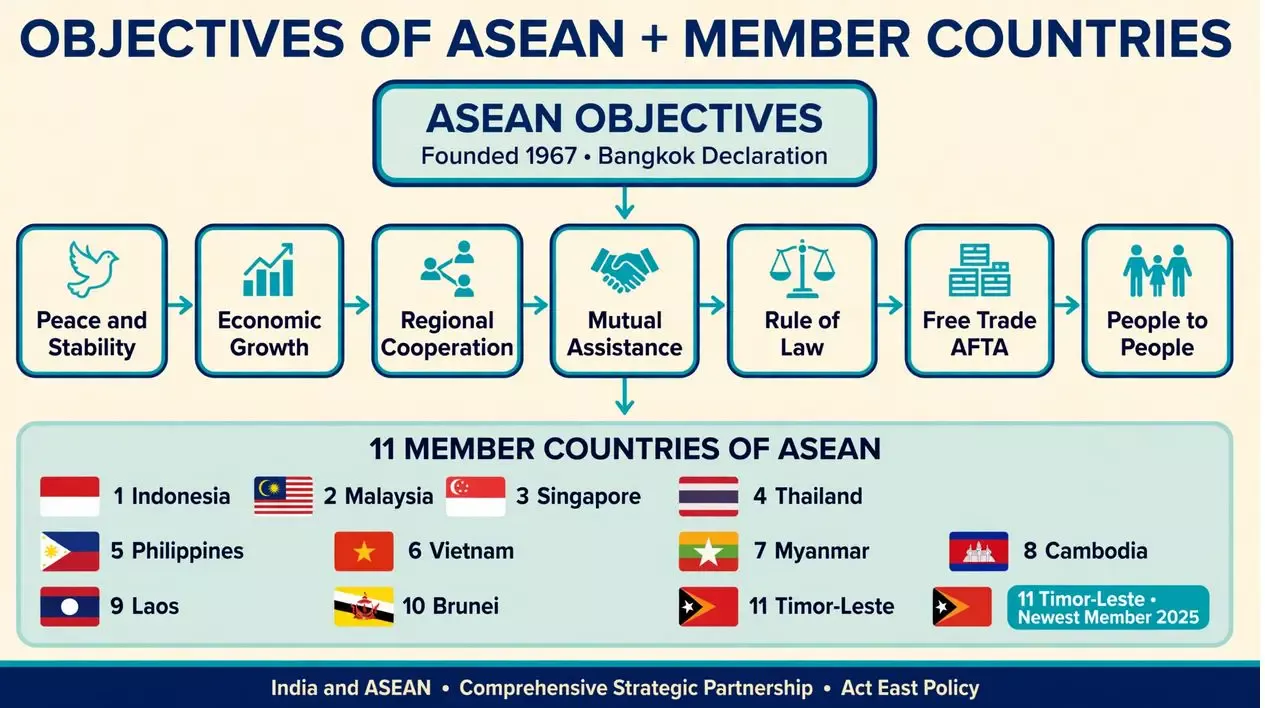
What is the ASEAN–India Summit 2026?
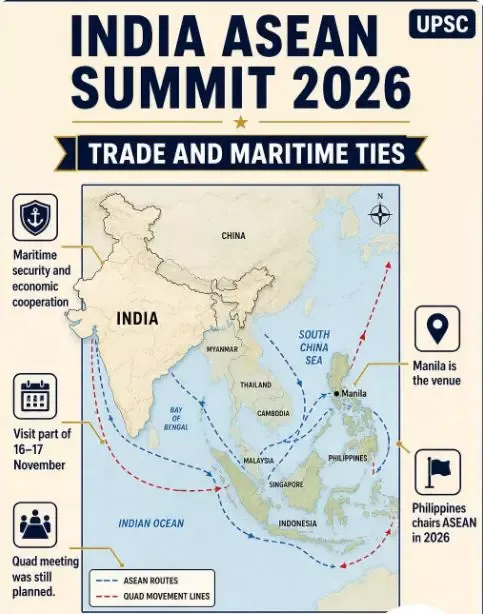
The 23rd ASEAN–India Summit was held on 17 November 2026 in Manila, Philippines.
- Host country: Philippines.
- Chair of ASEAN in 2026: Philippines.
- Host leader: President Ferdinand R. Marcos Jr.
- Indian representative: Prime Minister Narendra Modi.
- Summit theme: Navigating Our Future, Together.
The summit reviewed the progress of the India–ASEAN Comprehensive Strategic Partnership and discussed future cooperation in trade, maritime security, technology, connectivity and regional stability.
Press Information Bureau+1
Why is 2026 special?
2026 has been designated as the ASEAN–India Year of Maritime Cooperation.
This means India and ASEAN are giving special attention to cooperation related to oceans, maritime security, shipping, ports, marine resources and disaster management.
Why is the ASEAN–India Summit organised? (Main Objectives)
- Economic Cooperation:
- Increase trade and investment between India and ASEAN.
- Improve market access for Indian goods and services.
- Strengthen supply chains.
- Promote cooperation in manufacturing, semiconductors and critical minerals.
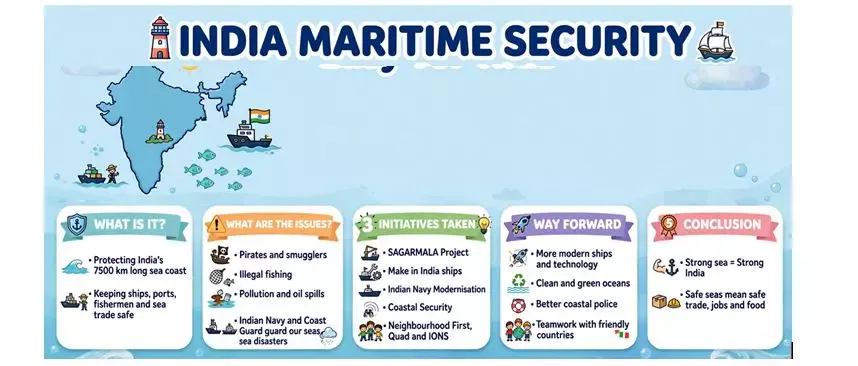
- Maritime Security:
- Maintain peace and stability in the Indo-Pacific region.
- Protect important sea routes.
- Improve cooperation between navies and Coast Guards.
- Prevent piracy, illegal fishing and maritime crimes.
- Regional Connectivity:
- Improve road, rail, sea and air connectivity.
- Strengthen India’s links with Southeast Asian markets.
- Promote tourism and people-to-people exchanges.
- Strategic Cooperation:
- Promote a free, open, inclusive and rules-based Indo-Pacific.
- Strengthen regional cooperation.
- Maintain ASEAN unity and centrality.
- Address common security challenges.
- Technology and Innovation:
- Promote digital technology and cybersecurity.
- Strengthen cooperation in space and nuclear energy.
- Develop skills and encourage innovation.
What were the Major Discussions and Outcomes of the 2026 Summit?
Important for Current Affairs 2026
The summit resulted in several important proposals and announcements.
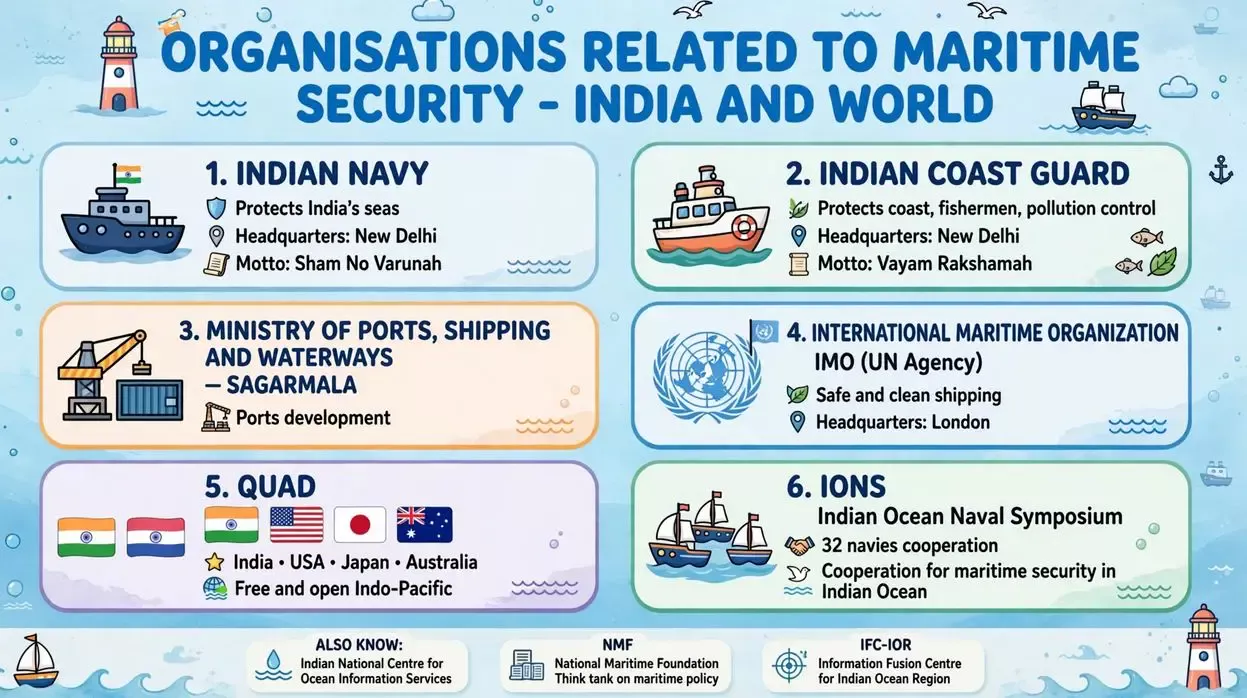
- Maritime Cooperation Plan:
India and ASEAN proposed a long-term Maritime Cooperation Plan.
It will focus on:
- Maritime connectivity.
- Scientific research.
- Disaster management.
- Coast Guard cooperation.
- Maritime Domain Awareness (MDA).
- Safety and security of seafarers.
Meaning of Maritime Domain Awareness:
It means collecting and sharing information about activities taking place in the sea to identify threats such as piracy, illegal fishing, suspicious vessels and maritime security risks.
- Joint Cyber Forensics Training Programme:
India proposed a joint training programme to strengthen the ability of ASEAN countries to investigate cybercrimes.
It will help in dealing with:
- Online financial fraud.
- Digital scams.
- Cyberattacks.
- Digital evidence and cybercrime investigations.
- ASEAN–India Nuclear Energy Technical Exchanges:
India proposed technical exchanges in nuclear energy to promote knowledge-sharing, capacity-building and peaceful applications of nuclear technology.
- ASEAN–India Space Hackathon:
A new initiative to encourage young innovators, students and researchers to develop solutions using space technology.
- Cooperation in Critical Minerals:
India and ASEAN will explore cooperation in mining and critical minerals.
These minerals are important for:
- Electric vehicle batteries.
- Solar panels.
- Semiconductor manufacturing.
- Electronics and clean energy technologies.
- ASEAN–India Youth Connect:
The proposal includes:
- Youth Summit.
- Young Parliamentarian Exchanges.
- Start-up Hackathons.
Its objective is to strengthen educational, cultural and professional connections among young people.
- Education and Cultural Cooperation:
- Increase scholarships for ASEAN students at Nalanda University.
- Establish an ASEAN–India Creative Partnership Pavilion at WAVES 2027.
- Promote tourism and cultural exchanges.
- Free E-Visa Facility:
India announced free e-visas for tourists from ASEAN countries to promote tourism and people-to-people relations.
- Disaster Management Cooperation:
The leaders adopted the ASEAN–India Joint Statement on Cooperation in Disaster Management.
Its focus is on improving disaster preparedness, emergency response and regional resilience.
These announcements are part of the official outcomes of the 23rd Summit.
Press Information Bureau+2
Why is ASEAN Important for India?
- Economic Importance:
- ASEAN is an important trading and investment partner of India.
- It provides a large market for Indian products.
- It creates opportunities in pharmaceuticals, automobiles, textiles, IT and services.
- It helps India diversify its export markets.
- Strategic Importance:
- Southeast Asia connects the Indian Ocean with the Pacific Ocean.
- ASEAN is important for maintaining stability in the Indo-Pacific.
- Cooperation with ASEAN helps India strengthen its regional presence.
- It provides opportunities for defence and maritime cooperation.
- Countering China’s Growing Influence:
China has a strong economic and strategic presence in Southeast Asia.
Closer relations with ASEAN help India maintain a balanced regional presence and promote a multipolar Indo-Pacific.
- Connectivity with North-East India:
ASEAN is important for the development of India’s North-Eastern states.
Projects such as:
- India–Myanmar–Thailand Trilateral Highway.
- Kaladan Multi-Modal Transit Transport Project.
These projects aim to connect India’s North-East with Southeast Asian countries.
- Energy and Food Security:
- ASEAN countries are important sources of energy and other natural resources.
- Cooperation can improve supply-chain resilience.
- It can strengthen India’s access to essential raw materials.
- Cultural and Historical Relations:
India and Southeast Asia share centuries-old cultural connections through Buddhism, Hinduism, trade, art, architecture and maritime exchanges.
India’s Major Interests in ASEAN
India wants to achieve the following objectives through stronger ASEAN relations:
- Trade: Increase exports and reduce trade barriers.
- Investment: Attract investment in manufacturing and infrastructure.
- Security: Strengthen maritime security and defence cooperation.
- Connectivity: Connect North-East India with Southeast Asia.
- Technology: Develop cooperation in semiconductors, AI, space and digital payments.
- Diplomacy: Strengthen India’s role in regional and international forums.
- Energy: Ensure access to critical minerals and diversify energy sources.
What are the Major Challenges in India–ASEAN Relations?
- Trade Imbalance:
India imports more goods from ASEAN than it exports to the region.
This creates concerns about the growing trade deficit.
- Limited Connectivity:
Many connectivity projects face delays because of:
- Difficult geographical conditions.
- Financial constraints.
- Security problems.
- Political instability in neighbouring Myanmar.
- China’s Growing Influence:
China has deep trade, investment and infrastructure relations with ASEAN countries.
This creates strategic competition in the region.
- South China Sea Dispute:
China has overlapping maritime and territorial claims with several ASEAN members.
This creates tensions and affects regional security.
India supports freedom of navigation and peaceful settlement of disputes in accordance with international law.
- Political Differences within ASEAN:
ASEAN members have different political systems, economic interests and strategic priorities.
Therefore, reaching a common position on sensitive international issues is sometimes difficult.
- Myanmar Crisis:
Political instability and conflict in Myanmar affect India’s border security and connectivity projects.
They also create difficulties for regional cooperation.
- Slow Progress in Trade Agreement Review:
The ASEAN–India Trade in Goods Agreement (AITIGA) needs improvement to make trade easier, more transparent and mutually beneficial.
Important Initiatives and Agreements between India and ASEAN
- Look East Policy (1991):
India started the Look East Policy to strengthen economic and diplomatic relations with Southeast Asian countries.
- Act East Policy (2014):
It upgraded the Look East Policy by giving greater importance to:
- Economic cooperation.
- Strategic and defence relations.
- Regional connectivity.
- Cultural relations.
- ASEAN–India Free Trade Agreement (FTA):
- The ASEAN–India Trade in Goods Agreement (AITIGA) was signed in 2009.
- It aims to reduce or eliminate customs duties on many goods traded between India and ASEAN.
- Its review is important to address trade-related concerns and make the agreement more beneficial.
- Comprehensive Strategic Partnership (2022):
India and ASEAN elevated their relationship to a Comprehensive Strategic Partnership in 2022.
It expanded cooperation in economic, political, security, technological and cultural areas.
- ASEAN–India Plan of Action (2026–2030):
It provides a framework for implementing the Comprehensive Strategic Partnership over five years.
It focuses on trade, connectivity, defence, technology, education, energy and regional security.
ASEAN Main Portal+1
Way Forward: What Should India Do?
- Improve Trade Relations:
- Complete the review of AITIGA.
- Reduce unnecessary trade barriers.
- Promote Indian exports to ASEAN markets.
- Improve market access for Indian businesses.
- Strengthen Connectivity:
- Complete the India–Myanmar–Thailand Trilateral Highway.
- Improve the Kaladan Multi-Modal Transit Transport Project.
- Develop better air, sea and digital connectivity.
- Strengthen Maritime Cooperation:
- Conduct regular joint naval exercises.
- Improve information sharing among maritime agencies.
- Protect sea routes and commercial shipping.
- Promote cooperation against piracy and illegal fishing.
- Promote Technology Cooperation:
- Strengthen cooperation in AI, semiconductors and space.
- Promote digital payments.
- Develop cybersecurity capabilities.
- Encourage joint research and innovation.
- Support ASEAN Centrality:
India should respect ASEAN’s leadership in regional institutions and support peaceful dialogue among member countries.
- Strengthen People-to-People Relations:
- Increase scholarships.
- Promote tourism.
- Encourage student exchanges.
- Strengthen cultural and educational cooperation.
- Maintain Strategic Balance:
India should develop strong relations with ASEAN without forcing regional countries to choose between major powers.

May 19, 2026
October 17, 2025
October 16, 2025
October 6, 2025

