September 30, 2026
Human Genomics in India: Opportunities, Challenges and Regulatory Framework
Why in News?
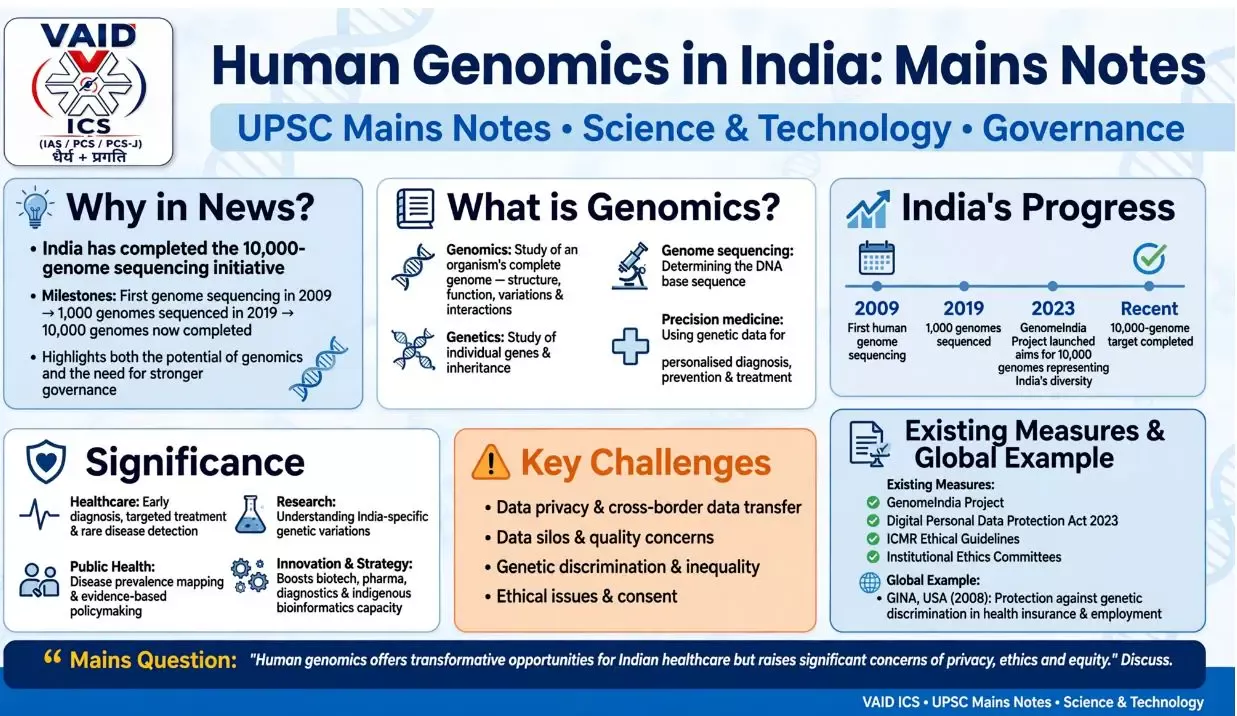
India has completed the 10,000 Genomes sequencing initiative, following earlier milestones of the first genome sequencing in 2009 and 1,000 genomes in 2019. The expansion of genomics can transform healthcare, but concerns remain regarding genomic data protection, cross-border sample transfer, genetic discrimination, data fragmentation and equitable access.
Understanding Human Genomics:
-
Genomics: Study of the complete genetic material of an organism, including its structure, functions, variations and interactions.
-
Genome sequencing: Determining the complete DNA sequence of an individual.
-
Precision medicine: Using an individual’s genetic information to tailor diagnosis, prevention and treatment.
-
Falling sequencing costs are making population-scale genomic programmes increasingly feasible.
What is Genomics?
Genomics is the branch of biology that studies an organism’s entire genome (complete set of DNA), including its structure, function, variations, interactions and evolution.
-
Genetics: Primarily studies individual genes and their inheritance.
-
Genomics: Studies the whole genome and interactions among genes and with the environment.
-
Genome sequencing: Determines the order of DNA bases in an individual’s genome.
-
Precision medicine: Uses genomic information to provide more personalised diagnosis, prevention and treatment.
India’s Genomics Journey:
-
2009: First human genome sequencing in India.
-
2019: Sequencing of 1,000 genomes.
-
2023: Department of Biotechnology launched the GenomeIndia Project to sequence 10,000 whole genomes representing India’s diverse population.
-
Recent milestone: Completion of the 10,000-genome target provides an important reference dataset for Indian populations.
Significance for India:
Healthcare:
-
Enables early identification of genetic diseases.
-
Supports personalised treatment and targeted therapies.
-
Helps identify genetic factors associated with cancer, diabetes and other diseases.
-
Can improve diagnosis of rare diseases.
Public Health:
-
Helps estimate disease and genetic-variant prevalence.
-
Provides baseline data for evidence-based health policies.
-
Aggregated genomic information can support development of affordable diagnostic tests.
Research & Innovation:
-
Strengthens India’s indigenous genomics capabilities.
-
Creates opportunities for biotechnology, pharmaceuticals and diagnostics.
-
Facilitates research on India-specific genetic variations.
Strategic Importance:
-
Reduces dependence on foreign genomic databases.
-
Builds domestic expertise in sequencing, bioinformatics and genomic medicine.
-
Can contribute to India’s emerging biotechnology and health-tech ecosystem.
Major Challenges:
Genomic Data Protection:
-
Genetic information is highly sensitive and potentially permanent.
-
Misuse or unauthorised access may affect individuals and their families.
Cross-Border Transfer of Samples:
-
Indian biological samples may be sent abroad for sequencing or research.
-
The article highlights concerns over limited oversight and regulation despite domestic expertise.
Fragmentation of Data:
-
Genetic-testing data are distributed across laboratories and institutions.
-
Lack of standardised aggregation reduces their usefulness for public-health planning and research.
Genetic Discrimination:
-
Genetic information could potentially influence insurance, employment or healthcare access.
-
Since genetic characteristics can be shared within families and populations, discrimination may extend beyond individuals.
Equity and Representation:
-
India’s population is highly diverse.
-
Under-representation of poorer, rural or minority populations can create biased genomic datasets.
-
Unequal access to genomic testing could widen existing healthcare inequalities.
Ethical Concerns:
-
Informed consent.
-
Privacy and confidentiality.
-
Ownership and control of genomic data.
-
Secondary use of samples and data.
-
Commercialisation of genetic information.
Quality and Validity:
-
Expansion of private genetic-testing services requires standards for accuracy, reliability and clinical validity.
-
Incorrect interpretation of genetic information can lead to inappropriate medical decisions.
Existing Policy and Institutional Framework:
-
GenomeIndia Project: Government-supported initiative to create a comprehensive Indian genomic reference dataset.
-
Digital Personal Data Protection Act, 2023: Provides a broader framework for protection of digital personal data; however, genomic information raises specialised ethical and governance issues requiring additional safeguards.
-
ICMR Ethical Guidelines: Provide ethical guidance for biomedical and health research involving human participants and biological materials.
-
Health Ministry/DBT oversight: Research involving human biological samples is subject to relevant ethical and regulatory requirements.
-
Institutional Ethics Committees: Provide ethical oversight for biomedical research involving human participants.
Global Best Practice:
U.S. Genetic Information Nondiscrimination Act (GINA), 2008:
-
Protects individuals from certain forms of discrimination based on genetic information, particularly in health insurance and employment.
Way Forward:
-
Comprehensive genomic governance: Develop clear rules covering collection, storage, processing, sharing and commercial use of genomic data.
-
Privacy by design: Use anonymisation/pseudonymisation, strong cybersecurity and strict access controls.
-
Responsible cross-border transfer: Strengthen oversight of export of biological samples and genomic datasets.
-
Data interoperability: Develop secure platforms for sharing aggregated, non-identifiable genomic information.
-
Anti-discrimination safeguards: Prevent misuse of genetic information in insurance, employment and healthcare.
-
Inclusive datasets: Ensure representation of India’s diverse geographical, social and genetic populations.
-
Quality regulation: Establish standards and accreditation for genomic testing and interpretation.
-
Informed consent: Ensure individuals understand how their samples and data may be stored, shared and reused.
-
Public–private partnership: Encourage industry participation while maintaining strong public-interest safeguards.
-
Affordable access: Ensure genomics benefits are not restricted to affluent sections and urban centres.
-
Capacity building: Expand indigenous expertise in sequencing, bioinformatics, genetic counselling and genomic medicine.
Ethical Balance:
Innovation ↔ Privacy
Research ↔ Informed Consent
Commercialisation ↔ Public Interest
Personalisation ↔ Non-discrimination
Data Sharing ↔ Data Security
Technological Progress ↔ Equity
Mains Takeaway:
India has the potential to use genomics for precision medicine, disease prevention, rare-disease diagnosis and public-health planning. However, the success of genomic healthcare will depend on creating a governance architecture that combines scientific innovation with privacy, informed consent, data security, equity, quality assurance and protection against discrimination.
Mains Question:
“India’s genomic revolution can transform healthcare, but without adequate governance it may also create new forms of inequality and discrimination.” Discuss the opportunities, challenges and way forward.
भारत में मानव जीनोमिक्स: अवसर, चुनौतियाँ एवं नियामक ढाँचा
चर्चा में क्यों?
भारत ने 10,000 जीनोम अनुक्रमण पहल पूरी कर ली है। इससे पहले भारत ने 2009 में प्रथम मानव जीनोम अनुक्रमण तथा 2019 में 1,000 जीनोम अनुक्रमण की उपलब्धि हासिल की थी। जीनोमिक्स स्वास्थ्य क्षेत्र में व्यापक परिवर्तन ला सकता है, किंतु जीनोमिक डेटा संरक्षण, सीमा-पार नमूना हस्तांतरण, आनुवंशिक भेदभाव, डेटा विखंडन एवं समान स्वास्थ्य पहुँच से संबंधित चुनौतियाँ बनी हुई हैं।
मानव जीनोमिक्स की अवधारणा:
-
जीनोमिक्स: किसी जीव के सम्पूर्ण जीनोम (DNA के संपूर्ण आनुवंशिक पदार्थ) की संरचना, कार्य, विविधताओं, अंतःक्रियाओं एवं विकास का अध्ययन।
-
जीनोम अनुक्रमण: किसी व्यक्ति के जीनोम में DNA क्षारों के क्रम का निर्धारण।
-
प्रिसीजन मेडिसिन: व्यक्ति की आनुवंशिक जानकारी के आधार पर निदान, रोकथाम एवं उपचार को अधिक व्यक्तिगत बनाना।
-
अनुक्रमण की घटती लागत से बड़े पैमाने पर जनसंख्या-आधारित जीनोमिक कार्यक्रमों की संभावनाएँ बढ़ी हैं।
जीनोमिक्स क्या है?
जीनोमिक्स जीव विज्ञान की वह शाखा है, जिसमें किसी जीव के सम्पूर्ण जीनोम तथा उसमें मौजूद जीनों की संरचना, कार्य, विविधता, पारस्परिक अंतःक्रिया एवं विकास का अध्ययन किया जाता है।
-
जेनेटिक्स: मुख्यतः व्यक्तिगत जीन तथा उनके वंशानुक्रम का अध्ययन।
-
जीनोमिक्स: सम्पूर्ण जीनोम तथा जीनों एवं पर्यावरण के बीच अंतःक्रियाओं का अध्ययन।
-
जीनोम अनुक्रमण: DNA के क्षारों के क्रम का निर्धारण।
-
प्रिसीजन मेडिसिन: आनुवंशिक जानकारी के आधार पर अधिक व्यक्तिगत निदान, उपचार एवं रोग-रोकथाम।
भारत में जीनोमिक्स की यात्रा:
-
2009: भारत में प्रथम मानव जीनोम अनुक्रमण।
-
2019: 1,000 जीनोम का अनुक्रमण।
-
2023: जैव प्रौद्योगिकी विभाग द्वारा GenomeIndia Project का शुभारंभ; भारत की विविध आबादी का प्रतिनिधित्व करने वाले 10,000 संपूर्ण जीनोम के अनुक्रमण का लक्ष्य।
-
हालिया उपलब्धि: 10,000 जीनोम लक्ष्य की पूर्णता से भारतीय आबादी के लिए महत्वपूर्ण जीनोमिक संदर्भ डेटाबेस उपलब्ध हुआ है।
भारत के लिए महत्त्व:
स्वास्थ्य सेवा:
-
आनुवंशिक रोगों की शीघ्र पहचान।
-
व्यक्तिगत एवं लक्षित उपचार को बढ़ावा।
-
कैंसर, मधुमेह आदि रोगों से जुड़े आनुवंशिक कारकों की पहचान।
-
दुर्लभ रोगों के निदान में सहायता।
सार्वजनिक स्वास्थ्य:
-
रोगों एवं आनुवंशिक विविधताओं की व्यापकता का अनुमान।
-
साक्ष्य-आधारित स्वास्थ्य नीतियों के निर्माण में सहायता।
-
समेकित जीनोमिक डेटा से कम लागत वाले नैदानिक परीक्षणों के विकास में सहायता।
अनुसंधान एवं नवाचार:
-
भारत की स्वदेशी जीनोमिक क्षमता मजबूत होगी।
-
जैव प्रौद्योगिकी, औषधि एवं निदान क्षेत्रों में नए अवसर।
-
भारतीय आबादी की विशिष्ट आनुवंशिक विविधताओं पर अनुसंधान को बढ़ावा।
रणनीतिक महत्त्व:
-
विदेशी जीनोमिक डेटाबेस पर निर्भरता में कमी।
-
अनुक्रमण, जैव-सूचनाविज्ञान एवं जीनोमिक चिकित्सा में घरेलू विशेषज्ञता।
-
भारत के बायोटेक एवं हेल्थ-टेक पारिस्थितिकी तंत्र को बढ़ावा।
प्रमुख चुनौतियाँ:
जीनोमिक डेटा संरक्षण:
-
आनुवंशिक जानकारी अत्यंत संवेदनशील एवं दीर्घकालिक प्रभाव वाली होती है।
-
अनधिकृत पहुँच या दुरुपयोग से व्यक्ति तथा उसके परिवार प्रभावित हो सकते हैं।
सीमा-पार नमूना हस्तांतरण:
-
भारतीय जैविक नमूनों को अनुक्रमण अथवा अनुसंधान हेतु विदेश भेजा जा सकता है।
-
घरेलू क्षमता उपलब्ध होने के बावजूद ऐसे नमूनों के नियमन एवं निगरानी को मजबूत करने की आवश्यकता है।
डेटा का विखंडन:
-
विभिन्न प्रयोगशालाओं एवं संस्थानों में जीनोमिक डेटा अलग-अलग रूप में उपलब्ध है।
-
मानकीकृत समेकन के अभाव में सार्वजनिक स्वास्थ्य नीति एवं अनुसंधान में इसका पूर्ण उपयोग नहीं हो पाता।
आनुवंशिक भेदभाव:
-
आनुवंशिक जानकारी का उपयोग बीमा, रोजगार या स्वास्थ्य सेवाओं तक पहुँच को प्रभावित करने के लिए किया जा सकता है।
-
समान आनुवंशिक विशेषताएँ परिवारों एवं समुदायों में भी पाई जा सकती हैं, जिससे भेदभाव का दायरा बढ़ सकता है।
समानता एवं प्रतिनिधित्व:
-
भारत की अत्यधिक विविध आबादी के कारण सभी समूहों का पर्याप्त प्रतिनिधित्व आवश्यक है।
-
कमजोर, ग्रामीण एवं कम प्रतिनिधित्व वाले समूहों की उपेक्षा से पक्षपाती जीनोमिक डेटाबेस बन सकते हैं।
-
महंगी जीनोमिक सेवाएँ स्वास्थ्य संबंधी असमानताओं को बढ़ा सकती हैं।
नैतिक चुनौतियाँ:
-
सूचित सहमति एवं गोपनीयता।
-
आनुवंशिक डेटा का स्वामित्व एवं नियंत्रण।
-
नमूनों एवं डेटा का द्वितीयक उपयोग।
-
आनुवंशिक जानकारी का व्यावसायीकरण।
-
परिवार एवं समुदाय पर संभावित प्रभाव।
गुणवत्ता एवं वैधता:
-
निजी आनुवंशिक परीक्षणों के लिए सटीकता, विश्वसनीयता एवं नैदानिक वैधता के मानक आवश्यक हैं।
-
गलत आनुवंशिक व्याख्या से अनुचित चिकित्सकीय निर्णय हो सकते हैं।
मौजूदा नीतिगत एवं संस्थागत ढाँचा:
-
GenomeIndia Project: भारतीय आबादी के लिए व्यापक जीनोमिक संदर्भ डेटाबेस विकसित करने की पहल।
-
Digital Personal Data Protection Act, 2023: डिजिटल व्यक्तिगत डेटा की सुरक्षा हेतु व्यापक कानूनी ढाँचा।
-
ICMR Ethical Guidelines: मानव प्रतिभागियों एवं जैविक नमूनों से संबंधित जैव-चिकित्सीय अनुसंधान के लिए नैतिक दिशा-निर्देश।
-
जैव प्रौद्योगिकी विभाग एवं स्वास्थ्य मंत्रालय: मानव जैविक नमूनों से संबंधित अनुसंधान एवं नियामक प्रक्रियाओं में भूमिका।
-
Institutional Ethics Committees: मानव प्रतिभागियों से जुड़े अनुसंधान की नैतिक निगरानी।
वैश्विक उदाहरण:
Genetic Information Nondiscrimination Act (GINA), USA, 2008:
-
आनुवंशिक जानकारी के आधार पर कुछ प्रकार के स्वास्थ्य बीमा एवं रोजगार संबंधी भेदभाव से सुरक्षा प्रदान करता है।
आगे की राह:
-
व्यापक जीनोमिक शासन: डेटा के संग्रह, भंडारण, प्रसंस्करण, साझाकरण एवं व्यावसायिक उपयोग के लिए स्पष्ट नियम।
-
गोपनीयता संरक्षण: अनामीकरण, छद्म-अनामकरण, साइबर सुरक्षा एवं नियंत्रित पहुँच।
-
सीमा-पार हस्तांतरण का नियमन: जैविक नमूनों एवं जीनोमिक डेटा के विदेश हस्तांतरण की प्रभावी निगरानी।
-
डेटा एकीकरण: गैर-पहचान योग्य एवं समेकित डेटा के सुरक्षित उपयोग हेतु मानकीकृत प्लेटफॉर्म।
-
भेदभाव-रोधी सुरक्षा: बीमा, रोजगार एवं स्वास्थ्य सेवाओं में आनुवंशिक जानकारी के दुरुपयोग की रोकथाम।
-
समावेशी डेटाबेस: भारत की सामाजिक, भौगोलिक एवं आनुवंशिक विविधता का पर्याप्त प्रतिनिधित्व।
-
गुणवत्ता नियंत्रण: जीनोमिक परीक्षण एवं उसकी व्याख्या के लिए मानकीकरण एवं प्रत्यायन।
-
सूचित सहमति: नमूनों एवं डेटा के संभावित उपयोग के बारे में व्यक्ति को स्पष्ट जानकारी।
-
सार्वजनिक–निजी भागीदारी: नवाचार को बढ़ावा देते हुए सार्वजनिक हित एवं नियामक सुरक्षा सुनिश्चित करना।
-
सस्ती पहुँच: जीनोमिक स्वास्थ्य सेवाओं को केवल समृद्ध एवं शहरी आबादी तक सीमित न रखना।
-
क्षमता निर्माण: अनुक्रमण, जैव-सूचनाविज्ञान, आनुवंशिक परामर्श एवं जीनोमिक चिकित्सा में मानव संसाधन विकसित करना।
नैतिक संतुलन:
नवाचार ↔ गोपनीयता
अनुसंधान ↔ सूचित सहमति
व्यावसायीकरण ↔ सार्वजनिक हित
व्यक्तिगत उपचार ↔ भेदभाव-निषेध
डेटा साझाकरण ↔ डेटा सुरक्षा
तकनीकी प्रगति ↔ समानता
मुख्य परीक्षा निष्कर्ष:
जीनोमिक्स भारत में प्रिसीजन मेडिसिन, रोग-रोकथाम, दुर्लभ रोगों के निदान एवं सार्वजनिक स्वास्थ्य नीति में महत्वपूर्ण परिवर्तन ला सकता है। इसके लिए ऐसी शासन व्यवस्था आवश्यक है जो वैज्ञानिक नवाचार के साथ गोपनीयता, सूचित सहमति, डेटा सुरक्षा, समानता, गुणवत्ता एवं भेदभाव-निषेध सुनिश्चित करे।
मुख्य परीक्षा प्रश्न:
“भारत में जीनोमिक क्रांति स्वास्थ्य क्षेत्र में परिवर्तनकारी क्षमता रखती है, किंतु पर्याप्त नियमन के अभाव में यह नई असमानताओं एवं भेदभाव को भी जन्म दे सकती है।” अवसरों, चुनौतियों एवं आगे की राह की चर्चा कीजिए।

May 19, 2026
October 17, 2025
October 16, 2025
October 6, 2025

