September 30, 2026
Status of Policing in India Report (SPIR) 2026,
Source: Status of Policing in India Report (SPIR) 2026 | Lokniti-CSDS & Common Cause
Why in News?
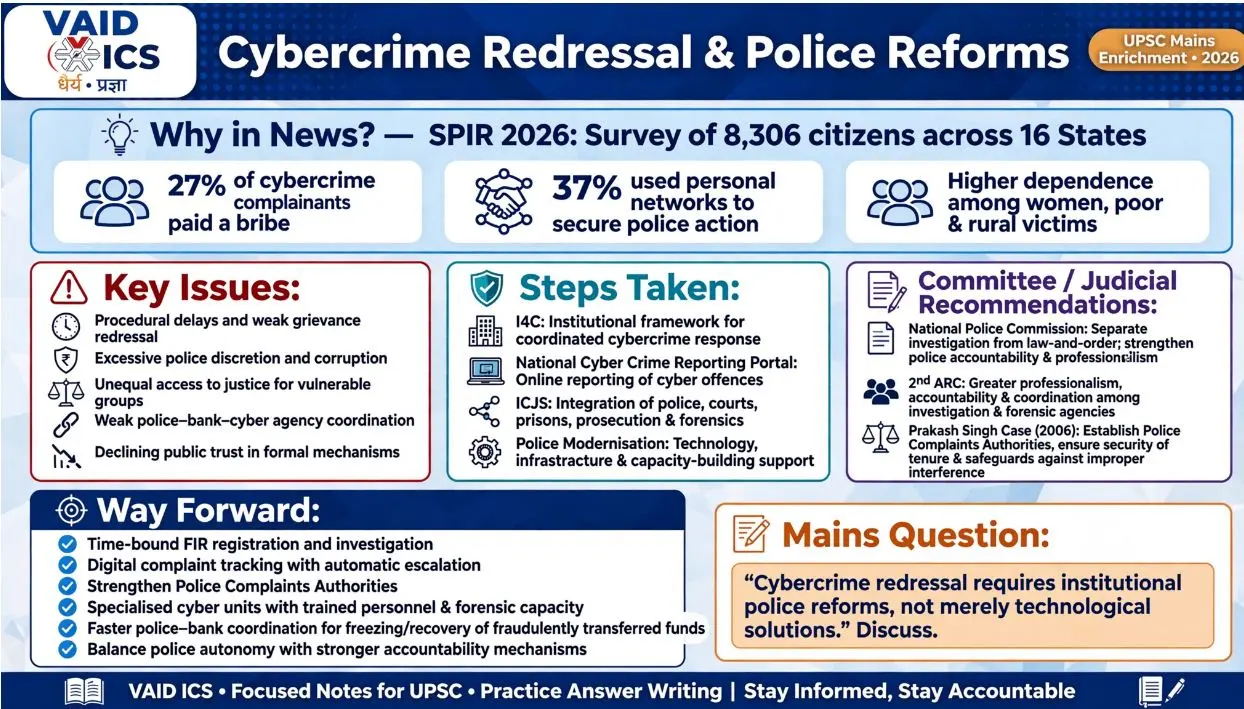
The Status of Policing in India Report (SPIR) 2026, based on a survey of 8,306 citizens across 16 States, examines the role of bribery and personal influence in obtaining police action in cybercrime cases.
Key Findings:
-
49% of cybercrime victims complained to the police.
-
9% approached the police initially but did not pursue the case.
-
39% did not complain at all.
Bribery as an Informal Channel:
-
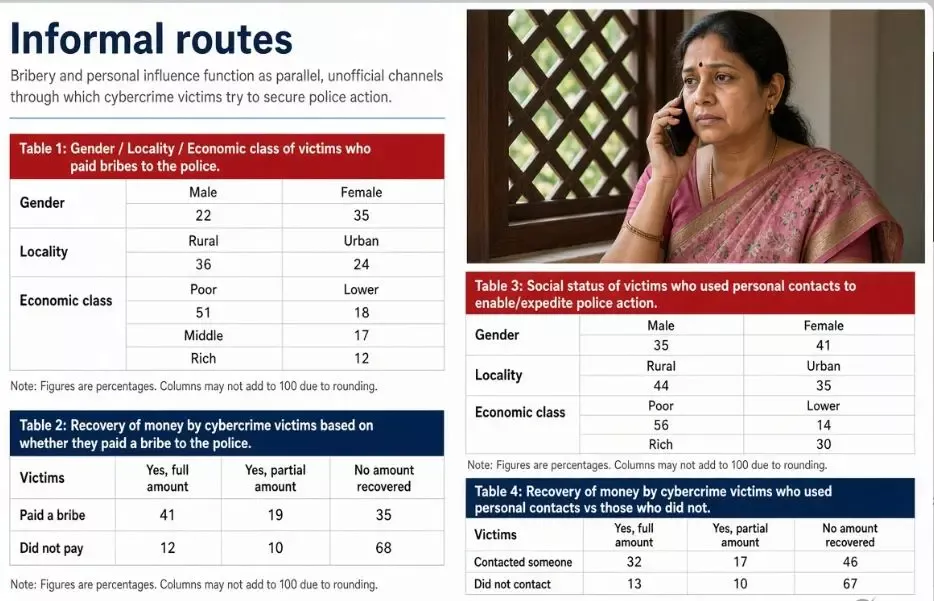
27% of victims who complained said they had to make a payment to get their case handled.
-
Women: 35% vs Men: 22%.
-
Rural victims: 36% vs Urban: 24%.
-
Poor victims: 51% vs Affluent: 12%.
-
41% of victims who paid a bribe recovered the full amount lost, compared with 12% among those who did not.
Personal Networks as an Informal Channel:
-
37% contacted someone in their personal network, such as senior police/government officials or local politicians, to press for police action.
-
Women: 41% vs Men: 35%.
-
Rural: 44% vs Urban: 35%.
-
Poor: 55% vs Rich: 30%.
-
32% of victims using personal networks recovered the full amount, compared with 13% among those who did not.
Key Concern:
-
Cybercrime victims increasingly appear to rely on informal mechanisms when formal police procedures do not provide timely redressal.
-
Women, poor and rural victims reported greater dependence on both bribery and personal connections.
-
This raises concerns regarding equal access to justice, police accountability and institutional trust.
Governance Implications:
-
Ensure mandatory and timely registration of cybercrime complaints.
-
Strengthen police–bank coordination for freezing and recovering fraudulent funds.
-
Establish time-bound investigation and grievance redressal mechanisms.
-
Provide transparent online complaint tracking systems.
-
Strengthen internal mechanisms against corruption and arbitrary discretion.
-
Improve cybercrime response capacity, particularly in rural and vulnerable communities.
Mains Perspective:
The findings highlight that effective cybercrime governance requires not only technological capacity but also accessible, transparent and accountable police institutions. Dependence on bribery or personal influence can undermine procedural equality, rule of law and public confidence in the criminal justice system.
भारत में साइबर अपराध निवारण एवं पुलिस प्रतिक्रिया:
स्रोत: स्टेटस ऑफ पुलिसिंग इन इंडिया रिपोर्ट (SPIR) 2026 | लोकनीति-CSDS एवं कॉमन कॉज़
चर्चा में क्यों?
स्टेटस ऑफ पुलिसिंग इन इंडिया रिपोर्ट (SPIR) 2026 में 16 राज्यों के 8,306 नागरिकों के सर्वेक्षण के आधार पर साइबर अपराध पीड़ितों को पुलिस से शिकायत के निवारण में होने वाली कठिनाइयों तथा रिश्वत एवं व्यक्तिगत प्रभाव के उपयोग का अध्ययन किया गया है।
प्रमुख निष्कर्ष:
-
49% साइबर अपराध पीड़ितों ने पुलिस में शिकायत दर्ज कराई।
-
9% ने प्रारंभ में पुलिस से संपर्क किया, लेकिन बाद में मामले को आगे नहीं बढ़ाया।
-
39% पीड़ितों ने पुलिस में शिकायत ही नहीं की।
अनौपचारिक माध्यम के रूप में रिश्वत:
-
पुलिस में शिकायत करने वाले पीड़ितों में 27% ने बताया कि मामले को आगे बढ़ाने के लिए उन्हें किसी समय पुलिस को भुगतान करना पड़ा।
-
महिलाएँ: 35% | पुरुष: 22%
-
ग्रामीण पीड़ित: 36% | शहरी पीड़ित: 24%
-
गरीब आर्थिक वर्ग: 51% | समृद्ध आर्थिक वर्ग: 12%
-
रिश्वत देने वाले 41% पीड़ितों को खोई हुई राशि पूरी तरह वापस मिली, जबकि रिश्वत न देने वालों में यह अनुपात केवल 12% था।
व्यक्तिगत संपर्क एवं प्रभाव का उपयोग:
-
37% पीड़ितों ने पुलिस पर कार्रवाई के लिए दबाव बनाने हेतु अपने व्यक्तिगत संपर्कों का सहारा लिया, जिनमें वरिष्ठ पुलिस/सरकारी अधिकारी तथा स्थानीय राजनेता शामिल थे।
-
महिलाएँ: 41% | पुरुष: 35%
-
ग्रामीण: 44% | शहरी: 35%
-
गरीब: 55% | अमीर: 30%
-
व्यक्तिगत संपर्कों का उपयोग करने वाले 32% पीड़ितों को पूरी राशि वापस मिली, जबकि ऐसे संपर्कों का उपयोग न करने वालों में यह अनुपात 13% था।
प्रमुख चिंता:
-
साइबर अपराध के मामलों में प्रभावी एवं समयबद्ध पुलिस कार्रवाई के लिए पीड़ितों द्वारा अनौपचारिक माध्यमों पर निर्भरता दिखाई देती है।
-
महिलाएँ, गरीब एवं ग्रामीण क्षेत्र के पीड़ित रिश्वत तथा व्यक्तिगत संपर्कों पर अपेक्षाकृत अधिक निर्भर पाए गए।
-
यह स्थिति समान न्याय तक पहुँच, पुलिस जवाबदेही, विधि के शासन तथा संस्थागत विश्वास से संबंधित गंभीर प्रश्न उठाती है।
सुधारात्मक उपाय:
-
साइबर अपराध की शिकायतों का अनिवार्य एवं समयबद्ध पंजीकरण सुनिश्चित किया जाए।
-
धोखाधड़ी की राशि को तत्काल रोकने एवं वापस प्राप्त करने हेतु पुलिस–बैंक समन्वय को मजबूत किया जाए।
-
समयबद्ध जाँच एवं शिकायत निवारण तंत्र विकसित किया जाए।
-
शिकायतों की स्थिति जानने के लिए पारदर्शी ऑनलाइन ट्रैकिंग प्रणाली को प्रभावी बनाया जाए।
-
पुलिस तंत्र में भ्रष्टाचार एवं मनमाने विवेकाधिकार को नियंत्रित करने हेतु जवाबदेही तंत्र मजबूत किया जाए।
-
ग्रामीण एवं कमजोर वर्गों के लिए साइबर अपराध जागरूकता और सहायता तंत्र का विस्तार किया जाए।
मुख्य परीक्षा परिप्रेक्ष्य:
साइबर अपराध से निपटने के लिए केवल तकनीकी क्षमता पर्याप्त नहीं है, बल्कि सुलभ, पारदर्शी, उत्तरदायी एवं समयबद्ध पुलिस व्यवस्था भी आवश्यक है। यदि पीड़ितों को न्याय एवं धन की वापसी के लिए रिश्वत या व्यक्तिगत प्रभाव पर निर्भर रहना पड़े, तो इससे कानून के समक्ष समानता, विधि का शासन तथा पुलिस एवं न्याय व्यवस्था में जनविश्वास प्रभावित हो सकता है।
प्रारंभिक परीक्षा हेतु तथ्य:
-
रिपोर्ट: स्टेटस ऑफ पुलिसिंग इन इंडिया रिपोर्ट 2026
-
संस्थाएँ: लोकनीति-CSDS एवं कॉमन कॉज़
-
सर्वेक्षण: 8,306 नागरिक
-
क्षेत्र: 16 राज्य
-
मुख्य विषय: पुलिस व्यवस्था में नागरिकों का अनुभव एवं न्याय तक पहुँच

May 19, 2026
October 17, 2025
October 16, 2025
October 6, 2025

