September 24, 2026
What is Super El Niño?सुपर अल नीनो क्या है?
Why in News?
According to a report by the Climate Impact Lab, India could witness an estimated 15,800 additional heat-related deaths (±1,600) between September 2026 and February 2027, compared with average conditions during the corresponding period of 1996–2025.
Key Findings:
-
India: Estimated 15,800 additional heat-related deaths during September 2026–February 2027.
-
Global: Around 451,000 additional heat-related deaths projected during the first six months of the El Niño event.
-
About 239,000 deaths are projected globally during September 2026–February 2027.
-
Regional projections include:
-
Indonesia: 19,300
-
Philippines, Vietnam, Thailand & Cambodia: 19,400
-
Brazil: 13,300
-
Sahel region: 66,800
-
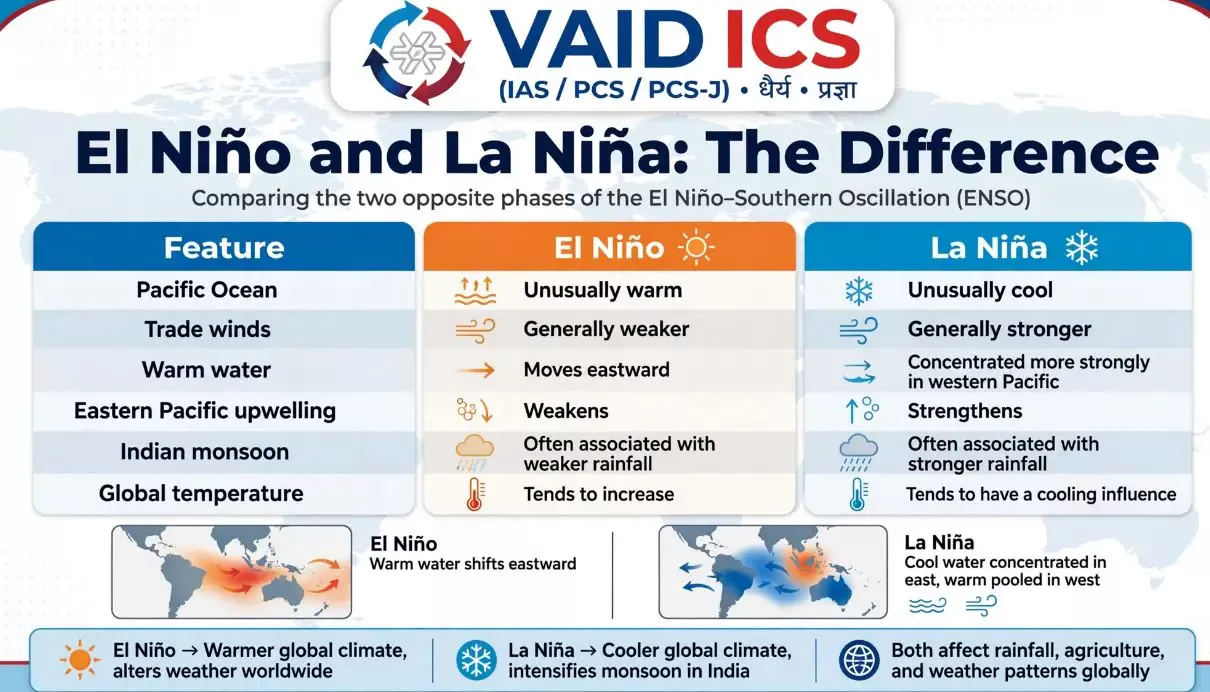
What is Super El Niño?
-
El Niño is a periodic climate phenomenon in which sea-surface temperatures in the central and eastern tropical Pacific Ocean become unusually warm.
-
It alters atmospheric circulation, leading to changes in rainfall and temperature patterns across different parts of the world.
-
Super El Niño is an informal term used for exceptionally strong El Niño conditions.
-
Eastern equatorial Pacific sea-surface temperatures were reported to be more than 3°C above normal.
-
Forecasts indicated a greater than 90% probability of a very strong El Niño during the Northern Hemisphere autumn and winter.
Impact on India:
-
Southwest Monsoon: Entering its withdrawal phase after a season of deficient rainfall.
-
Rainfall deficit: Around 15% below normal nationally up to 22 September 2026.
-
Larger rainfall shortfalls were reported in parts of southern and eastern India.
-
Electricity demand: Hotter-than-usual conditions are increasing cooling and electricity demand.
-
Nearly 40% of India’s coal-fired power plants reportedly had critically low fuel stocks amid increased power demand.
Global Impacts:
El Niño can contribute to:
-
Heatwaves and excess mortality
-
Droughts
-
Agricultural losses
-
Wildfire-favourable conditions
-
Water stress
-
Changes in regional rainfall patterns
For example, Indonesia has experienced conditions conducive to wildfires, while parts of Central America have faced drought-related agricultural impacts.
Climate Change Link:
The report describes the event as a “postcard from our future”, suggesting that the extreme temperatures associated with the event provide an indication of climatic conditions that could become more common with future climate change.
Methodology & Limitation:
The Climate Impact Lab:
-
Applies previously estimated temperature–mortality relationships across 24,378 regions.
-
Combines these relationships with seasonal temperature forecasts.
-
Accounts for local climate, vulnerability and adaptive capacity.
-
However, the report does not disclose the specific numerical coefficients linking a particular temperature increase to a particular number of deaths.
El Niño:
What is El Niño?
-
El Niño is a periodic climate phenomenon involving unusual warming of sea-surface temperatures in the central and eastern tropical Pacific Ocean.
-
It is the warm phase of the El Niño–Southern Oscillation (ENSO).
How does it occur?
-
Normally, trade winds blow from east to west, pushing warm water towards Indonesia and Australia.
-
During El Niño, these trade winds weaken.
-
Warm water shifts eastward towards the central/eastern Pacific.
-
Cold-water upwelling near the South American coast weakens.
-
This alters the Walker circulation, changing global rainfall and temperature patterns.
Major Effects:
-
Higher global temperatures and increased heatwaves.
-
Drought in some regions and heavy rainfall/flooding in others.
-
Increased risk of wildfires and agricultural losses.
-
Reduced nutrient-rich upwelling can affect Pacific fisheries.
Impact on India:
-
El Niño is generally associated with weaker southwest monsoon rainfall.
-
However, it does not necessarily cause drought, as the Indian monsoon is also influenced by the Indian Ocean Dipole, MJO and other climatic factors.
-
It can contribute to higher temperatures, water stress and agricultural risks.
El Niño & Climate Change:
-
El Niño is a natural climate variability phenomenon, whereas global warming is a long-term warming trend largely driven by greenhouse gases.
-
A strong El Niño can temporarily amplify global temperatures on top of the long-term warming trend.
La Niña:
What is La Niña?
-
La Niña is a periodic climate phenomenon marked by unusually cool sea-surface temperatures in the central and eastern tropical Pacific Ocean.
-
It is the cool phase of the El Niño–Southern Oscillation (ENSO).
How does it occur?
-
Trade winds strengthen, pushing warm surface water towards the western Pacific.
-
This causes stronger upwelling of cold, nutrient-rich water in the eastern Pacific.
-
The strengthened temperature gradient reinforces the Walker circulation.
Major Effects:
-
Tends to produce cooler global temperatures compared with El Niño conditions.
-
Can cause heavy rainfall and flooding in some regions.
-
Can contribute to drought in other regions.
-
Strengthened upwelling can increase marine productivity and fisheries in parts of the eastern Pacific.
Impact on India:
-
La Niña is generally associated with stronger southwest monsoon rainfall over India.
-
It can increase the likelihood of above-normal rainfall, but it does not guarantee a good monsoon.
-
Excess rainfall can also increase risks of floods, landslides and crop damage.
सुपर अल नीनो 2026–27: ऊष्मा-जनित मृत्यु एवं जलवायु जोखिम
समाचार में क्यों?
Climate Impact Lab की एक रिपोर्ट के अनुसार, भारत में सितंबर 2026 से फरवरी 2027 के बीच ऊष्मा-जनित मृत्यु के लगभग 15,800 अतिरिक्त मामले (±1,600) हो सकते हैं। यह अनुमान 1996–2025 की इसी अवधि की औसत परिस्थितियों की तुलना में है।
प्रमुख निष्कर्ष:
-
भारत: सितंबर 2026–फरवरी 2027 के दौरान लगभग 15,800 अतिरिक्त ऊष्मा-जनित मृत्यु का अनुमान।
-
विश्व: अल नीनो की प्रारंभिक छह माह की अवधि में लगभग 4,51,000 अतिरिक्त ऊष्मा-जनित मृत्यु का अनुमान।
-
सितंबर 2026–फरवरी 2027 के दौरान विश्व स्तर पर लगभग 2,39,000 अतिरिक्त मृत्यु का अनुमान।
-
क्षेत्रीय अनुमान:
- इंडोनेशिया: 19,300
- फिलीपींस, वियतनाम, थाईलैंड एवं कंबोडिया: 19,400
- ब्राजील: 13,300
- साहेल क्षेत्र: 66,800
सुपर अल नीनो क्या है?
-
अल नीनो एक आवधिक जलवायवीय घटना है, जिसमें उष्णकटिबंधीय प्रशांत महासागर के मध्य एवं पूर्वी भाग के समुद्री सतह के तापमान में असामान्य वृद्धि होती है।
-
यह वायुमंडलीय परिसंचरण को प्रभावित करता है, जिससे विश्व के विभिन्न क्षेत्रों में वर्षा एवं तापमान के प्रतिरूप बदल जाते हैं।
-
सुपर अल नीनो कोई औपचारिक वैज्ञानिक श्रेणी नहीं, बल्कि अत्यंत प्रबल अल नीनो परिस्थितियों के लिए प्रयुक्त अनौपचारिक शब्द है।
-
पूर्वी भूमध्यरेखीय प्रशांत क्षेत्र का समुद्री सतह तापमान सामान्य से 3°C से अधिक बताया गया।
-
पूर्वानुमानों में उत्तरी गोलार्द्ध की शरद एवं शीत ऋतु के दौरान अत्यंत प्रबल अल नीनो की 90% से अधिक संभावना व्यक्त की गई।
भारत पर प्रभाव:
-
दक्षिण-पश्चिम मानसून: कम वर्षा वाले मौसम के बाद वापसी के चरण में।
-
वर्षा की कमी: 22 सितंबर 2026 तक देश में वर्षा सामान्य से लगभग 15% कम।
-
दक्षिणी एवं पूर्वी भारत के कुछ हिस्सों में अपेक्षाकृत अधिक वर्षा-कमी।
-
विद्युत मांग: सामान्य से अधिक तापमान के कारण शीतलन एवं बिजली की मांग में वृद्धि।
-
लगभग 40% कोयला-आधारित विद्युत संयंत्रों में अत्यंत निम्न ईंधन भंडार की सूचना।
वैश्विक प्रभाव:
अल नीनो के कारण निम्नलिखित प्रभाव उत्पन्न हो सकते हैं:
-
लू एवं ऊष्मा-जनित मृत्यु
-
सूखा
-
कृषि क्षति
-
वनाग्नि का बढ़ा जोखिम
-
जल संकट
-
क्षेत्रीय वर्षा प्रतिरूप में परिवर्तन
उदाहरण के लिए, इंडोनेशिया में वनाग्नि के अनुकूल परिस्थितियाँ तथा मध्य अमेरिका के कुछ हिस्सों में सूखे से संबंधित कृषि प्रभाव देखे गए हैं।
जलवायु परिवर्तन से संबंध:
-
रिपोर्ट ने वर्तमान घटना को “भविष्य की एक झलक” के रूप में वर्णित किया है।
-
इसका आशय यह है कि वर्तमान में देखी जा रही अत्यधिक गर्म परिस्थितियाँ भविष्य में जलवायु परिवर्तन के कारण अधिक सामान्य हो सकती हैं।
-
अल नीनो एक प्राकृतिक जलवायु परिवर्तनशीलता है, जबकि वैश्विक तापन दीर्घकालिक तापमान वृद्धि की प्रक्रिया है।
-
दोनों की परस्पर क्रिया से चरम तापमान एवं अन्य जलवायवीय जोखिम प्रभावित हो सकते हैं।
अध्ययन की पद्धति एवं सीमा:
-
Climate Impact Lab ने 24,378 क्षेत्रों में पूर्व में निर्धारित तापमान–मृत्यु संबंधों का उपयोग किया।
-
इन्हें मौसमी तापमान पूर्वानुमानों के साथ जोड़ा गया।
-
स्थानीय जलवायु, संवेदनशीलता एवं अनुकूलन क्षमता को ध्यान में रखा गया।
-
रिपोर्ट में किसी विशेष तापमान वृद्धि और मृत्यु के बीच संबंध स्थापित करने वाले विशिष्ट संख्यात्मक गुणांकों का खुलासा नहीं किया गया है।
अल नीनो:
क्या है?
-
उष्णकटिबंधीय प्रशांत महासागर के मध्य एवं पूर्वी भाग के समुद्री सतह तापमान का असामान्य रूप से बढ़ना।
-
यह ENSO (El Niño–Southern Oscillation) का उष्ण चरण है।
निर्माण की प्रक्रिया:
-
सामान्य परिस्थितियों में व्यापारिक पवनें (Trade Winds) पूर्व से पश्चिम की ओर चलती हैं और गर्म जल को इंडोनेशिया एवं ऑस्ट्रेलिया की ओर ले जाती हैं।
-
अल नीनो के दौरान व्यापारिक पवनें कमजोर हो जाती हैं।
-
गर्म जल पूर्व की ओर खिसकता है।
-
दक्षिण अमेरिका के तट के समीप ठंडे, पोषक-तत्वयुक्त जल का ऊर्ध्वप्रवाह (Upwelling) कमजोर हो जाता है।
-
इससे वॉकर परिसंचरण प्रभावित होता है तथा वैश्विक तापमान एवं वर्षा प्रतिरूप बदलते हैं।
प्रमुख प्रभाव:
-
वैश्विक तापमान में वृद्धि एवं लू की घटनाएँ।
-
कुछ क्षेत्रों में सूखा, जबकि अन्य क्षेत्रों में अधिक वर्षा एवं बाढ़।
-
वनाग्नि एवं कृषि क्षति का बढ़ा जोखिम।
-
समुद्री ऊर्ध्वप्रवाह में कमी से प्रशांत क्षेत्र की मत्स्य संपदा प्रभावित हो सकती है।
भारत पर प्रभाव:
-
अल नीनो सामान्यतः दक्षिण-पश्चिम मानसून की कमजोर वर्षा से संबद्ध होता है।
-
हालांकि, अल नीनो अकेले सूखे का निर्धारक नहीं है।
-
हिंद महासागर द्विध्रुव (IOD), मैडेन–जूलियन दोलन (MJO) तथा अन्य वायुमंडलीय एवं महासागरीय कारक भी भारतीय मानसून को प्रभावित करते हैं।
ला नीना:
क्या है?
-
उष्णकटिबंधीय प्रशांत महासागर के मध्य एवं पूर्वी भाग में समुद्री सतह तापमान का असामान्य रूप से ठंडा होना।
-
यह ENSO का शीत चरण है।
निर्माण की प्रक्रिया:
-
व्यापारिक पवनें मजबूत हो जाती हैं।
-
गर्म सतही जल पश्चिमी प्रशांत की ओर अधिक मात्रा में स्थानांतरित होता है।
-
पूर्वी प्रशांत में ठंडे, पोषक-तत्वयुक्त जल का ऊर्ध्वप्रवाह मजबूत होता है।
-
इससे वॉकर परिसंचरण अधिक सुदृढ़ होता है।
प्रमुख प्रभाव:
-
अल नीनो की तुलना में वैश्विक तापमान पर सामान्यतः शीतलनकारी प्रभाव।
-
कुछ क्षेत्रों में अधिक वर्षा एवं बाढ़।
-
अन्य क्षेत्रों में सूखे की स्थिति।
-
मजबूत ऊर्ध्वप्रवाह से पूर्वी प्रशांत में समुद्री उत्पादकता एवं मत्स्य संसाधन बढ़ सकते हैं।
भारत पर प्रभाव:
-
ला नीना सामान्यतः दक्षिण-पश्चिम मानसून में अधिक वर्षा से संबद्ध है।
-
इससे सामान्य से अधिक वर्षा की संभावना बढ़ सकती है, लेकिन यह अच्छे मानसून की गारंटी नहीं है।
-
अत्यधिक वर्षा से बाढ़, भूस्खलन एवं फसल क्षति का जोखिम बढ़ सकता है।

May 19, 2026
October 17, 2025
October 16, 2025
October 6, 2025

