September 24, 2026
Election Commission of India/भारत निर्वाचन आयोग: आंतरिक मतभेद एवं निर्वाचक नामावली प्रबंधन
Why in News?
An Indian Express investigation reported that Election Commissioners Sukhbir Singh Sandhu and Vivek Joshi had recorded at least 14 formal objections over 10 months regarding certain decisions and procedures of the Election Commission of India (ECI). The issue has raised questions about collective decision-making, electoral-roll management and centralisation of election technology.
Constitutional Framework:
-
The Election Commission of India (ECI) is a constitutional body established under Article 324.
-
It is responsible for the superintendence, direction and control of elections to Parliament, State Legislatures, and the offices of President and Vice-President.
-
The Commission functions as a multi-member body, comprising the CEC and other Election Commissioners.
Legal Framework: 2023 Act
Under the Chief Election Commissioner and Other Election Commissioners Act, 2023:
-
ECI decisions should, as far as possible, be taken unanimously.
-
In case of disagreement, the majority view prevails.
-
The framework therefore recognises both collective decision-making and recorded differences within the Commission.
Major Issues Reported:
Centralisation of Electoral-Roll Database:
-
Concerns were reportedly raised over increasing centralisation of electoral-roll data and digital systems.
-
Questions were raised regarding whether statutory election officials had complete access and authority over electoral-roll databases.
-
The issue highlights the importance of maintaining a balance between centralised technology and decentralised statutory responsibility.
ERONet Access:
-
Concerns were reportedly raised regarding Electoral Registration Officers (EROs) not having proper and complete access to the ERONet portal, used for maintaining electoral rolls.
-
Questions were also raised about the authority to restrict access of statutory election officials.
Changes in Form 6:
-
Form 6 is used by eligible individuals for inclusion of their names in electoral rolls.
-
Reportedly, changes were made to seek information regarding whether the applicant or their parents/grandparents existed in electoral rolls during an earlier Special Intensive Revision (SIR).
-
The reported objections questioned whether such changes could be made without following the procedure prescribed under the Registration of Electors Rules, 1960.
Goa Electoral-Roll Issue:
-
A reported software limitation allegedly prevented the system from recording decisions of local Electoral Registration Officers.
-
This reportedly resulted in 97 eligible voters being left out of the final roll.
-
The episode highlights the need to ensure that technology does not override legally empowered administrative decisions.
West Bengal Appeals:
-
Questions were reportedly raised regarding the authority for filing appeals against voters whose inclusion had already been upheld through judicially supervised proceedings.
-
The issue also highlighted the importance of coordination between electoral authorities and judicial mechanisms.
ECI’s Response:
-
The ECI stated that its actions were undertaken in accordance with the applicable law.
-
It argued that focusing on selected internal notes over a 10-month period provides only part of the overall institutional decision-making process.
-
The controversy therefore involves competing claims regarding the interpretation and implementation of electoral procedures.
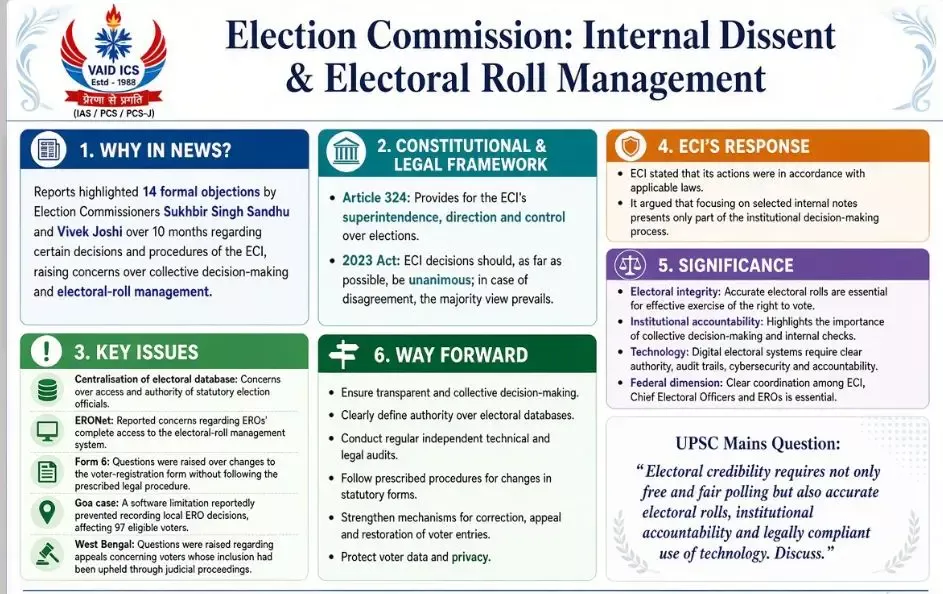
Significance:
Electoral Integrity:
Accurate and transparent electoral rolls are fundamental to ensuring the effective exercise of the right to vote.
Institutional Accountability:
Recorded differences among constitutional authorities highlight the importance of internal checks, transparency and collective decision-making.
Technology in Elections:
Increasing digitisation of electoral rolls requires:
-
Strong audit trails
-
Clear statutory authority
-
Role-based access
-
Data security
-
Mechanisms for correction and review
Federal Dimension:
Electoral-roll preparation involves officials at local, state and national levels. Clear allocation of responsibilities is therefore essential to maintain accountability and administrative efficiency.
Way Forward:
-
Ensure collective and transparent decision-making within the ECI.
-
Clearly define the authority of EROs, Chief Electoral Officers and the ECI over digital electoral databases.
-
Conduct periodic independent technical and legal audits of electoral software.
-
Ensure statutory forms are modified only through the prescribed legal procedure.
-
Provide effective mechanisms for correction, appeal and restoration of voter entries.
-
Strengthen transparency while protecting electoral data and voter privacy.
UPSC Mains Qn:
The credibility of an electoral system depends not only on free and fair polling but also on the accuracy of electoral rolls, institutional accountability and legally compliant use of technology.
भारत निर्वाचन आयोग: आंतरिक मतभेद एवं निर्वाचक नामावली प्रबंधन
चर्चा में क्यों?
एक रिपोर्ट के अनुसार, निर्वाचन आयुक्त सुखबीर सिंह संधू और विवेक जोशी ने पिछले 10 महीनों में निर्वाचन आयोग के कुछ निर्णयों एवं प्रक्रियाओं पर कम-से-कम 14 बार औपचारिक आपत्तियाँ दर्ज कीं। इससे सामूहिक निर्णय-निर्माण, निर्वाचक नामावली के प्रबंधन तथा निर्वाचन प्रौद्योगिकी के केंद्रीकरण से जुड़े प्रश्न उठे हैं।
संवैधानिक ढाँचा:
-
भारत निर्वाचन आयोग (ECI) एक संवैधानिक निकाय है, जिसकी स्थापना अनुच्छेद 324 के अंतर्गत की गई है।
-
इसे संसद, राज्य विधानमंडलों तथा राष्ट्रपति और उपराष्ट्रपति के चुनावों के अधीक्षण, निर्देशन एवं नियंत्रण की शक्ति प्राप्त है।
-
निर्वाचन आयोग एक बहु-सदस्यीय निकाय है, जिसमें मुख्य निर्वाचन आयुक्त तथा अन्य निर्वाचन आयुक्त शामिल होते हैं।
विधिक ढाँचा: 2023 का अधिनियम
मुख्य निर्वाचन आयुक्त और अन्य निर्वाचन आयुक्त अधिनियम, 2023 के अंतर्गत:
-
जहाँ तक संभव हो, आयोग के निर्णय सर्वसम्मति से लिए जाने चाहिए।
-
मतभेद की स्थिति में बहुमत का मत प्रभावी होता है।
-
यह व्यवस्था आयोग के भीतर सामूहिक निर्णय-निर्माण एवं असहमति दर्ज करने दोनों को मान्यता देती है।
प्रमुख मुद्दे:
निर्वाचक नामावली डेटाबेस का केंद्रीकरण:
-
निर्वाचक नामावली से संबंधित डेटा एवं डिजिटल प्रणालियों के बढ़ते केंद्रीकरण पर आपत्तियाँ दर्ज किए जाने की बात सामने आई।
-
यह प्रश्न उठा कि क्या वैधानिक निर्वाचन अधिकारियों को डेटाबेस तक पूर्ण पहुँच एवं आवश्यक अधिकार प्राप्त हैं।
-
इससे केंद्रीकृत प्रौद्योगिकी और विकेंद्रीकृत वैधानिक उत्तरदायित्व के बीच संतुलन का प्रश्न सामने आता है।
ERONet तक पहुँच:
-
निर्वाचक पंजीकरण अधिकारियों (EROs) द्वारा ERONet पोर्टल तक पूर्ण एवं उचित पहुँच न होने संबंधी चिंताएँ सामने आईं।
-
वैधानिक निर्वाचन अधिकारियों की पहुँच को सीमित करने के अधिकार को लेकर भी प्रश्न उठाए गए।
फॉर्म 6 में परिवर्तन:
-
फॉर्म 6 का उपयोग पात्र व्यक्तियों के नाम निर्वाचक नामावली में शामिल करने के लिए किया जाता है।
-
रिपोर्ट के अनुसार, इसमें आवेदक अथवा उसके माता-पिता/दादा-दादी के पूर्व विशेष गहन पुनरीक्षण (SIR) के दौरान निर्वाचक नामावली में दर्ज होने से संबंधित जानकारी शामिल की गई।
-
इस परिवर्तन को निर्वाचक पंजीकरण नियम, 1960 में निर्धारित प्रक्रिया के अनुरूप किए जाने की आवश्यकता पर प्रश्न उठाया गया।
गोवा की निर्वाचक नामावली संबंधी मामला:
-
एक सॉफ्टवेयर सीमा के कारण स्थानीय निर्वाचक पंजीकरण अधिकारियों के निर्णयों को प्रणाली में दर्ज न कर पाने का मुद्दा सामने आया।
-
इसके परिणामस्वरूप 97 पात्र मतदाताओं के अंतिम निर्वाचक नामावली में शामिल न होने की बात रिपोर्ट में कही गई।
-
यह मामला दर्शाता है कि प्रौद्योगिकी को विधि द्वारा अधिकृत प्रशासनिक निर्णयों का स्थान नहीं लेना चाहिए।
पश्चिम बंगाल में अपील:
-
ऐसे मतदाताओं के विरुद्ध अपील दायर करने के अधिकार पर प्रश्न उठाए गए, जिनका नाम न्यायिक निगरानी वाली कार्यवाही के बाद निर्वाचक नामावली में शामिल किया गया था।
-
इससे निर्वाचन प्राधिकरणों और न्यायिक तंत्र के बीच समन्वय का महत्त्व सामने आता है।
निर्वाचन आयोग की प्रतिक्रिया:
-
निर्वाचन आयोग ने कहा कि उसकी सभी कार्रवाइयाँ लागू कानूनों के अनुरूप की गई हैं।
-
आयोग के अनुसार, 10 महीने की अवधि के चुनिंदा आंतरिक नोट्स पर ध्यान केंद्रित करने से संस्थागत निर्णय-निर्माण की पूरी तस्वीर सामने नहीं आती।
-
अतः विवाद में निर्वाचन प्रक्रियाओं की व्याख्या एवं क्रियान्वयन से संबंधित विभिन्न दावे शामिल हैं।
महत्त्व:
निर्वाचन की शुचिता:
सटीक एवं पारदर्शी निर्वाचक नामावली मताधिकार के प्रभावी प्रयोग की आधारभूत आवश्यकता है।
संस्थागत जवाबदेही:
संवैधानिक पदाधिकारियों के बीच दर्ज मतभेद आंतरिक नियंत्रण, पारदर्शिता एवं सामूहिक निर्णय-निर्माण के महत्त्व को रेखांकित करते हैं।
निर्वाचन में प्रौद्योगिकी:
निर्वाचक नामावली के बढ़ते डिजिटलीकरण के साथ आवश्यक है:
-
मजबूत ऑडिट ट्रेल
-
स्पष्ट वैधानिक अधिकार
-
भूमिका-आधारित पहुँच
-
डेटा सुरक्षा
-
सुधार एवं पुनरीक्षण की प्रभावी व्यवस्था
संघीय आयाम:
निर्वाचक नामावली के निर्माण एवं पुनरीक्षण में स्थानीय, राज्य तथा राष्ट्रीय स्तर के अधिकारी शामिल होते हैं। अतः स्पष्ट उत्तरदायित्व-विभाजन आवश्यक है।
आगे की राह:
-
निर्वाचन आयोग में सामूहिक एवं पारदर्शी निर्णय-निर्माण सुनिश्चित करना।
-
डिजिटल निर्वाचक डेटाबेस पर EROs, मुख्य निर्वाचन अधिकारियों एवं निर्वाचन आयोग के अधिकार स्पष्ट करना।
-
निर्वाचन सॉफ्टवेयर का नियमित स्वतंत्र तकनीकी एवं विधिक ऑडिट कराना।
-
वैधानिक प्रपत्रों में परिवर्तन निर्धारित विधिक प्रक्रिया के अनुसार करना।
-
मतदाता प्रविष्टियों के सुधार, अपील एवं पुनर्स्थापन के प्रभावी तंत्र को मजबूत करना।
-
पारदर्शिता के साथ-साथ मतदाता डेटा एवं निजता की सुरक्षा सुनिश्चित करना।
UPSC मुख्य परीक्षा हेतु निष्कर्ष:
निर्वाचन प्रणाली की विश्वसनीयता केवल स्वतंत्र एवं निष्पक्ष मतदान पर निर्भर नहीं करती, बल्कि सटीक निर्वाचक नामावली, संस्थागत जवाबदेही, पारदर्शी निर्णय-निर्माण तथा प्रौद्योगिकी के विधि-सम्मत उपयोग पर भी निर्भर करती है।

May 19, 2026
October 17, 2025
October 16, 2025
October 6, 2025

