September 21, 2026
Urban Demand and Wildlife Trafficking
Why in News?
-
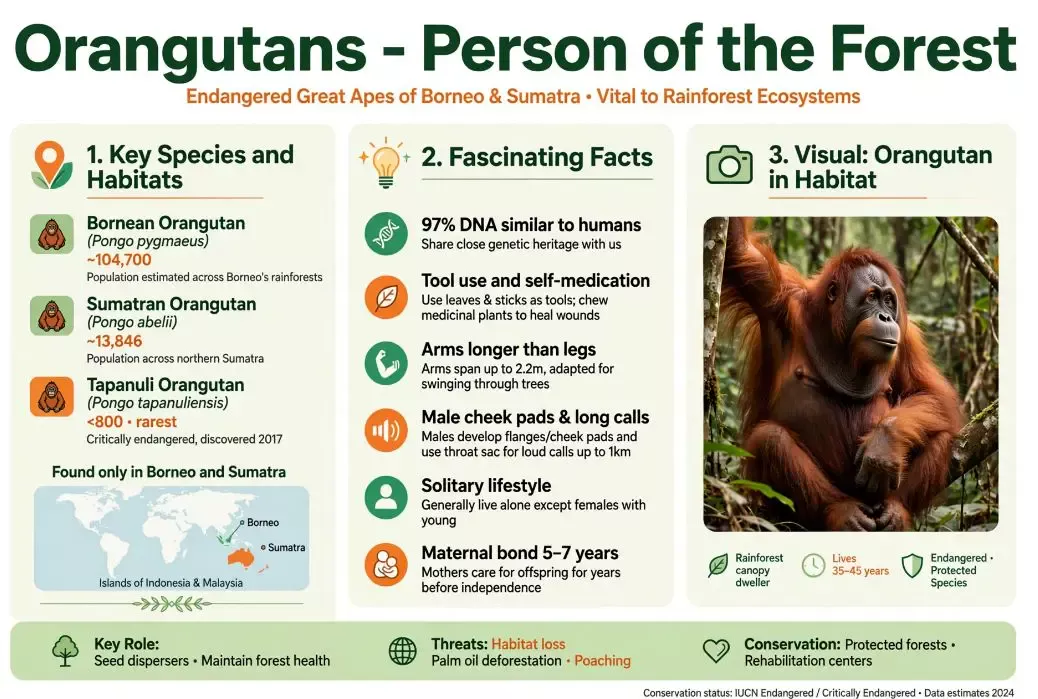
Five baby orangutans were rescued from a forest in Odisha on 8 September 2026.
-
They were found nearly 2,000 km away from their natural habitat in Borneo and Sumatra.
-
Their lack of fear of humans suggested that they had been kept in captivity.
-
The Wildlife Crime Control Bureau (WCCB) is investigating how they entered India.
-
A recent PNAS study shows that cities are increasingly becoming major demand centres for illegal wildlife trade.
What does the Odisha case show?
-
Orangutans are native to Borneo and Sumatra, not India.
-
Their presence in Odisha indicates illegal international wildlife trafficking.
-
Orangutans are highly valuable in the exotic-pet trade.
-
CITES prohibits commercial international trade in orangutans.
-
Earlier, two baby orangutans were found near the Assam–Mizoram border in 2022.
-
The exact route and intended buyers in the Odisha case are still being investigated.
What does the new study reveal?
-
Researchers analysed 30 years of wildlife-confiscation data.
-
They used spatial network analysis to understand trafficking routes.
-
The study found that urban centres are important demand hubs.
-
Wildlife may be captured in forests but ultimately be transported to distant cities where demand and money are concentrated.
-
The same method can help investigate trafficking of timber, marine species and other illegal commodities.
Why are cities important?
-
High-value wildlife is increasingly demanded by urban consumers and collectors.
-
Popular species such as macaws and Amazon parrots are selectively targeted.
-
This creates pressure on wildlife populations far away from cities.
-
Therefore, protecting forests alone cannot eliminate wildlife trafficking.
Wildlife Trafficking and Organised Crime:
-
Wildlife trafficking is a multibillion-dollar global criminal activity.
-
Criminal networks may share transport, financial and smuggling networks with other illegal activities.
-
In some regions, wildlife trafficking is connected with illegal logging and drug-trafficking networks.
-
It also increases the risk of zoonotic diseases.
Wildlife Trafficking in India;
-
Primates, turtles and lizards are among the commonly smuggled groups.
-
India–Myanmar land routes are important trafficking corridors.
-
Traffickers often change routes and methods after enforcement action.
-
Therefore, catching one consignment does not necessarily break the entire network.
Challenges and Way Forward:
Challenges:
-
Seizure-based enforcement: Seizures stop individual consignments but often fail to identify the larger trafficking network behind them.
-
High profits: Rare wildlife can fetch very high prices, creating strong incentives for poaching and smuggling.
-
Changing routes: Traffickers quickly change routes and methods after enforcement action.
-
Exotic species regulation: Illegal possession of foreign species can be difficult to detect without proper registration and traceability.
-
Urban demand: Enforcement is often concentrated in forests and borders, while the actual demand may come from urban markets and private collectors.
-
Organised crime: Wildlife trafficking may share transport, financial and smuggling networks with other forms of organised crime.
-
Limited intelligence: Lack of integrated information on traffickers, finances, routes and buyers makes it difficult to dismantle the entire network.
Way Forward:
-
Network-based investigation: Move beyond seizure and identify poachers, financiers, transporters, intermediaries and buyers.
-
Financial investigation: Follow the money trail and confiscate illegal profits and assets.
-
Demand-side enforcement: Monitor urban markets, exotic-pet traders and online platforms.
-
Traceability: Create proper registration and documentation systems for legally possessed exotic species.
-
Technology and intelligence: Use spatial analysis, databases and digital monitoring to identify trafficking routes and hotspots.
-
Inter-agency coordination: Strengthen cooperation among WCCB, Customs, police, forest departments and international agencies.
-
International cooperation: Improve intelligence sharing and coordinated action across source, transit and destination countries.
शहरी मांग और वन्यजीव तस्करी:
समाचार में क्यों?
-
8 सितंबर 2026 को ओडिशा के एक वन क्षेत्र से पाँच शिशु ऑरंगुटान बरामद किए गए।
-
ये अपने प्राकृतिक आवास बोर्नियो और सुमात्रा से लगभग 2,000 किमी दूर पाए गए।
-
मनुष्यों से उनके भय का अभाव इस बात का संकेत था कि उन्हें पहले कैद में रखा गया था।
-
वन्यजीव अपराध नियंत्रण ब्यूरो (WCCB) इस बात की जाँच कर रहा है कि वे भारत में कैसे पहुँचे।
-
हाल के PNAS अध्ययन से पता चलता है कि शहरी केंद्र अवैध वन्यजीव व्यापार के प्रमुख मांग केंद्र बनते जा रहे हैं।
ओडिशा की घटना क्या दर्शाती है?
-
ऑरंगुटान बोर्नियो और सुमात्रा के मूल निवासी हैं, भारत के नहीं।
-
ओडिशा में उनकी उपस्थिति अवैध अंतरराष्ट्रीय वन्यजीव तस्करी का संकेत देती है।
-
ऑरंगुटान का विदेशी पालतू पशु व्यापार में उच्च मूल्य है।
-
CITES ऑरंगुटान के वाणिज्यिक अंतरराष्ट्रीय व्यापार पर प्रतिबंध लगाता है।
-
वर्ष 2022 में असम–मिजोरम सीमा के पास भी दो शिशु ऑरंगुटान पाए गए थे।
-
ओडिशा मामले में उनके मार्ग और संभावित खरीदारों की पहचान अभी जाँच का विषय है।
नए अध्ययन से क्या पता चलता है?
-
शोधकर्ताओं ने 30 वर्षों के वन्यजीव जब्ती संबंधी आँकड़ों का विश्लेषण किया।
-
तस्करी के मार्गों को समझने के लिए स्थानिक नेटवर्क विश्लेषण का उपयोग किया गया।
-
अध्ययन के अनुसार, शहरी केंद्र महत्वपूर्ण मांग केंद्र के रूप में उभर रहे हैं।
-
वन्यजीवों को जंगलों से पकड़कर उन दूरस्थ शहरों तक पहुँचाया जाता है जहाँ मांग और धन केंद्रित हैं।
-
यही पद्धति इमारती लकड़ी, समुद्री प्रजातियों तथा अन्य अवैध वस्तुओं की तस्करी के अध्ययन में भी उपयोगी हो सकती है।
शहर क्यों महत्वपूर्ण हैं?
-
उच्च मूल्य वाले वन्यजीवों की मांग शहरी उपभोक्ताओं और संग्राहकों में बढ़ रही है।
-
मकाव और अमेजन तोते जैसी लोकप्रिय प्रजातियों को चुनिंदा रूप से निशाना बनाया जाता है।
-
इससे शहरों से दूर स्थित वन्यजीव आबादी पर भी दबाव बढ़ता है।
-
इसलिए केवल वन क्षेत्रों की सुरक्षा से वन्यजीव तस्करी समाप्त नहीं की जा सकती।
वन्यजीव तस्करी और संगठित अपराध:
-
वन्यजीव तस्करी एक बहु-अरब डॉलर का वैश्विक आपराधिक व्यापार है।
-
आपराधिक नेटवर्क अन्य अवैध गतिविधियों के साथ परिवहन, वित्तीय और तस्करी नेटवर्क साझा कर सकते हैं।
-
कुछ क्षेत्रों में वन्यजीव तस्करी का संबंध अवैध लकड़ी कटाई और मादक पदार्थों की तस्करी से भी देखा गया है।
-
इससे जूनोटिक रोगों के प्रसार का जोखिम भी बढ़ता है।
भारत में वन्यजीव तस्करी:
-
प्राइमेट, कछुए और छिपकलियाँ भारत में तस्करी की जाने वाली प्रमुख श्रेणियों में शामिल हैं।
-
भारत–म्यांमार स्थलीय मार्ग महत्वपूर्ण तस्करी गलियारे हैं।
-
प्रवर्तन कार्रवाई के बाद तस्कर अक्सर मार्ग और तरीकों में बदलाव कर लेते हैं।
-
इसलिए किसी एक खेप को पकड़ लेना पूरे तस्करी नेटवर्क को समाप्त नहीं करता।
चुनौतियाँ और आगे की राह:
चुनौतियाँ:
-
जब्ती-आधारित प्रवर्तन: जब्ती से एक खेप रोकी जाती है, लेकिन उसके पीछे मौजूद बड़े तस्करी नेटवर्क की पहचान अक्सर नहीं हो पाती।
-
अधिक लाभ: दुर्लभ वन्यजीवों की ऊँची कीमत अवैध शिकार और तस्करी को प्रोत्साहित करती है।
-
बदलते मार्ग: प्रवर्तन कार्रवाई के बाद तस्कर तेजी से मार्ग और तरीकों को बदल लेते हैं।
-
विदेशी प्रजातियों का विनियमन: उचित पंजीकरण और पता लगाने की व्यवस्था के अभाव में विदेशी प्रजातियों का अवैध कब्जा पहचानना कठिन होता है।
-
शहरी मांग: प्रवर्तन मुख्यतः वनों और सीमावर्ती क्षेत्रों में केंद्रित रहता है, जबकि वास्तविक मांग शहरी बाजारों और निजी संग्राहकों से आ सकती है।
-
संगठित अपराध: वन्यजीव तस्करी अन्य संगठित अपराधों के साथ परिवहन, वित्तीय और तस्करी नेटवर्क साझा कर सकती है।
-
सीमित खुफिया जानकारी: तस्करों, वित्तीय लेन-देन, मार्गों और खरीदारों से जुड़ी समेकित जानकारी के अभाव में पूरे नेटवर्क को नष्ट करना कठिन होता है।
आगे की राह:
-
नेटवर्क-आधारित जाँच: केवल जब्ती तक सीमित न रहकर अवैध शिकारी, वित्तपोषक, परिवहनकर्ता, बिचौलियों और खरीदारों की पहचान की जाए।
-
वित्तीय जाँच: धन के प्रवाह का पता लगाया जाए तथा अवैध लाभ और संपत्तियों को जब्त किया जाए।
-
मांग-पक्ष पर कार्रवाई: शहरी बाजारों, विदेशी पालतू पशु व्यापारियों और ऑनलाइन प्लेटफॉर्मों की निगरानी बढ़ाई जाए।
-
पता लगाने की व्यवस्था: कानूनी रूप से रखी गई विदेशी प्रजातियों के लिए उचित पंजीकरण और दस्तावेजीकरण प्रणाली विकसित की जाए।
-
प्रौद्योगिकी और खुफिया तंत्र: तस्करी के मार्गों और हॉटस्पॉट की पहचान के लिए स्थानिक विश्लेषण, डेटाबेस और डिजिटल निगरानी का उपयोग किया जाए।
-
अंतर-एजेंसी समन्वय: WCCB, सीमा शुल्क विभाग, पुलिस, वन विभाग और अंतरराष्ट्रीय एजेंसियों के बीच सहयोग मजबूत किया जाए।
-
अंतरराष्ट्रीय सहयोग: स्रोत, पारगमन और गंतव्य देशों के बीच खुफिया जानकारी साझा करने तथा समन्वित कार्रवाई को मजबूत किया जाए।

May 19, 2026
October 17, 2025
October 16, 2025
October 6, 2025

