September 18, 2026
Orangutans in Odisha: Wildlife Smuggling and CITES/
Why in News?
-
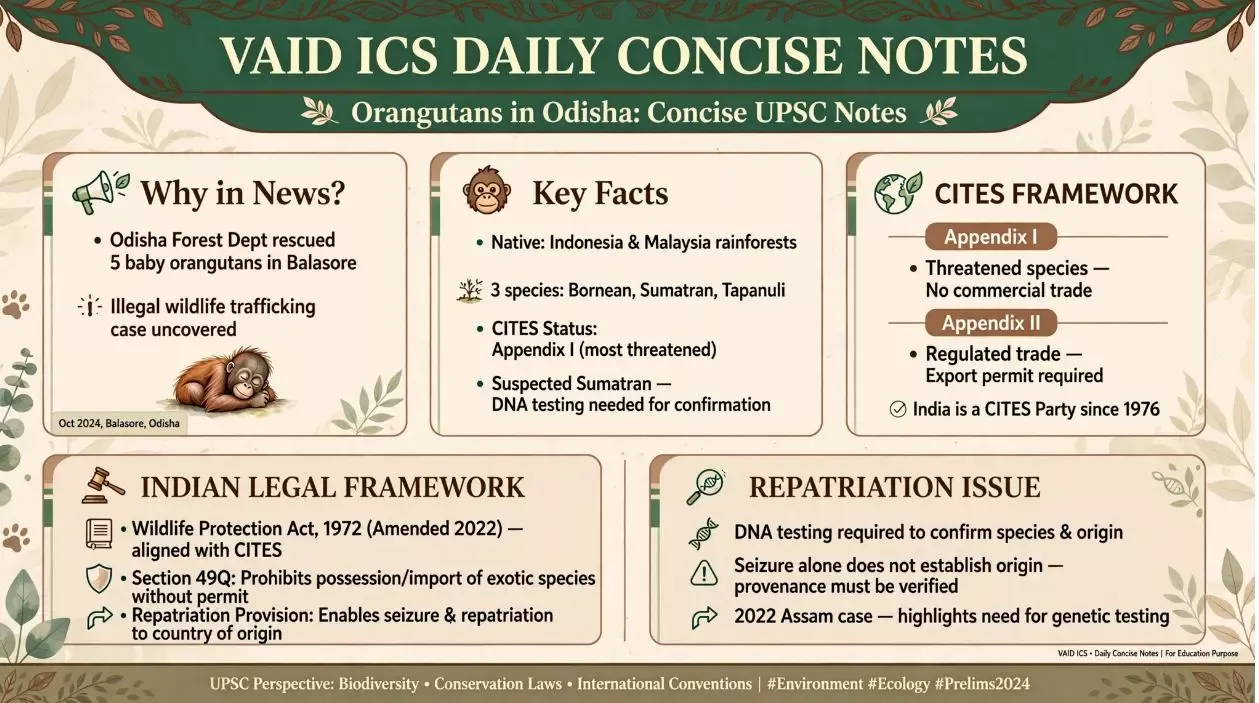
The Odisha Forest Department recently rescued five baby orangutans from a forest in Balasore district.
-
The animals, all below two years of age, have been shifted to Nandankanan Zoological Park near Bhubaneswar.
-
Since orangutans are naturally found only in Indonesia and Malaysia, their presence in Odisha has raised concerns over illegal international wildlife trafficking.
-
DNA testing is required to establish their exact species and geographic origin.
Orangutans: Key Facts
-
There are three living species:
-
Bornean Orangutan (Pongo pygmaeus)
-
Sumatran Orangutan (Pongo abelii)
-
Tapanuli Orangutan (Pongo tapanuliensis)
-
-
Their natural distribution is restricted to Borneo and Sumatra.
-
All three species are classified as Critically Endangered by the IUCN.
-
All three are listed under CITES Appendix I.
-
The Odisha animals are suspected to be Sumatran orangutans, but this requires confirmation through DNA analysis.
CITES: International Regulation of Wildlife Trade
CITES — Convention on International Trade in Endangered Species of Wild Fauna and Flora
-
Came into force in 1975; India became a party in 1976.
-
It regulates international trade in wild animals, plants and their parts.
-
It aims to ensure that international wildlife trade does not threaten the survival of species.
-
It operates through a permit and certificate system.
Three CITES Appendices:
-
Appendix I: Species threatened with extinction; international commercial trade is generally prohibited and only exceptional trade is permitted.
-
Appendix II: Species that may become threatened unless trade is strictly regulated.
-
Appendix III: Species protected in at least one country that seeks cooperation from other countries to control their trade.
Appendix I and Orangutans:
-
Commercial international trade in Appendix I species is generally prohibited.
-
Exceptional non-commercial transactions may be permitted for purposes such as:
-
Scientific research
-
Conservation
-
Transfer between recognised zoological institutions
-
Breeding programmes
-
-
Appropriate CITES permits are required.
Indian Legal Framework: Wildlife Protection Act, 1972
-
The Wild Life (Protection) Act, 1972 was amended in 2022 to strengthen India’s alignment with CITES.
-
The amendment introduced provisions dealing specifically with CITES-listed specimens.
-
Section 49Q provides a framework concerning living specimens of CITES-listed species.
-
Authorities must establish that the specimen was illegally imported before taking action under the relevant provisions.
-
For lawful import of an Appendix I species, appropriate CITES import and export/re-export documentation is required.
-
Where repatriation is feasible, the animal may be returned to the country of origin in accordance with the legal framework.
-
Where repatriation is not feasible, the animal may be housed in a recognised zoo or rescue centre.
Does India Have to Return the Orangutans?
-
Repatriation is not automatically mandatory merely because an animal is seized.
-
The relevant authorities must establish factors such as:
-
Species identity
-
Country of origin
-
Legality of import
-
Availability of appropriate documentation
-
Feasibility and conservation implications of repatriation
-
-
Indonesia has reportedly offered technical assistance if investigation establishes that the orangutans originated there.
-
Therefore, DNA testing and investigation into the trafficking chain are crucial before a final decision.
Assam Precedent:
-
In 2022, two baby orangutans were seized near the Assam–Mizoram border.
-
They were identified as Sumatran orangutans and were kept at the Assam State Zoo.
-
Their repatriation remained unresolved because the investigation into the alleged smuggling network did not reach a conclusive stage.
-
The case demonstrates the difficulty of tracing the origin and trafficking chain of illegally traded wildlife.
Why Is Repatriation Difficult?
-
Wildlife consignments may pass through multiple countries and intermediaries.
-
Seizure locations may be far from the animals’ natural geographical range.
-
Captive-bred specimens may have uncertain genetic or geographical origins.
-
Smugglers may use fraudulent documentation to portray wild-caught animals as captive-bred.
-
Effective enforcement requires expertise in wildlife science, veterinary care, conservation and law.
India’s Exotic Pet Trade:
-
The Odisha case also highlights concerns regarding India’s growing demand for exotic animals.
-
Reported trafficking routes include:
-
Overland routes through Northeast India, particularly across borders with Bangladesh and Myanmar.
-
Air routes involving major Indian airports.
-
-
Investigations have indicated that illegally captured animals may be accompanied by false captive-breeding documents.
-
The illegal exotic-pet trade also creates risks related to animal welfare, biodiversity loss and zoonotic disease transmission.
Key Issues:
-
Wildlife trafficking: India may function not only as a transit route but also as a destination market.
-
Weak investigation: Identification of the trafficking network is essential for successful repatriation.
-
Documentation fraud: False claims of captive breeding can facilitate illegal trade.
-
Conservation concerns: Removal of endangered animals from their natural habitats threatens already vulnerable populations.
-
Institutional capacity: Enforcement agencies require greater expertise and coordination.
Way Forward:
-
Strengthen wildlife crime investigation and intelligence networks.
-
Improve coordination among forest departments, customs, police and international authorities.
-
Establish a comprehensive inventory of exotic species kept in India.
-
Strengthen DNA-based species and origin identification.
-
Improve monitoring of online and offline exotic-pet markets.
-
Ensure effective implementation of CITES and the Wild Life (Protection) Act, 1972.
-
Strengthen international cooperation for investigation, confiscation and repatriation.
Conclusion:
The Odisha orangutan case highlights the gap between a strong international legal framework and effective enforcement on the ground. CITES and Indian wildlife law provide mechanisms for regulating the trade and dealing with illegally imported specimens, but successful conservation also requires effective investigation, scientific identification, international cooperation and reduction of demand for exotic wildlife.
ओडिशा में ऑरंगुटान: वन्यजीव तस्करी एवं CITES
चर्चा में क्यों?
-
हाल ही में ओडिशा वन विभाग ने बालासोर जिले के एक वन क्षेत्र से ऑरंगुटान के पाँच शिशुओं को बचाया।
-
सभी ऑरंगुटान दो वर्ष से कम आयु के हैं और उन्हें भुवनेश्वर के निकट नंदनकानन प्राणी उद्यान में रखा गया है।
-
ऑरंगुटान प्राकृतिक रूप से केवल इंडोनेशिया और मलेशिया में पाए जाते हैं। इसलिए ओडिशा में उनकी उपस्थिति ने अंतरराष्ट्रीय वन्यजीव तस्करी की आशंका बढ़ा दी है।
-
उनकी सटीक प्रजाति तथा भौगोलिक उत्पत्ति की पुष्टि के लिए DNA परीक्षण आवश्यक है।
ऑरंगुटान: प्रमुख तथ्य
ऑरंगुटान की तीन जीवित प्रजातियाँ हैं—
-
बोर्नियन ऑरंगुटान (Pongo pygmaeus)
-
सुमात्रन ऑरंगुटान (Pongo abelii)
-
तपनुली ऑरंगुटान (Pongo tapanuliensis)
प्रमुख तथ्य:
-
इनका प्राकृतिक वितरण मुख्यतः बोर्नियो और सुमात्रा द्वीपों तक सीमित है।
-
तीनों प्रजातियाँ IUCN की Critically Endangered श्रेणी में हैं।
-
तीनों को CITES Appendix-I में सूचीबद्ध किया गया है।
-
ओडिशा में पाए गए ऑरंगुटानों के सुमात्रन प्रजाति के होने की आशंका है, लेकिन इसकी पुष्टि DNA परीक्षण से होगी।
CITES: वन्यजीव व्यापार का अंतरराष्ट्रीय ढाँचा
CITES — Convention on International Trade in Endangered Species of Wild Fauna and Flora
-
CITES 1975 में लागू हुआ।
-
भारत 1976 में इसका पक्षकार बना।
-
इसका उद्देश्य वन्यजीवों, वनस्पतियों तथा उनके अंगों के अंतरराष्ट्रीय व्यापार को इस प्रकार नियंत्रित करना है कि इससे प्रजातियों के अस्तित्व को खतरा न हो।
-
यह मुख्यतः परमिट एवं प्रमाण-पत्र प्रणाली के माध्यम से अंतरराष्ट्रीय व्यापार को नियंत्रित करता है।
CITES की तीन परिशिष्टियाँ:
Appendix-I:
-
विलुप्ति के खतरे से अत्यधिक प्रभावित प्रजातियाँ।
-
इनके व्यावसायिक अंतरराष्ट्रीय व्यापार पर सामान्यतः प्रतिबंध होता है।
-
विशेष परिस्थितियों में, जैसे वैज्ञानिक अनुसंधान, संरक्षण अथवा मान्यता प्राप्त प्राणी उद्यानों के बीच स्थानांतरण के लिए व्यापार की अनुमति दी जा सकती है।
Appendix-II:
-
ऐसी प्रजातियाँ जिनका व्यापार नियंत्रित न होने पर वे भविष्य में संकटग्रस्त हो सकती हैं।
-
इनके व्यापार को कठोर नियमन और परमिट व्यवस्था के अधीन रखा जाता है।
Appendix-III:
-
ऐसी प्रजातियाँ जिन्हें किसी देश में संरक्षण प्राप्त है और वह देश उनके अंतरराष्ट्रीय व्यापार को नियंत्रित करने के लिए अन्य देशों से सहयोग चाहता है।
ऑरंगुटान और Appendix-I:
-
ऑरंगुटान Appendix-I में सूचीबद्ध हैं।
-
इनके अंतरराष्ट्रीय वाणिज्यिक व्यापार पर सामान्यतः प्रतिबंध है।
-
वैज्ञानिक अनुसंधान, संरक्षण, मान्यता प्राप्त संस्थानों के बीच स्थानांतरण तथा प्रजनन कार्यक्रम जैसे सीमित उद्देश्यों के लिए उचित अनुमति के साथ लेन-देन संभव हो सकता है।
भारतीय कानून: वन्यजीव संरक्षण अधिनियम, 1972
-
वन्यजीव संरक्षण अधिनियम, 1972 में 2022 में संशोधन किया गया, जिसका एक उद्देश्य भारत के वन्यजीव व्यापार संबंधी कानून को CITES के अनुरूप मजबूत करना था।
-
संशोधन के बाद CITES में सूचीबद्ध प्रजातियों से संबंधित विशेष प्रावधान जोड़े गए।
-
धारा 49Q जीवित CITES-सूचीबद्ध नमूनों के संबंध में व्यवस्था प्रदान करती है।
-
संबंधित कार्रवाई से पहले यह स्थापित करना आवश्यक है कि संबंधित जीव को अवैध रूप से भारत में आयात किया गया था।
-
Appendix-I प्रजातियों के वैध आयात के लिए संबंधित CITES आयात तथा निर्यात/पुनः-निर्यात दस्तावेज आवश्यक होते हैं।
-
जहाँ पुनर्वापसी संभव हो, वहाँ कानूनी प्रक्रिया के अनुसार संबंधित जीव को उसके मूल देश को वापस किया जा सकता है।
-
यदि पुनर्वापसी संभव न हो, तो उसे मान्यता प्राप्त प्राणी उद्यान अथवा बचाव केंद्र में रखा जा सकता है।
क्या भारत को ऑरंगुटान वापस करना अनिवार्य है?
-
किसी जीव के जब्त हो जाने मात्र से उसका स्वतः प्रत्यावर्तन (Repatriation) अनिवार्य नहीं हो जाता।
-
संबंधित अधिकारियों को मुख्यतः निम्नलिखित पहलुओं की जाँच करनी होती है—
-
प्रजाति की पहचान;
-
मूल देश;
-
आयात की वैधता;
-
आवश्यक दस्तावेजों की उपलब्धता;
-
प्रत्यावर्तन की व्यवहार्यता एवं संरक्षण संबंधी प्रभाव।
-
-
यदि जाँच से इंडोनेशियाई मूल की पुष्टि होती है, तो इंडोनेशिया ने प्रत्यावर्तन की प्रक्रिया में तकनीकी सहायता की पेशकश की है।
-
इसलिए DNA परीक्षण तथा तस्करी नेटवर्क की जाँच इस मामले में महत्वपूर्ण हैं।
असम का उदाहरण:
-
2022 में असम-मिजोरम सीमा के निकट दो शिशु ऑरंगुटान जब्त किए गए थे।
-
उनकी पहचान सुमात्रन ऑरंगुटान के रूप में की गई और उन्हें असम राज्य चिड़ियाघर में रखा गया।
-
कथित तस्करी नेटवर्क की जाँच निर्णायक रूप से आगे न बढ़ पाने के कारण उनका प्रत्यावर्तन लंबे समय तक लंबित रहा।
-
यह मामला अवैध वन्यजीव व्यापार में मूल देश और तस्करी श्रृंखला का पता लगाने की कठिनाई को दर्शाता है।
प्रत्यावर्तन कठिन क्यों है?
-
तस्करी किए गए वन्यजीव कई देशों और मध्यस्थों के माध्यम से आगे बढ़ सकते हैं।
-
जहाँ से जीव जब्त होता है, वह स्थान उसके प्राकृतिक आवास से बहुत दूर हो सकता है।
-
बंदी प्रजनन से प्राप्त बताए गए जीवों की वास्तविक भौगोलिक उत्पत्ति निर्धारित करना कठिन हो सकता है।
-
जंगली जीवों को कृत्रिम दस्तावेजों के माध्यम से captive-bred के रूप में प्रस्तुत किया जा सकता है।
-
प्रभावी कार्रवाई के लिए वन्यजीव विज्ञान, पशु चिकित्सा, संरक्षण तथा कानून में विशेषज्ञता आवश्यक है।
भारत में विदेशी वन्यजीवों की बढ़ती माँग:
-
ओडिशा की घटना भारत में विदेशी वन्यजीवों के अवैध व्यापार और पालतू पशु के रूप में उनकी माँग से जुड़ी व्यापक चिंता को सामने लाती है।
-
रिपोर्ट किए गए प्रमुख तस्करी मार्गों में शामिल हैं—
-
पूर्वोत्तर भारत के स्थल मार्ग, विशेषकर बांग्लादेश और म्यांमार से लगी सीमाओं के माध्यम से;
-
हवाई मार्ग, जिसमें प्रमुख भारतीय हवाई अड्डे शामिल हैं।
-
-
अवैध रूप से पकड़े गए वन्यजीवों को फर्जी captive-breeding दस्तावेजों के माध्यम से वैध दिखाने का प्रयास किया जा सकता है।
-
यह व्यापार जैव-विविधता हानि, पशु कल्याण तथा जूनोटिक रोगों के प्रसार का जोखिम बढ़ाता है।
प्रमुख चुनौतियाँ:
-
वन्यजीव तस्करी और अंतरराष्ट्रीय अपराध नेटवर्क।
-
तस्करी श्रृंखला एवं मूल देश की पहचान में कठिनाई।
-
फर्जी दस्तावेजों का उपयोग।
-
वन्यजीव अपराधों की जाँच में विशेषज्ञता की कमी।
-
अंतरराष्ट्रीय संस्थाओं एवं संबंधित देशों के बीच समन्वय की आवश्यकता।
-
भारत में विदेशी प्रजातियों की बढ़ती घरेलू माँग।
आगे की राह:
-
वन्यजीव अपराधों की जाँच एवं खुफिया तंत्र को मजबूत करना।
-
वन विभाग, पुलिस, सीमा शुल्क तथा अन्य संबंधित एजेंसियों के बीच समन्वय बढ़ाना।
-
भारत में रखी गई विदेशी प्रजातियों का व्यापक राष्ट्रीय डेटाबेस/इन्वेंटरी तैयार करना।
-
प्रजाति एवं भौगोलिक उत्पत्ति की पहचान के लिए DNA आधारित तकनीक का उपयोग बढ़ाना।
-
विदेशी वन्यजीवों के ऑनलाइन एवं ऑफलाइन अवैध व्यापार की निगरानी करना।
-
CITES तथा वन्यजीव संरक्षण अधिनियम, 1972 का प्रभावी क्रियान्वयन सुनिश्चित करना।
-
जाँच, जब्ती एवं प्रत्यावर्तन के लिए अंतरराष्ट्रीय सहयोग को मजबूत करना।
निष्कर्ष:
ओडिशा में ऑरंगुटान की बरामदगी भारत के सामने मौजूद वन्यजीव संरक्षण कानून और उसके प्रभावी क्रियान्वयन के बीच की चुनौती को दर्शाती है। CITES तथा भारतीय कानून अवैध वन्यजीव व्यापार को नियंत्रित करने और जब्त जीवों के संबंध में कार्रवाई का कानूनी ढाँचा प्रदान करते हैं। किंतु प्रभावी संरक्षण के लिए वैज्ञानिक पहचान, मजबूत जाँच व्यवस्था, अंतरराष्ट्रीय सहयोग तथा विदेशी वन्यजीवों की घरेलू माँग में कमी आवश्यक है।

May 19, 2026
October 17, 2025
October 16, 2025
October 6, 2025

