August 6, 2026
INDIA – SRI LANKA RELATIONS
WHY IN NEWS?
Foreign Secretary Vikram Misri concluded his official visit to Sri Lanka (5 August 2026).
High-Level Engagements:
-
President Anura Kumara Dissanayake
-
PM Dr. Harini Amarasuriya
-
Foreign Minister Vijitha Herath
-
Tamil representatives and Opposition leaders.
Key Focus Areas Reviewed:
-
Economic cooperation and development partnership
-
Maritime and regional security
-
Energy connectivity and digital cooperation
-
Infrastructure projects
Strategic Frameworks:
-
Neighbourhood First Policy
-
Vision MAHASAGAR (Mutual and Holistic Advancement for Security and Growth Across Regions)
UPSC RELEVANCE:
-
Prelims: Neighbourhood First, Vision MAHASAGAR, Trincomalee, Kankesanthurai Harbour, EXIM Bank Credit Lines, Sampur Solar Project, Digital Identity Project.
-
Mains: GS-II (International Relations), GS-III (Energy Security, Maritime Security).
-
Essay & Interview: Strategic bilateral cooperation, maritime geopolitics in the Indian Ocean.
INTRODUCTION:
India and Sri Lanka share one of South Asia’s oldest civilizational relationships spanning over 2,500 years.
Core Pillars of the Relationship:
-
Geography and shared culture
-
Buddhism and Hinduism
-
Trade and maritime security
-
Economic interdependence
-
People-to-people contacts
Sri Lanka occupies a strategic position in the Indian Ocean, making it central to India’s security architecture and SAGAR vision.
HISTORICAL EVOLUTION:
-
Ancient Period: Emperor Ashoka sent Mahinda and Sanghamitta to Sri Lanka, facilitating the spread of Buddhism alongside robust maritime trade.
-
Medieval Period: Chola Kingdom ruled parts of Sri Lanka, boosting commerce across the Palk Strait.
-
Colonial Period: British rule over both regions led to significant migration of Indian Tamil laborers to Sri Lanka’s plantations.
-
Post-Independence Era: * 1964 Sirimavo-Shastri Pact: Addressed the status of Indian Tamils.
-
1974 & 1976 Maritime Boundary Agreements: Delimited boundaries in the Palk Bay, addressing the Katchatheevu Island status.
-
1987 Indo-Sri Lanka Accord: Introduced Provincial Councils under the 13th Constitutional Amendment and deployed the Indian Peace Keeping Force (IPKF).
-
IMPORTANCE OF SRI LANKA FOR INDIA:
1. Strategic Importance:
Sri Lanka lies near major Sea Lines of Communication (SLOCs). Nearly 60% of global maritime trade and a significant share of India’s energy imports pass nearby.
2. Indian Ocean Security:
Critical for anti-piracy operations, Maritime Domain Awareness (MDA), coastal surveillance, and counter-terrorism.
3. China’s Growing Presence:
Major infrastructure investments under the Belt and Road Initiative (BRI), including the Hambantota Port and Colombo Port City, make Sri Lanka a focal point of regional strategic competition.
4. Economic Gateway:
Serves as an operational gateway to South Asia, the broader Indian Ocean, and global shipping routes.
5. Tamil Issue:
India maintains humanitarian, cultural, and political stakes regarding the rights and welfare of Sri Lankan Tamils.
DIMENSIONS OF INDIA–SRI LANKA RELATIONS:
I. Political Relations:
Frequent high-level visits, Joint Commission frameworks, parliamentary exchanges, and active engagement through multilateral forums like BIMSTEC, IORA, and the Colombo Security Conclave.
II. Cultural Relations:
Shared Buddhist heritage (Bodh Gaya, Sarnath, Anuradhapura), the Ramayana Circuit, religious tourism, ICCR scholarships, and temple restoration initiatives (Thiruketheeswaram, Nagadeepa).
III. Social & Economic Relations:
-
Trade: India is among Sri Lanka’s largest trading partners, major investors, and primary development partners.
-
India Exports: Petroleum, automobiles, pharmaceuticals, food products.
-
Sri Lanka Exports: Tea, rubber, coconut products, apparel.
-
-
Investments: Major Indian entities operate in Sri Lanka, including IOC, LIC, Airtel, TCS, NTPC, and Adani Ports.
IV. Development, Energy & Digital Cooperation:
-
Development Partnership: Over 100 completed projects spanning housing, railways, roads, schools, and hospitals.
-
Energy Cooperation: Sampur Solar Power Project, cross-border grid interconnection, and the Trincomalee Energy Hub development.
-
Digital Cooperation: Implementation of the Sri Lanka Unique Digital Identity (SL-UDI) project modeled on India’s Digital Public Infrastructure (DPI).
RECENT DEVELOPMENTS (2025–26):
-
Reconstruction Package: USD 450 million assistance package following Cyclone Ditwah.
-
Credit Lines via EXIM Bank: USD 250 million allocated for railway projects; USD 100 million for livestock and priority sectors.
-
Infrastructure Modernization: Completion of Northern Railway rehabilitation, permanent bridge constructions, and the modernization of Kankesanthurai Harbour under an Indian grant.
-
Disaster Management: Deployment of an island-wide Early Warning System, medical kiosks, and essential hospital equipment.
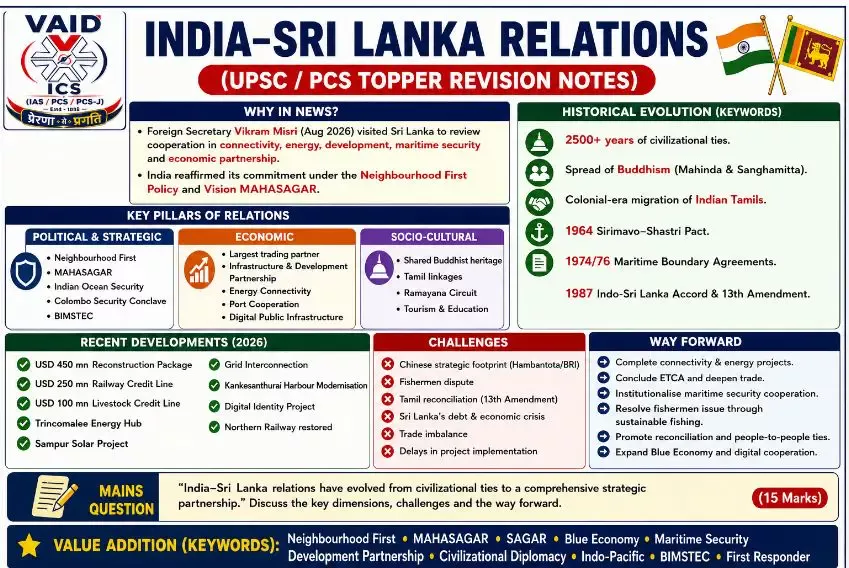
MAJOR CHALLENGES:
-
Chinese Influence: Strategic footprint expansion via the Hambantota lease and BRI projects.
-
Fishermen Dispute: Ongoing friction over illegal fishing, bottom trawling, and frequent arrests of fishermen.
-
Tamil Question: Persistent delays in the full implementation of the 13th Constitutional Amendment.
-
Economic & Political Volatility: Managing sovereign debt recovery, inflationary pressures, and domestic political shifts.
-
Security & Trade: Transnational drug trafficking, maritime crime, and bilateral trade imbalances.
INDIA’S CRISIS ASSISTANCE (2022–2026):
India emerged as the First Responder during Sri Lanka’s severe economic crisis, delivering over USD 4 billion in critical assistance encompassing credit lines, fuel, food, medicines, fertilizers, and currency support, which profoundly enhanced bilateral goodwill.
WAY FORWARD:
-
Economic: Conclude the Economic and Technological Cooperation Agreement (ETCA), scale local currency trade, and expand digital payment interoperability.
-
Strategic: Deepen maritime domain awareness, Blue Economy initiatives, coastal surveillance, and coordinated counter-narcotics operations.
-
Connectivity: Operationalize regular passenger ferry services, enhance regional air connectivity, and progress with energy grid integration.
-
Political: Encourage inclusive governance, full devolution of powers via Provincial Councils, and lasting ethnic reconciliation.
CONCLUSION :
India and Sri Lanka share far more than geographical proximity—they are bound by history, culture, security, and the Indian Ocean. As geopolitical competition in the Indo-Pacific intensifies, a stable, prosperous, and sovereign Sri Lanka remains vital to India’s core strategic interests. Guided by the Neighbourhood First Policy, Vision MAHASAGAR, and the principle of “Security and Growth for All in the Region”, deepening cooperation in connectivity, clean energy, and digital infrastructure will ensure a secure and inclusive Indian Ocean region.
भारत – श्रीलंका संबंध :
चर्चा में क्यों?
विदेश सचिव विक्रम मिस्री ने अपनी आधिकारिक श्रीलंका यात्रा (5 अगस्त 2026) संपन्न की।
उच्च-स्तरीय बैठकें:
-
राष्ट्रपति अनुरा कुमारा दिसानायाके
-
प्रधानमंत्री डॉ. हरिनी अमरसूरिया
-
विदेश मंत्री विजिता हेराथ
-
तमिल प्रतिनिधि और विपक्षी नेता।
समीक्षा किए गए प्रमुख क्षेत्र:
-
आर्थिक सहयोग और विकास साझीदारी
-
समुद्री और क्षेत्रीय सुरक्षा
-
ऊर्जा कनेक्टिविटी और डिजिटल सहयोग
-
बुनियादी ढांचे की परियोजनाएँ
रणनीतिक फ्रेमवर्क:
-
पड़ोसी पहले नीति (Neighbourhood First Policy)
-
विज़न महासागर (Vision MAHASAGAR) (क्षेत्र में सुरक्षा और विकास के लिए आपसी और समग्र उन्नति)
यूपीएससी महत्व:
-
प्रारंभिक परीक्षा (Prelims): पड़ोसी पहले, विज़न महासागर, त्रिंकोमाली, कांकेसंतुरई बंदरगाह, एक्जिम बैंक क्रेडिट लाइन, साम्पुर सौर परियोजना, डिजिटल पहचान परियोजना।
-
मुख्य परीक्षा (Mains): जीएस-II (अंतर्राष्ट्रीय संबंध), जीएस-III (ऊर्जा सुरक्षा, समुद्री सुरक्षा)।
-
निबंध और साक्षात्कार: रणनीतिक द्विपक्षीय सहयोग, हिंद महासागर में समुद्री भू-राजनीति।
परिचय:
भारत और श्रीलंका दक्षिण एशिया के सबसे पुराने सभ्यतातुर संबंधों में से एक साझा करते हैं, जो 2,500 वर्षों से अधिक पुराने हैं।
संबंधों के मुख्य स्तंभ:
-
भूगोल और साझा संस्कृति
-
बौद्ध धर्म और हिंदू धर्म
-
व्यापार और समुद्री सुरक्षा
-
आर्थिक परस्पर निर्भरता
-
लोगों से लोगों के संपर्क
श्रीलंका हिंद महासागर में एक रणनीतिक स्थिति रखता है, जो इसे भारत की सुरक्षा वास्तुकला और सागर विज़न के केंद्र में रखता है।
ऐतिहासिक विकास:
-
प्राचीन काल: सम्राट अशोक ने श्रीलंका में महिन्द और संघमित्रा को भेजा, जिससे समुद्री व्यापार के साथ-साथ बौद्ध धर्म का प्रसार हुआ।
-
मध्यकाल: चोल साम्राज्य ने श्रीलंका के कुछ हिस्सों पर शासन किया, जिससे पाक जलडमरूमध्य के पार व्यापार को बढ़ावा मिला।
-
औपनिवेशिक काल: दोनों क्षेत्रों पर ब्रिटिश शासन के कारण श्रीलंका के बागानों में भारतीय तमिल मजदूरों का बड़ा प्रवास हुआ।
-
स्वतंत्रता-ोत्तर युग: * 1964 का सिरिमावो-शास्त्री समझौता: भारतीय तमिलों की स्थिति का समाधान।
-
1974 और 1976 के समुद्री सीमा समझौते: पाक खाड़ी में सीमाओं का सीमांकन और कच्चातिवु द्वीप की स्थिति का समाधान।
-
1987 का भारत-श्रीलंका समझौता: 13वें संवैधानिक संशोधन के तहत प्रांतीय परिषदों की शुरुआत और भारतीय शांति सेना (IPKF) की तैनाती।
-
भारत के लिए श्रीलंका का महत्व:
1. रणनीतिक महत्व:
श्रीलंका प्रमुख समुद्री संचार लाइनों (SLOCs) के पास स्थित है। वैश्विक समुद्री व्यापार का लगभग 60% और भारत के ऊर्जा आयात का एक बड़ा हिस्सा इसके पास से गुजरता है।
2. हिंद महासागर सुरक्षा:
समुद्री डकैती-रोधी अभियानों, समुद्री डोमेन जागरूकता (MDA), तटीय निगरानी और आतंकवाद-रोधी अभियानों के लिए महत्वपूर्ण।
3. चीन की बढ़ती उपस्थिति:
बेल्ट एंड रोड इनिशिएटिव (BRI) के तहत हंबनटोटा बंदरगाह और कोलंबो पोर्ट सिटी सहित प्रमुख बुनियादी ढांचा निवेश, श्रीलंका को क्षेत्रीय रणनीतिक प्रतिस्पर्धा का केंद्र बनाते हैं।
4. आर्थिक प्रवेश द्वार:
दक्षिण एशिया, व्यापक हिंद महासागर और वैश्विक शिपिंग मार्गों के लिए एक परिचालन प्रवेश द्वार के रूप में कार्य करता है।
5. तमिल मुद्दा:
भारत श्रीलंकाई तमिलों के अधिकारों और कल्याण से संबंधित मानवीय, सांस्कृतिक और राजनीतिक हित बनाए रखता है।
भारत–श्रीलंका संबंधों के आयाम:
I. राजनीतिक संबंध:
नियमित उच्च-स्तरीय यात्राएँ, संयुक्त आयोग का ढांचा, संसदीय आदान-प्रदान और बिम्सटेक (BIMSTEC), आईओआरए (IORA) और कोलंबो सुरक्षा कॉन्क्लेव जैसे बहुपक्षीय मंचों के माध्यम से सक्रिय जुड़ाव।
II. सांस्कृतिक संबंध:
साझा बौद्ध विरासत (बोधगया, सारनाथ, अनुराधापुरा), रामायण सर्किट, धार्मिक पर्यटन, ICCR छात्रवृत्तियाँ और मंदिर पुनरुद्धार पहल (थिरुकेथीश्वरम, नागदीपा)।
III. सामाजिक और आर्थिक संबंध:
-
व्यापार: भारत श्रीलंका के सबसे बड़े व्यापारिक साझेदारों, प्रमुख निवेशकों और प्राथमिक विकास साझेदारों में से एक है।
-
भारत के निर्यात: पेट्रोलियम, ऑटोमोबाइल, फार्मास्यूटिकल्स, खाद्य उत्पाद।
-
श्रीलंका के निर्यात: चाय, रबर, नारियल उत्पाद, परिधान।
-
-
निवेश: IOC, LIC, एयरटेल, TCS, NTPC और अडानी पोर्ट्स सहित प्रमुख भारतीय कंपनियाँ श्रीलंका में कार्यरत हैं।
IV. विकास, ऊर्जा और डिजिटल सहयोग:
-
विकास साझीदारी: आवास, रेलवे, सड़क, स्कूलों और अस्पतालों में 100 से अधिक पूरी की गई परियोजनाएँ।
-
ऊर्जा सहयोग: साम्पुर सौर ऊर्जा परियोजना, सीमा पार ग्रिड इंटरकनेक्शन और त्रिंकोमाली एनर्जी हब का विकास।
-
डिजिटल सहयोग: भारत के डिजिटल पब्लिक इन्फ्रास्ट्रक्चर (DPI) की तर्ज पर श्रीलंका यूनिक डिजिटल आइडेंटिटी (SL-UDI) परियोजना का कार्यान्वयन।
हालिया विकास (2025–26):
-
पुनर्निर्माण पैकेज: चक्रवात डिटवाह (Cyclone Ditwah) के बाद 450 मिलियन अमेरिकी डॉलर का सहायता पैकेज।
-
एक्जिम बैंक के माध्यम से क्रेडिट लाइन: रेलवे परियोजनाओं के लिए 250 मिलियन अमेरिकी डॉलर; पशुधन और प्राथमिकता वाले क्षेत्रों के लिए 100 मिलियन अमेरिकी डॉलर आवंटित।
-
बुनियादी ढांचा आधुनिकीकरण: उत्तरी रेलवे पुनर्वास का पूरा होना, पक्की पुलों का निर्माण और भारतीय अनुदान के तहत कांकेसंतुरई बंदरगाह का आधुनिकीकरण।
-
आपदा प्रबंधन: द्वीप-व्यापी अर्ली वार्निंग सिस्टम, मेडिकल किओस्क और आवश्यक अस्पताल उपकरणों की तैनाती।
प्रमुख चुनौतियाँ:
-
चीनी प्रभाव: हंबनटोटा पट्टे और बीआरआई परियोजनाओं के माध्यम से रणनीतिक पदचिह्न का विस्तार।
-
मछुआरे विवाद: अवैध मछली पकड़ने, बॉटम ट्रॉलिंग और मछुआरों की लगातार गिरफ्तारियों को लेकर चल रहा तनाव।
-
तमिल प्रश्न: 13वें संवैधानिक संशोधन के पूर्ण कार्यान्वयन में लगातार देरी।
-
आर्थिक और राजनीतिक अस्थिरता: संप्रभु ऋण रिकवरी, मुद्रास्फीति के दबाव और घरेलू राजनीतिक बदलावों का प्रबंधन।
-
सुरक्षा और व्यापार: सीमा पार नशीली दवाओं की तस्करी, समुद्री अपराध और द्विपक्षीय व्यापार असंतुलन।
संकट के दौरान भारत की सहायता (2022–2026):
श्रीलंका के गंभीर आर्थिक संकट के दौरान भारत पहले प्रदाता (First Responder) के रूप में उभरा, जिसने ऋण लाइनों, ईंधन, भोजन, दवाओं, उर्वरकों और मुद्रा समर्थन को शामिल करते हुए 4 बिलियन अमेरिकी डॉलर से अधिक की महत्वपूर्ण सहायता प्रदान की, जिससे द्विपक्षीय सद्भावना में काफी वृद्धि हुई।
आगे की राह:
-
आर्थिक: आर्थिक और तकनीकी सहयोग समझौते (ETCA) को अंतिम रूप देना, स्थानीय मुद्रा व्यापार को बढ़ावा देना और डिजिटल भुगतान अंतरसंचालनीयता का विस्तार करना।
-
रणनीतिक: समुद्री डोमेन जागरूकता, ब्लू इकोनॉमी पहल, तटीय निगरानी और समन्वित मादक पदार्थ विरोधी अभियानों को गहरा करना।
-
कनेक्टिविटी: नियमित यात्री फेरी सेवाओं का संचालन करना, क्षेत्रीय हवाई संपर्क बढ़ाना और ऊर्जा ग्रिड एकीकरण के साथ आगे बढ़ना।
-
राजनीतिक: समावेशी शासन, प्रांतीय परिषदों के माध्यम से शक्तियों के पूर्ण हस्तावहन और स्थायी जातीय सुलह को प्रोत्साहित करना।
निष्कर्ष :
भारत और श्रीलंका भौगोलिक निकटता से कहीं अधिक साझा करते हैं—वे इतिहास, संस्कृति, सुरक्षा और हिंद महासागर से बंधे हुए हैं। जैसे-जैसे इंडो-पैसिफिक में भू-राजनीतिक प्रतिस्पर्धा तेज हो रही है, एक स्थिर, समृद्ध और संप्रभु श्रीलंका भारत के मुख्य रणनीतिक हितों के लिए महत्वपूर्ण बना हुआ है। पड़ोसी पहले नीति, विज़न महासागर, और “क्षेत्र में सुरक्षा और विकास सभी के लिए” के सिद्धांत से निर्देशित होकर, कनेक्टिविटी, स्वच्छ ऊर्जा और डिजिटल बुनियादी ढांचे में सहयोग को गहरा करना एक सुरक्षित और समावेशी हिंद महासागर क्षेत्र सुनिश्चित करेगा।

May 19, 2026
October 17, 2025
October 16, 2025
October 6, 2025

