August 3, 2026
Why in News?
-
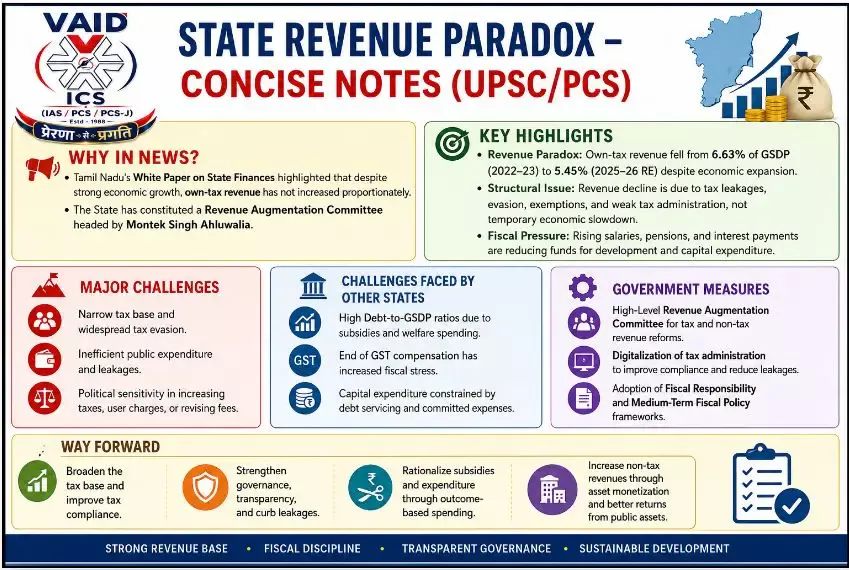
Tamil Nadu’s latest White Paper on state finances revealed an unusual paradox: even though the state’s economy has expanded significantly in recent years, its own-tax revenue has failed to keep pace, leading to a widening gap between economic growth and revenue mobilization.
-
To address this, the Tamil Nadu government has constituted a Revenue Augmentation Committee headed by former Planning Commission deputy chairman Montek Singh Ahluwalia.
Key Points from the Article:
-
The Revenue Paradox: Despite being one of India’s most diversified and industrialized economies (excelling in automobiles, electronics, and textiles), the state’s own-tax revenue as a percentage of GSDP has dropped from 6.63% in 2022–23 down to 5.45% in 2025–26 (Revised Estimates).
-
Structural Deterioration: The White Paper emphasizes that this revenue decline is structural rather than cyclical, pointing to administrative shortcomings, tax leakages, evasion, and exemptions rather than temporary post-pandemic economic slumps.
-
Committed Expenditure Pressures: Mandatory and committed expenditures—such as salaries, pensions, and interest payments—have steadily consumed a larger share of revenue receipts, leaving increasingly narrow fiscal space for developmental expenditure and capital investments.
Issues and Challenges:
-
Untapped Sectors & Evasion: Fast-growing sectors or specific economic activities remain lightly taxed relative to their true economic value, while enforcement challenges and administrative inefficiencies allow widespread tax evasion.
-
Public Spending Efficiency: Raising more revenue alone is insufficient; the committee is tasked with examining how efficiently public money is spent and plugging leakages on the expenditure side.
-
Political and Policy Trade-offs: Recommendations to augment revenue (such as altering user charges, revising liquor policies, or adjusting property registration fees) and reform expenditures involve politically sensitive and contentious choices.
Other States’ Fiscal Challenges:
-
High Debt-to-GSDP Ratios: Several Indian states face mounting fiscal stress due to rising welfare spending, subsidies, and old pension scheme (OPS) reversions, which strain state exchequers.
-
GST Compensation Phase-Out: Following the conclusion of the GST compensation period, states heavily reliant on central tax transfers or struggling with narrow internal tax bases face severe budgetary tight spots.
-
Capital Outlay Squeezes: Similar to Tamil Nadu, many states find their capital expenditure (capex) squeezed because a major chunk of revenue receipts goes toward servicing debt and paying salaries.
Government Steps and Measures Taken:
-
Formation of Expert Panels: Tamil Nadu set up the High-Level Revenue Augmentation Committee under Montek Singh Ahluwalia to recommend comprehensive structural reforms in tax administration, non-tax revenues (dividends, asset monetization), and public assets.
-
Digitalization of Tax Administration: Departments like Road Transport and Commercial Taxes are undergoing massive digitalization to plug leakages, reduce administrative discretion, and improve compliance monitoring.
-
Fiscal Responsibility Frameworks: States are utilizing Medium-Term Fiscal Policy Plans and aiming to adhere to mandated fiscal deficit targets under recommendations from the Finance Commission.
Way Forward:
-
Broaden the Tax Base: Systematically identify lightly taxed or untaxed sectors and bring them under efficient tax nets without placing undue burdens on compliant taxpayers.
-
Strengthen Governance and Integrity: Move beyond mere technical upgrades by aligning institutional incentives, enhancing accountability, and eliminating corrupt leakages or commission practices in procurement and administration.
-
Rationalize Expenditures: Conduct rigorous cost-benefit analyses of public programs and subsidies to ensure every rupee spent delivers proportional outcomes to state fiscal health.
-
Enhance Non-Tax Revenues: Actively pursue asset monetization, optimize returns from public sector undertakings, and revise realistic user fees for public utilities.
चर्चा में क्यों?
-
तमिलनाडु के नवीनतम राजकोषीय श्वेत पत्र (White Paper on state finances) से एक अजीब विरोधाभास सामने आया है: भले ही हाल के वर्षों में राज्य की अर्थव्यवस्था का काफी विस्तार हुआ है, लेकिन इसका स्वयं का कर राजस्व (own-tax revenue) अर्थव्यवस्था की वृद्धि के मुकाबले नहीं बढ़ पाया है, जिसके कारण आर्थिक विकास और राजस्व संग्रहण के बीच की खाई चौड़ी होती जा रही है।
-
इस समस्या से निपटने के लिए, तमिलनाडु सरकार ने योजना आयोग के पूर्व उपाध्यक्ष मोंटेक सिंह अहलूवालिया की अध्यक्षता में एक राजस्व वृद्धि समिति (Revenue Augmentation Committee) का गठन किया है।
लेख के मुख्य बिंदु (Key Points):
-
राजस्व का विरोधाभास: भारत की सबसे विविध और औद्योगिक अर्थव्यवस्थाओं में से एक होने के बावजूद (जो ऑटोमोबाइल, इलेक्ट्रॉनिक्स और वस्त्र निर्माण में उत्कृष्टता रखती है), GSDP के प्रतिशत के रूप में राज्य का अपना कर राजस्व वर्ष 2022–23 के 6.63% से घटकर वित्त वर्ष 2025–26 (संशोधित अनुमान) में 5.45% रह गया है।
-
संरचनात्मक गिरावट: श्वेत पत्र इस बात पर जोर देता है कि राजस्व में यह गिरावट चक्रीय (cyclical) न होकर संरचनात्मक (structural) है, जो महामारी के बाद के अस्थायी आर्थिक मंदी के बजाय प्रशासनिक कमियों, कर रिसाव, कर चोरी और छूटों की ओर इशारा करती है।
-
प्रतिबद्ध व्यय का दबाव: वेतन, पेंशन और ब्याज भुगतान जैसे अनिवार्य और प्रतिबद्ध व्यय ने राजस्व प्राप्तियों के एक बड़े हिस्से को लगातार उपभोग कर लिया है, जिससे विकासात्मक व्यय और पूंजीगत निवेश के लिए बहुत कम वित्तीय गुंजाइश (fiscal space) बची है।
मुद्दे और चुनौतियाँ (Issues and Challenges):
-
अनुपचारित क्षेत्र और कर चोरी: तेजी से बढ़ने वाले क्षेत्र या विशिष्ट आर्थिक गतिविधियां अपने वास्तविक आर्थिक मूल्य की तुलना में कम कर के दायरे में हैं, जबकि प्रवर्तन संबंधी चुनौतियां और प्रशासनिक अकुशलताएं बड़े पैमाने पर कर चोरी की अनुमति देती हैं।
-
सार्वजनिक खर्च की दक्षता: केवल अधिक राजस्व जुटाना पर्याप्त नहीं है; समिति को यह जांचने का जिम्मा सौंपा गया है कि सार्वजनिक धन का उपयोग कितनी कुशलता से किया जा रहा है और खर्च के स्तर पर रिसाव को कैसे रोका जाए।
-
राजनीतिक और नीतिगत विकल्प: राजस्व बढ़ाने (जैसे उपयोगकर्ता शुल्क में बदलाव, आबकारी नीति की समीक्षा, या संपत्ति पंजीकरण शुल्क में संशोधन) और व्यय में सुधार की सिफारिशों में राजनीतिक रूप से संवेदनशील और विवादास्पद विकल्प शामिल हैं।
अन्य राज्यों की राजकोषीय चुनौतियाँ (Other States’ Fiscal Challenges):
-
उच्च ऋण-से-जीएसडीपी अनुपात: बढ़ते कल्याणकारी खर्चों, सब्सिडी और पुरानी पेंशन योजना (OPS) की वापसी के कारण कई भारतीय राज्य बढ़ते राजकोषीय तनाव का सामना कर रहे हैं, जिससे उनके खजाने पर भारी बोझ पड़ रहा है।
-
जीएसटी मुआवजा समाप्ति: जीएसटी मुआवजा अवधि समाप्त होने के बाद, केंद्रीय कर हस्तांतरण पर अत्यधिक निर्भर या अपने आंतरिक कर आधार को बढ़ाने में संघर्ष करने वाले राज्य गंभीर बजटीय तंगी का सामना कर रहे हैं।
-
पूंजीगत व्यय पर दबाव: तमिलनाडु की तरह, कई राज्यों का पूंजीगत व्यय (capex) सिकुड़ गया है क्योंकि उनकी राजस्व प्राप्तियों का एक बड़ा हिस्सा ऋण चुकाने और वेतन देने में चला जाता है।
सरकार द्वारा उठाए गए कदम (Government Steps):
-
विशेषज्ञ पैनल का गठन: तमिलनाडु ने कर प्रशासन, गैर-कर राजस्व (लाभांश, संपत्ति का मुद्रीकरण) और सार्वजनिक संपत्तियों में व्यापक संरचनात्मक सुधारों की सिफारिश करने के लिए मोंटेक सिंह अहलूवालिया के नेतृत्व में उच्च-स्तरीय राजस्व वृद्धि समिति का गठन किया है।
-
कर प्रशासन का डिजिटलीकरण: रिसाव को रोकने, प्रशासनिक विवेक को कम करने और अनुपालन निगरानी में सुधार के लिए सड़क परिवहन और वाणिज्यिक कर जैसे विभागों का बड़े पैमाने पर डिजिटलीकरण किया जा रहा है।
-
राजकोषीय उत्तरदायित्व फ्रेमवर्क: राज्य मध्यम अवधि की राजकोषीय नीति योजनाओं का उपयोग कर रहे हैं और वित्त आयोग की सिफारिशों के तहत अनिवार्य राजकोषीय घाटे के लक्ष्यों का पालन करने का लक्ष्य रख रहे हैं।
आगे की राह (Way Forward):
-
कर आधार का विस्तार करना: कम कर वाले या बिना कर वाले क्षेत्रों की व्यवस्थित रूप से पहचान करना और अनुपालन करने वाले करदाताओं पर अनुचित बोझ डाले बिना उन्हें कुशल कर के दायरे में लाना।
-
शासन और सत्यनिष्ठा को मजबूत करना: संस्थागत प्रोत्साहनों को संरेखित करके, जवाबदेही बढ़ाकर और खरीद तथा प्रशासन में भ्रष्टाचार संबंधी रिसाव या कमीशन प्रथाओं को समाप्त करके केवल तकनीकी उन्नयन से आगे बढ़ना।
-
व्यय को तर्कसंगत बनाना: यह सुनिश्चित करने के लिए कि खर्च किया गया प्रत्येक रुपया राज्य के राजकोषीय स्वास्थ्य को आनुपातिक परिणाम दे, सार्वजनिक कार्यक्रमों और सब्सिडी का कठोर लागत-लाभ विश्लेषण किया जाए।
-
गैर-कर राजस्व को बढ़ाना: सक्रिय रूप से संपत्ति का मुद्रीकरण करना, सार्वजनिक उपक्रमों से रिटर्न को अनुकूलित करना और सार्वजनिक उपयोगिताओं के लिए यथार्थवादी उपयोगकर्ता शुल्क संशोधित करना।

May 19, 2026
October 17, 2025
October 16, 2025
October 6, 2025

