July 15, 2026
Ban on Paraquat Dichloride
The Ministry of Agriculture and Farmers Welfare has issued a draft notification for a nationwide ban on the herbicide paraquat dichloride.
Implementation: The prohibition covers the import, manufacture, sale, transport, distribution, and use of the chemical under Section 27 of the Insecticides Act, 1968.
Stakeholder Feedback: Interested parties have 30 days from July 13, 2026, to submit objections or suggestions before the order is finalized.
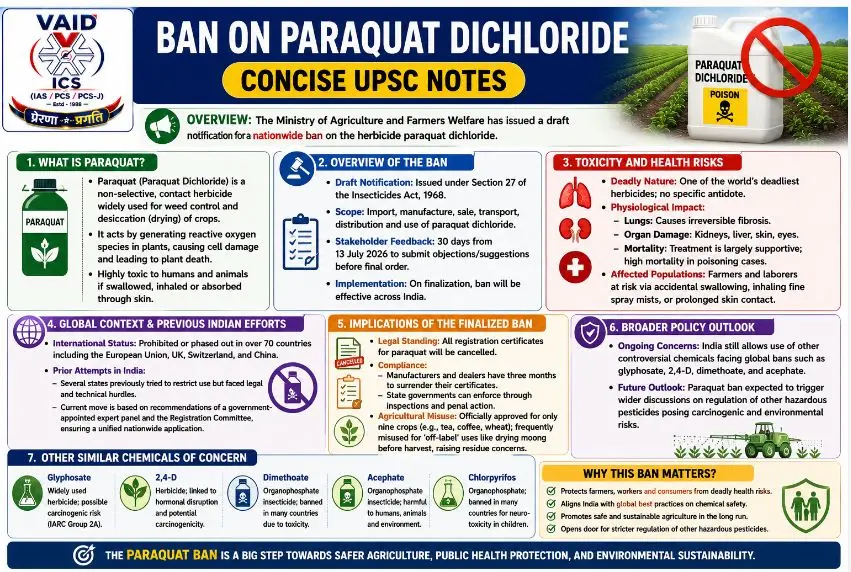
Toxicity and Health Risks:
Deadly Nature: Paraquat is considered one of the world’s deadliest herbicides due to the absence of a specific antidote.
Physiological Impact:
- Lungs: Causes irreversible fibrosis, making breathing impossible.
- Organ Damage: Can severely damage the kidneys, liver, skin, and eyes.
- Mortality: Treatment is largely supportive rather than curative, leading to exceptionally high mortality rates in cases of poisoning.
Affected Populations: Farmers and laborers are at the highest risk through accidental swallowing, inhaling fine spray mists, or prolonged skin contact with wounds.
Global Context and Previous Indian Efforts:
International Status: Prohibited or phased out in over 70 countries, including the European Union, the United Kingdom, Switzerland, and China.
Prior Attempts:
- Several Indian states previously attempted to restrict use but faced legal and technical hurdles.
- The current initiative follows recommendations from a government-appointed expert panel and the Registration Committee, ensuring a unified nationwide application.
Implications of the Finalized Ban:
Legal Standing: Upon finalization, all registration certificates for paraquat will be cancelled.
Compliance:
- Manufacturers and dealers have three months to surrender their certificates.
- State governments are authorized to enforce the order through inspections and penal action against violators.
Agricultural Misuse: While officially approved for only nine crops (including tea, coffee, and wheat), the chemical was frequently misused for “off-label” applications, such as drying moong crops before harvest, raising concerns about residues in the human food chain.
Broader Policy Outlook:
Ongoing Concerns: India continues to permit the use of other controversial chemicals facing international bans, such as glyphosate, 2,4-D, dimethoate, and acephate.
Future Outlook: The ban on paraquat is expected to trigger a wider conversation regarding the regulation of other hazardous pesticides that pose carcinogenic and environmental risks.
पैराक्वाट डाइक्लोराइड पर प्रतिबंध:
कृषि और किसान कल्याण मंत्रालय ने शाकनाशी (हर्बिसाइड) पैराक्वाट डाइक्लोराइड पर राष्ट्रव्यापी प्रतिबंध लगाने के लिए एक ड्राफ्ट अधिसूचना जारी की है।
कार्यान्वयन: यह प्रतिबंध कीटनाशक अधिनियम, 1968 की धारा 27 के तहत रसायन के आयात, निर्माण, बिक्री, परिवहन, वितरण और उपयोग पर लागू होगा।
हितधारकों की प्रतिक्रिया: इच्छुक पक्ष 13 जुलाई, 2026 से 30 दिनों के भीतर आदेश को अंतिम रूप देने से पहले अपनी आपत्तियां या सुझाव प्रस्तुत कर सकते हैं।
विषाक्तता और स्वास्थ्य जोखिम:
घातक प्रकृति: पैराक्वाट को दुनिया के सबसे घातक कृषि रसायनों में से एक माना जाता है क्योंकि इसका कोई विशिष्ट एंटीडोट (इलाज) नहीं है।
शारीरिक प्रभाव:
- फेफड़े: यह फेफड़ों में अपरिवर्तनीय फाइब्रोसिस का कारण बनता है, जिससे सांस लेना असंभव हो जाता है।
- अंगों को नुकसान: यह गुर्दे, लीवर, त्वचा और आंखों को गंभीर रूप से नुकसान पहुंचा सकता है।
- मृत्यु दर: इसका उपचार उपचारात्मक होने के बजाय केवल सहायक है, जिससे विषाक्तता के मामलों में मृत्यु दर अत्यधिक उच्च रहती है।
प्रभावित आबादी: किसान और खेत मजदूर आकस्मिक निगलने, बारीक स्प्रे धुंध में सांस लेने, या घावों के साथ लंबे समय तक त्वचा के संपर्क के कारण सबसे अधिक जोखिम में हैं।
वैश्विक संदर्भ और पिछले भारतीय प्रयास:
अंतर्राष्ट्रीय स्थिति: यूरोपीय संघ, यूनाइटेड किंगडम, स्विट्जरलैंड और चीन सहित 70 से अधिक देशों में इसका उपयोग प्रतिबंधित या चरणबद्ध तरीके से समाप्त कर दिया गया है।
पिछले प्रयास:
- कई भारतीय राज्यों ने पहले इसके उपयोग को सीमित करने का प्रयास किया था लेकिन उन्हें कानूनी और तकनीकी बाधाओं का सामना करना पड़ा।
- वर्तमान पहल एक सरकार द्वारा नियुक्त विशेषज्ञ पैनल और पंजीकरण समिति की सिफारिशों के बाद आई है, जो एक एकीकृत राष्ट्रव्यापी अनुप्रयोग सुनिश्चित करेगी।
अंतिम प्रतिबंध के निहितार्थ:
कानूनी स्थिति: अधिसूचना को अंतिम रूप दिए जाने के बाद, पैराक्वाट के सभी पंजीकरण प्रमाण पत्र रद्द कर दिए जाएंगे।
अनुपालन:
- निर्माताओं और डीलरों के पास अपने प्रमाण पत्र जमा करने के लिए तीन महीने का समय होगा।
- राज्य सरकारों को निरीक्षण और उल्लंघनकर्ताओं के खिलाफ दंडात्मक कार्रवाई करने के लिए अधिकृत किया गया है।
कृषि दुरुपयोग: हालांकि आधिकारिक तौर पर केवल नौ फसलों (चाय, कॉफी, गेहूं आदि सहित) के लिए अनुमोदित, इस रसायन का अक्सर “ऑफ–लेबल” अनुप्रयोगों के लिए दुरुपयोग किया जाता था, जैसे कटाई से पहले मूंग की फसलों को सुखाने के लिए, जिससे मानव खाद्य श्रृंखला में अवशेषों के पहुंचने की चिंता बढ़ गई है।
व्यापक नीतिगत दृष्टिकोण:
लगातार चिंताएं: भारत अभी भी अन्य विवादास्पद रसायनों जैसे ग्लाइफोसेट, 2,4-डी, डाइमेथोएट और एसेफेट के उपयोग की अनुमति देता है, जो कई देशों में प्रतिबंधों या स्वास्थ्य और पर्यावरणीय चिंताओं का सामना कर रहे हैं।
भविष्य की संभावनाएं: पैराक्वाट पर प्रतिबंध से अन्य खतरनाक कीटनाशकों के नियमन के संबंध में एक व्यापक चर्चा शुरू होने की उम्मीद है जो कार्सिनोजेनिक (कैंसरकारी) और पर्यावरणीय जोखिम पैदा करते हैं।

May 19, 2026
October 17, 2025
October 16, 2025
October 6, 2025

