July 1, 2026
The White-Rumped Vulture
Context: The first attempt to reintroduce a captive-bred white-rumped vulture into the wild in South India resulted in a setback. The radio-tagged bird was accidentally electrocuted by a power line in Ebbanad village, located near the Mudumalai Tiger Reserve.
About the White-Rumped Vulture:
What It Is: The white-rumped vulture (Gyps bengalensis) is an “Old World” scavenger bird native to South and Southeast Asia. It belongs to the basal evolutionary branch of the Gyps genus. Historically, during the 1980s, it was the most abundant large bird of prey in the world; however, it subsequently suffered a catastrophic population crash, bringing it to the brink of extinction.
Habitat and Distribution:
- Primary Landscape: The species thrives across the Gangetic plains, central valleys, and semi-arid zones of India, Pakistan, Nepal, Bangladesh, and localized parts of Southeast Asia.
- Nesting Habits: They build massive nests, averaging one meter in length, high in mature canopy trees. They prefer species such as the Banyan (Ficus benghalensis), Peepul, Arjun, and Neem, often choosing sites near human habitations or dense gallery forests.
- Scurrying Range: They soar across open country, grasslands, agricultural fields, and forest peripheries, utilizing high-altitude thermal air currents to scout for food.
Conservation Status:
- IUCN Red List: Critically Endangered (since 2000).
- Core Biological Threats:
- Diclofenac: Residues of veterinary diclofenac in cattle carcasses cause fatal kidney failure and visceral gout in vultures.
- Human-Induced Threats: Uninsulated power lines, pesticide residues, and ongoing habitat loss continue to threaten remaining populations.
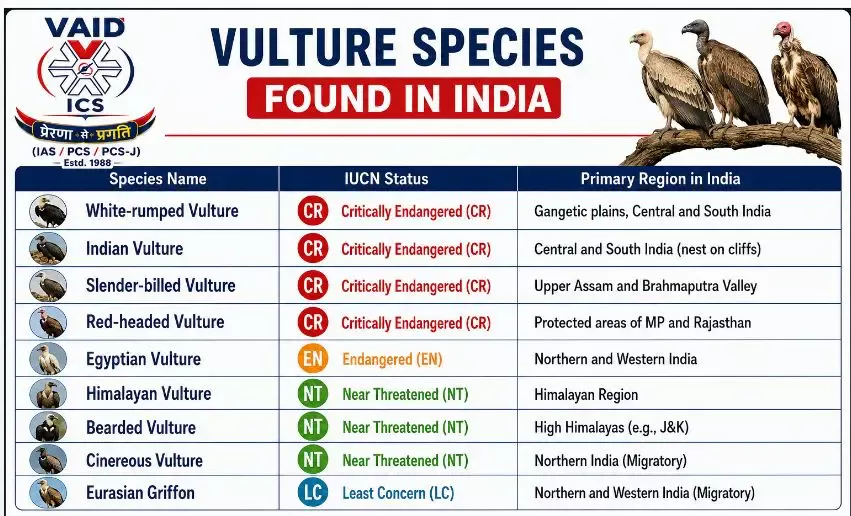
Key Characteristics:
- Physical Markers: It is the smallest of the Gyps vultures, weighing between 5 to 7.5 kg with a body length of 75 to 93 cm. Adults are recognized by a distinctive white neck ruff, a brilliant white lower back and rump, and silver-grey secondaries that contrast with their otherwise charcoal-black plumage.
- Aerodynamic Wingspan: Featuring broad wings with a span ranging from 1.9 to 2.6 meters (6.3 to 8.5 feet), the bird is engineered for long-distance flight using thermal currents with minimal energy expenditure.
- Scavenging Adaptations: They possess an unfeathered, pink-tinged head and neck, which allows them to remain clean while feeding deep inside carcasses. They feature slit-like nostrils and a powerful, sharp, silver-colored bill.
- Digestive Capabilities: They are capable of digesting old, dry bones, ribs, and skull fragments from small mammals. A feeding flock can completely strip a large bullock carcass to the bone in under 20 minutes.
- Reproductive Blueprint: The species is monotypic (lacks subspecies). Breeding occurs between November and March. The female lays a single white egg, which requires an incubation period of 30 to 35 days. The chick remains dependent on the nest for three months.
व्हाइट–रम्प्ड गिद्ध (सफेद पीठ वाला गिद्ध):
विषय: समाचारों में प्रजाति:
संदर्भ: दक्षिण भारत में कैप्टिव-ब्रीड (बंधक बनाकर पाले गए) व्हाइट-रम्प्ड गिद्ध को जंगल में फिर से बसाने का पहला प्रयास विफल रहा। मुदुमलई टाइगर रिज़र्व के पास एब्बानद गाँव में बिजली की तार के संपर्क में आने से रेडियो-टैग किए गए इस गिद्ध की दुर्घटनावश मृत्यु हो गई।
व्हाइट–रम्प्ड गिद्ध के बारे में:
यह क्या है: व्हाइट-रम्प्ड गिद्ध (Gyps bengalensis) दक्षिण और दक्षिण-पूर्व एशिया का मूल निवासी एक “ओल्ड वर्ल्ड” सफाईकर्मी पक्षी है। यह Gyps वंश की आधारभूत विकासवादी शाखा से संबंधित है। 1980 के दशक तक, यह दुनिया का सबसे प्रचुर मात्रा में पाया जाने वाला बड़ा शिकारी पक्षी था, लेकिन बाद में इसकी आबादी में भारी गिरावट आई और यह विलुप्ति के कगार पर पहुंच गया।
आवास और वितरण:
- प्रमुख क्षेत्र: यह भारत, पाकिस्तान, नेपाल, बांग्लादेश के गंगा के मैदानी इलाकों, केंद्रीय घाटियों और अर्ध-शुष्क क्षेत्रों तथा दक्षिण-पूर्व एशिया के कुछ हिस्सों में पाया जाता है।
- घोंसले की आदतें: ये ऊंचे, परिपक्व पेड़ों पर एक मीटर लंबे विशाल घोंसले बनाते हैं। इन्हें बरगद, पीपल, अर्जुन और नीम जैसे पेड़ पसंद हैं और ये अक्सर मानव बस्तियों या घने जंगलों के पास रहना पसंद करते हैं।
- विचरण क्षेत्र: ये भोजन की तलाश में खुले मैदानों, घास के मैदानों, कृषि क्षेत्रों और जंगलों के किनारों पर लंबी उड़ान भरते हैं, जहाँ ये ऊँचाई पर मौजूद तापीय वायु धाराओं का उपयोग करते हैं।
संरक्षण स्थिति:
- IUCN रेड लिस्ट: गंभीर रूप से लुप्तप्राय (Critically Endangered) – वर्ष 2000 से।
- प्रमुख जैविक खतरे:
- डाइक्लोफेनाक: पशुओं के शवों में बची हुई ‘डाइक्लोफेनाक’ नामक दवा गिद्धों में गुर्दे की विफलता और विसरा गाउट का कारण बनती है।
- मानवजनित खतरे: बिना इंसुलेटेड बिजली की तारें, कीटनाशकों के अवशेष और आवासों का विनाश इनकी आबादी के लिए निरंतर खतरा बने हुए हैं।
मुख्य विशेषताएं:
- शारीरिक लक्षण: यह Gyps गिद्धों में सबसे छोटा होता है, जिसका वजन 5 से 7.5 किलोग्राम और लंबाई 75 से 93 सेंटीमीटर के बीच होती है। व्यस्कों की पहचान उनकी सफेद गर्दन, पीठ के निचले हिस्से और दुम से होती है, जो उनके काले पंखों के साथ स्पष्ट अंतर पैदा करते हैं।
- एयरोडायनामिक पंख: इनके पंखों का फैलाव 1.9 से 2.6 मीटर (6.3 से 8.5 फीट) तक होता है, जो इन्हें बिना ऊर्जा खर्च किए लंबी दूरी तक उड़ने में सक्षम बनाता है।
- सफाईकर्मी अनुकूलन: इनका सिर और गर्दन पंख रहित और हल्के गुलाबी रंग की होती है, जो इन्हें मृत शवों को खाते समय साफ रहने में मदद करती है। इनकी नाक में झिरी जैसी संरचना होती है और चोंच शक्तिशाली व चांदी के रंग की होती है।
- पाचन क्षमता: ये छोटे स्तनधारियों की सूखी हड्डियों और खोपड़ी के टुकड़ों को पचाने में सक्षम होते हैं। इनका एक झुंड 20 मिनट से भी कम समय में एक बड़े बैल के शव को हड्डियों तक साफ कर सकता है।
- प्रजनन चक्र: प्रजनन नवंबर और मार्च के बीच होता है। मादा एक ही सफेद अंडा देती है जिसे 30 से 35 दिनों तक सेती है। चूजा तीन महीने तक घोंसले पर निर्भर रहता है।

May 19, 2026
October 17, 2025
October 16, 2025
October 6, 2025

