May 27, 2026
Wetlands (Conservation and Management) Rules, 2017/State Wetland Authority (SWA):
Why is this in the news:
On May 26, 2026, the Supreme Court of India issued a notice to the Union Government regarding a petition challenging the constitutional validity of the Wetlands (Conservation and Management) Rules, 2017.
- Defining the Conflict: The challenge centers on the “vagueness” of the definition of wetlands under the 2017 Rules, which activists argue systematically excludes historically protected wetlands from legal safeguards.
- Judicial Focus: The bench led by CJI Surya Kant has specifically limited the current scope of the notice to the ambiguity of the definition, with the matter set for further hearing in August.
Key points of the challenge:
- Narrowing the Scope: Petitioners argue that the 2017 Rules significantly dilute the protection compared to the 2010 Rules, which included a broader array of man-made and natural water bodies (such as tanks and aquaculture structures).
- Threat to Ramsar Sites: Senior advocate Gopal Sankaranarayanan submitted that the 2017 definition could immediately strip 39 out of 94 Indian Ramsar sites of their protective status.
- Impact on Biodiversity: The petition highlights that India has over two lakh wetlands; the new definition could lead to widespread loss of protection for critical ecological zones, including bird sanctuaries.
Legal and constitutional arguments:
- Principle of Non-Regression: The petition contends that the dilution of existing environmental safeguards violates this principle, which holds that environmental protections should not be rolled back once established.
- Article 21 (Right to Life): Petitioners argue that by excluding wetlands from protection, the state is failing its duty to safeguard ecological resources, thereby endangering citizens’ rights to a healthy environment, water security, and climate resilience.
- International Obligations: The 2017 Rules are alleged to be inconsistent with India’s binding obligations under the Ramsar Convention of 1971, an international treaty for the conservation of wetlands.
- Public Trust Doctrine: The petitioners invoke this doctrine, asserting that the state is a trustee of natural resources and has an inherent obligation to protect them for future generations.
Background and context:
- Previous Judicial Stance: In a separate, ongoing batch of petitions (monitored by a bench led by Justice Aravind Kumar), the Supreme Court has previously directed that all 201,503 wetlands identified in the National Wetland Atlas must be protected under the 2010 Rules.
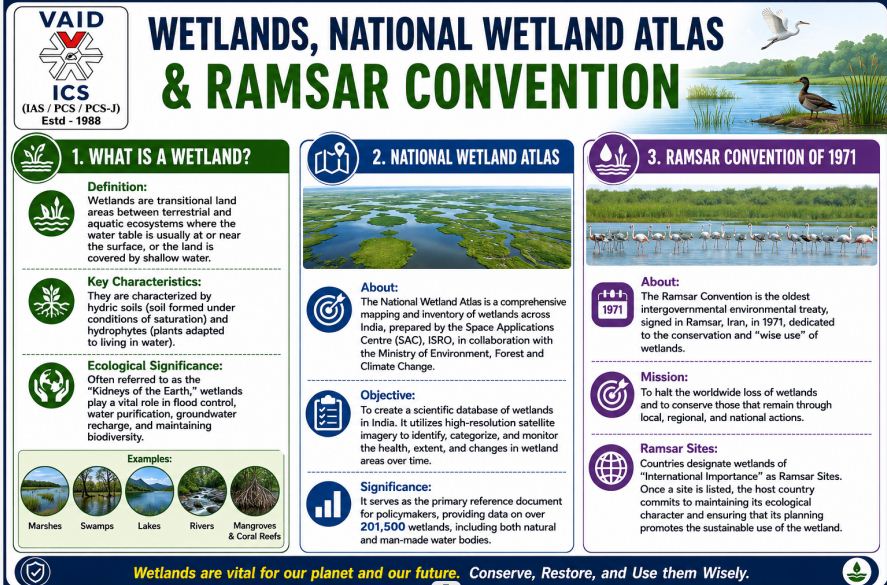
What is a Wetland:
Wetlands are transitional land areas between terrestrial and aquatic ecosystems where the water table is usually at or near the surface, or the land is covered by shallow water.
- Key Characteristics: They are characterized by hydric soils (soil formed under conditions of saturation) and hydrophytes (plants adapted to living in water).
- Ecological Significance: Often referred to as the “Kidneys of the Earth,” wetlands play a vital role in flood control, water purification, groundwater recharge, and maintaining biodiversity. They include diverse ecosystems such as marshes, swamps, lakes, rivers, mangroves, and coral reefs.
National Wetland Atlas:
The National Wetland Atlas is a comprehensive mapping and inventory of wetlands across India, prepared by the Space Applications Centre (SAC), ISRO, in collaboration with the Ministry of Environment, Forest and Climate Change.
- Objective: To create a scientific database of wetlands in India. It utilizes high-resolution satellite imagery to identify, categorize, and monitor the health, extent, and changes in wetland areas over time.
- Significance: It serves as the primary reference document for policymakers, providing data on over 201,500 wetlands, including both natural and man-made water bodies.
Ramsar Convention of 1971:
The Ramsar Convention is the oldest intergovernmental environmental treaty, signed in Ramsar, Iran, in 1971, dedicated to the conservation and “wise use” of wetlands.
- Mission: To halt the worldwide loss of wetlands and to conserve those that remain through local, regional, and national actions.
- Ramsar Sites: Countries designate wetlands of “International Importance” as Ramsar Sites. Once a site is listed, the host country commits to maintaining its ecological character and ensuring that its planning promotes the sustainable use of the wetland.
About The Wetlands (Conservation and Management) Rules, 2017:
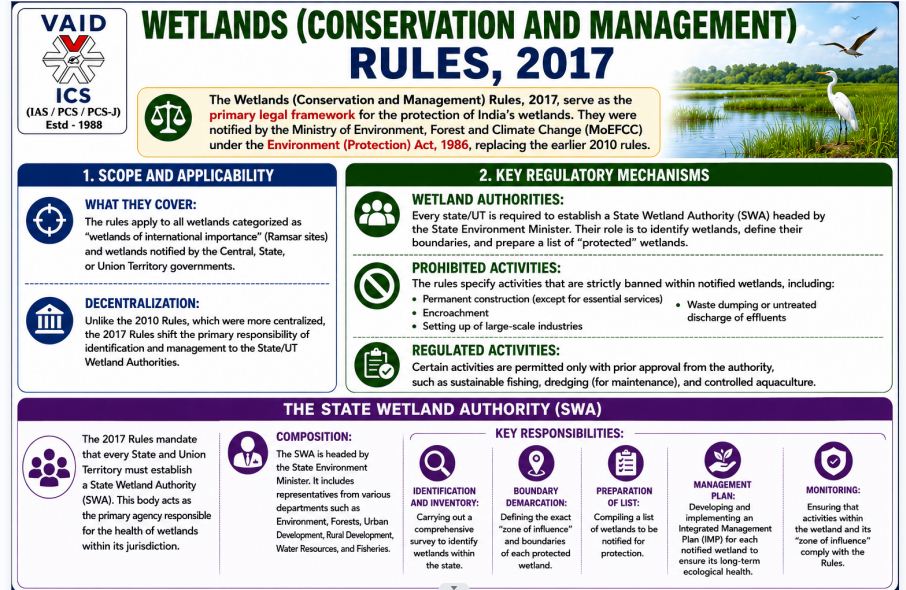
The Wetlands (Conservation and Management) Rules, 2017, serve as the primary legal framework for the protection of India’s wetlands. They were notified by the Ministry of Environment, Forest and Climate Change (MoEFCC) under the Environment (Protection) Act, 1986, replacing the earlier 2010 rules.
Here are the key aspects of these rules:
1. Scope and Applicability:
-
What they cover: The rules apply to all wetlands categorized as “wetlands of international importance” (Ramsar sites) and wetlands notified by the Central, State, or Union Territory governments.
-
Decentralization: Unlike the 2010 Rules, which were more centralized, the 2017 Rules shift the primary responsibility of identification and management to the State/UT Wetland Authorities.
2. Key Regulatory Mechanisms:
-
Wetland Authorities: Every state/UT is required to establish a State Wetland Authority (SWA) headed by the State Environment Minister. Their role is to identify wetlands, define their boundaries, and prepare a list of “protected” wetlands.
-
Prohibited Activities: The rules specify activities that are strictly banned within notified wetlands, including:
-
Permanent construction (except for essential services).
-
Encroachment.
-
Setting up of large-scale industries.
-
Waste dumping or untreated discharge of effluents.
-
-
Regulated Activities: Certain activities are permitted only with prior approval from the authority, such as sustainable fishing, dredging (for maintenance), and controlled aquaculture.
About The State Wetland Authority (SWA):
The 2017 Rules mandate that every State and Union Territory must establish a State Wetland Authority (SWA). This body acts as the primary agency responsible for the health of wetlands within its jurisdiction.
-
Composition: The SWA is headed by the State Environment Minister. It includes representatives from various departments such as Environment, Forests, Urban Development, Rural Development, Water Resources, and Fisheries.
-
Key Responsibilities:
-
Identification and Inventory: Carrying out a comprehensive survey to identify wetlands within the state.
-
Boundary Demarcation: Defining the exact “zone of influence” and boundaries of each protected wetland.
-
Preparation of List: Compiling a list of wetlands to be notified for protection.
-
Management Plan: Developing and implementing an Integrated Management Plan (IMP) for each notified wetland to ensure its long-term ecological health.
-
Monitoring: Ensuring that activities within the wetland and its “zone of influence” comply with the Rules.
-
2. Regulatory Scope;
-
Prohibited Activities: The SWA is empowered to strictly ban:
-
Permanent construction (except for essential services).
-
Encroachment.
-
Large-scale industrial operations.
-
Dumping of untreated waste or sewage.
-
-
Regulated Activities: The SWA oversees activities that require prior approval, such as sustainable fishing, dredging (for maintenance), and controlled aquaculture.
यह चर्चा में क्यों है:
-
सर्वोच्च न्यायालय का हस्तक्षेप: 26 मई 2026 को, भारत के सर्वोच्च न्यायालय ने आर्द्रभूमि (संरक्षण और प्रबंधन) नियम, 2017 की संवैधानिक वैधता को चुनौती देने वाली एक याचिका पर केंद्र सरकार को नोटिस जारी किया है।
-
विवाद का मुख्य कारण: चुनौती इस बात पर केंद्रित है कि 2017 के नियमों में ‘आर्द्रभूमि’ की परिभाषा बहुत अस्पष्ट है। याचिकाकर्ताओं का तर्क है कि यह परिभाषा व्यवस्थित रूप से उन ऐतिहासिक वेटलैंड्स को कानूनी सुरक्षा से बाहर कर देती है, जिन्हें पहले संरक्षण प्राप्त था।
-
न्यायिक रुख: भारत के मुख्य न्यायाधीश (CJI) सूर्यकांत की अध्यक्षता वाली पीठ ने वर्तमान नोटिस को केवल परिभाषा की अस्पष्टता तक सीमित रखा है। इस मामले की अगली सुनवाई अगस्त में होनी है।
चुनौती के मुख्य बिंदु:
-
दायरे का संकुचन: याचिकाकर्ताओं का तर्क है कि 2010 के नियमों की तुलना में 2017 के नियमों ने संरक्षण के दायरे को काफी कम कर दिया है। 2010 के नियमों में मानव निर्मित और प्राकृतिक दोनों प्रकार के जल निकायों (जैसे टैंक और जलीय कृषि संरचनाएं) को व्यापक रूप से शामिल किया गया था।
-
रामसर साइट्स के लिए खतरा: वरिष्ठ अधिवक्ता गोपाल शंकरनारायणन ने प्रस्तुत किया कि 2017 की परिभाषा से भारत की 94 में से 39 रामसर साइट्स अपनी सुरक्षात्मक स्थिति तुरंत खो सकती हैं।
-
जैव विविधता पर प्रभाव: याचिका में उल्लेख है कि भारत में दो लाख से अधिक आर्द्रभूमियां हैं; नई परिभाषा से पक्षी अभयारण्यों सहित कई महत्वपूर्ण पारिस्थितिक क्षेत्रों को सुरक्षा से वंचित होना पड़ सकता है।
कानूनी और संवैधानिक तर्क:
-
गैर-प्रतिगमन का सिद्धांत (Principle of Non-Regression): याचिका का तर्क है कि मौजूदा पर्यावरणीय सुरक्षा उपायों को कमजोर करना इस सिद्धांत का उल्लंघन है, जो कहता है कि एक बार स्थापित हो जाने के बाद पर्यावरणीय सुरक्षा को कम नहीं किया जाना चाहिए।
-
अनुच्छेद 21 (जीवन का अधिकार): याचिकाकर्ताओं का तर्क है कि आर्द्रभूमियों को सुरक्षा से बाहर रखकर, राज्य पारिस्थितिक संसाधनों की रक्षा करने के अपने कर्तव्य में विफल हो रहा है, जिससे नागरिकों का स्वस्थ पर्यावरण और जल सुरक्षा का अधिकार खतरे में है।
-
अंतरराष्ट्रीय दायित्व: आरोप है कि 2017 के नियम रामसर कन्वेंशन, 1971 के तहत भारत के अंतरराष्ट्रीय दायित्वों के अनुकूल नहीं हैं।
-
पब्लिक ट्रस्ट डॉक्ट्रिन: याचिकाकर्ताओं ने इस सिद्धांत का आह्वान किया है, जिसके अनुसार राज्य प्राकृतिक संसाधनों का ट्रस्टी है और आने वाली पीढ़ियों के लिए उनकी रक्षा करना उसका निहित दायित्व है।
पृष्ठभूमि और संदर्भ:
-
पिछला न्यायिक रुख: न्यायमूर्ति अरविंद कुमार की अध्यक्षता वाली पीठ द्वारा देखे जा रहे एक अलग मामले में, सर्वोच्च न्यायालय ने पहले ही निर्देश दिया है कि ‘नेशनल वेटलैंड एटलस’ में पहचानी गई सभी 2,01,503 आर्द्रभूमियों को 2010 के नियमों के तहत संरक्षित किया जाना चाहिए।
वेटलैंड (आर्द्रभूमि) क्या है:
वेटलैंड्स स्थलीय और जलीय पारिस्थितिक तंत्र के बीच के संक्रमणकालीन क्षेत्र हैं, जहाँ जल स्तर आमतौर पर सतह पर या उसके पास होता है।
-
मुख्य विशेषताएँ: इनमें हाइड्रिक मिट्टी और हाइड्रोफाइट्स (पानी में रहने वाले पौधे) पाए जाते हैं।
-
पारिस्थितिक महत्व: इन्हें “पृथ्वी का गुर्दा” (Kidneys of the Earth) कहा जाता है। ये बाढ़ नियंत्रण, जल शुद्धिकरण, भूजल पुनर्भरण और जैव विविधता बनाए रखने में महत्वपूर्ण हैं। इनमें दलदल, झीलें, नदियाँ, मैंग्रोव और मूंगा चट्टानें शामिल हैं।
नेशनल वेटलैंड एटलस:
यह भारत में आर्द्रभूमियों का एक व्यापक मानचित्रण और इन्वेंट्री है, जिसे अंतरिक्ष अनुप्रयोग केंद्र (SAC), ISRO द्वारा पर्यावरण, वन और जलवायु परिवर्तन मंत्रालय के सहयोग से तैयार किया गया है।
-
उद्देश्य: भारत में वेटलैंड्स का एक वैज्ञानिक डेटाबेस बनाना। यह उच्च-रिज़ॉल्यूशन उपग्रह चित्रों का उपयोग करके इनकी स्थिति और बदलावों की निगरानी करता है।
-
महत्व: यह नीति निर्माताओं के लिए प्राथमिक संदर्भ दस्तावेज है, जिसमें 2,01,500 से अधिक आर्द्रभूमियों का डेटा है।
रामसर कन्वेंशन 1971:
यह आर्द्रभूमि के संरक्षण और उनके “विवेकपूर्ण उपयोग” के लिए सबसे पुराना अंतर-सरकारी वैश्विक समझौता है, जिस पर 1971 में रामसर, ईरान में हस्ताक्षर किए गए थे।
-
मिशन: आर्द्रभूमि के वैश्विक नुकसान को रोकना और स्थानीय, क्षेत्रीय और राष्ट्रीय स्तर पर उनके संरक्षण को सुनिश्चित करना।
-
रामसर साइट्स: इसके तहत ‘अंतरराष्ट्रीय महत्व’ की आर्द्रभूमियों को नामित किया जाता है। एक बार सूचीबद्ध होने के बाद, संबंधित देश उसके पारिस्थितिक चरित्र को बनाए रखने और सतत उपयोग के लिए प्रतिबद्ध होता है।
यहाँ आर्द्रभूमि (संरक्षण और प्रबंधन) नियम, 2017 और राज्य आर्द्रभूमि प्राधिकरण (SWA) के बारे में विस्तृत नोट्स दिए गए हैं:
आर्द्रभूमि (संरक्षण और प्रबंधन) नियम, 2017 के बारे में:
आर्द्रभूमि (संरक्षण और प्रबंधन) नियम, 2017 भारत में आर्द्रभूमियों के संरक्षण के लिए प्राथमिक कानूनी ढांचा हैं। इन्हें पर्यावरण, वन और जलवायु परिवर्तन मंत्रालय (MoEFCC) द्वारा पर्यावरण (संरक्षण) अधिनियम, 1986 के तहत अधिसूचित किया गया था, जिन्होंने पूर्ववर्ती 2010 के नियमों का स्थान लिया है।
नियमों के मुख्य पहलू:
कार्यक्षेत्र और प्रयोज्यता:
-
कवरेज: ये नियम सभी “अंतरराष्ट्रीय महत्व की आर्द्रभूमियों” (रामसर साइट्स) और केंद्र, राज्य या केंद्र शासित प्रदेश सरकारों द्वारा अधिसूचित आर्द्रभूमियों पर लागू होते हैं।
-
विकेंद्रीकरण: 2010 के नियमों की तुलना में, जो अधिक केंद्रीकृत थे, 2017 के नियम पहचान और प्रबंधन की प्राथमिक जिम्मेदारी ‘राज्य/केंद्र शासित प्रदेश आर्द्रभूमि प्राधिकरणों’ (State/UT Wetland Authorities) को सौंपते हैं।
प्रमुख नियामक तंत्र:
-
आर्द्रभूमि प्राधिकरण: प्रत्येक राज्य/केंद्र शासित प्रदेश के लिए एक ‘राज्य आर्द्रभूमि प्राधिकरण’ (SWA) की स्थापना करना अनिवार्य है, जिसकी अध्यक्षता राज्य के पर्यावरण मंत्री करते हैं। उनकी भूमिका आर्द्रभूमियों की पहचान करना, उनकी सीमाएं निर्धारित करना और “संरक्षित” आर्द्रभूमियों की सूची तैयार करना है।
-
प्रतिबंधित गतिविधियाँ: नियमों के तहत अधिसूचित आर्द्रभूमियों के भीतर कुछ गतिविधियों पर सख्त प्रतिबंध है, जिनमें शामिल हैं:
-
स्थायी निर्माण (आवश्यक सेवाओं को छोड़कर)।
-
अतिक्रमण।
-
बड़े पैमाने पर उद्योगों की स्थापना।
-
कचरा डालना या अनुपचारित अपशिष्ट का विसर्जन।
-
-
विनियमित गतिविधियाँ: कुछ गतिविधियाँ केवल प्राधिकरण की पूर्व स्वीकृति से ही अनुमत हैं, जैसे स्थायी मछली पकड़ना, ड्रेजिंग (रखरखाव के लिए) और नियंत्रित जलीय कृषि।
राज्य आर्द्रभूमि प्राधिकरण (SWA) के बारे में:
2017 के नियमों के तहत प्रत्येक राज्य और केंद्र शासित प्रदेश के लिए एक ‘राज्य आर्द्रभूमि प्राधिकरण’ (SWA) का गठन करना अनिवार्य है। यह निकाय अपने अधिकार क्षेत्र के भीतर आर्द्रभूमियों के स्वास्थ्य के लिए जिम्मेदार प्राथमिक एजेंसी के रूप में कार्य करता है।
संरचना:
-
SWA की अध्यक्षता राज्य के पर्यावरण मंत्री करते हैं। इसमें पर्यावरण, वन, शहरी विकास, ग्रामीण विकास, जल संसाधन और मत्स्य पालन जैसे विभिन्न विभागों के प्रतिनिधि शामिल होते हैं।
प्रमुख जिम्मेदारियां:
-
पहचान और सूची: राज्य के भीतर आर्द्रभूमियों की पहचान करने के लिए व्यापक सर्वेक्षण करना।
-
सीमांकन: प्रत्येक संरक्षित आर्द्रभूमि के सटीक “प्रभाव क्षेत्र” और सीमाओं को परिभाषित करना।
-
सूची तैयार करना: संरक्षण के लिए अधिसूचित की जाने वाली आर्द्रभूमियों की सूची संकलित करना।
-
प्रबंधन योजना: प्रत्येक अधिसूचित आर्द्रभूमि के लिए एक “एकीकृत प्रबंधन योजना” (IMP) विकसित और कार्यान्वित करना ताकि उनकी दीर्घकालिक पारिस्थितिक स्थिति सुनिश्चित हो सके।
-
निगरानी: यह सुनिश्चित करना कि आर्द्रभूमि और उसके प्रभाव क्षेत्र के भीतर की गतिविधियाँ नियमों का अनुपालन करती हैं।
नियामक दायरा:
-
प्रतिबंधित गतिविधियाँ: SWA सख्त प्रतिबंध लगाने के लिए सशक्त है:
-
स्थायी निर्माण (आवश्यक सेवाओं को छोड़कर)।
-
अतिक्रमण।
-
बड़े पैमाने पर औद्योगिक संचालन।
-
अनुपचारित कचरे या सीवेज का निपटान।
-
-
विनियमित गतिविधियाँ: SWA उन गतिविधियों की देखरेख करता है जिनके लिए पूर्व स्वीकृति आवश्यक है, जैसे स्थायी मछली पकड़ना, ड्रेजिंग (रखरखाव के लिए) और नियंत्रित जलीय कृषि।

May 19, 2026
October 17, 2025
October 16, 2025
October 6, 2025

