May 14, 2026
Ecological Challenges at Asola Bhatti Wildlife Sanctuary: What is invasive tree?
At Asola Bhatti, Delhi’s primary wildlife sanctuary, the most significant threat to the ecosystem is paradoxically “green.” A recently drafted 10-year management plan by the Wildlife Institute of India (WII) reveals that the sanctuary is battling a severe invasion of non-native flora and various anthropogenic pressures that threaten the stability of the Aravalli habitat.
The Invasive Crisis: Prosopis Juliflora:
The most staggering finding of the plan is the dominance of Prosopis Juliflora (locally known as Vilayati Kikar). Introduced during the colonial era for quick afforestation, this Mexican mesquite has now become an ecological liability.
-
Extent of Dominance: It covers 63.48% (18.41 sq km) of the sanctuary’s landscape.
-
Comparison: In contrast, native Anogeissus Pendula (Dhauk) forests account for less than 1% of the area.
-
The Problem: As an invasive species, it suppresses native plants, alters groundwater recharge, and creates monocultures that offer poor nutritional value for local wildlife.
-
Recommendation: A phased, scientific removal of the species, replaced by intensive restoration using native flora like Palash, Gum Acacia, and Siris.
The Macaque Conflict and Artificial Feeding:
Asola Bhatti has become a relocation site for nearly 20,000 Rhesus Macaques moved from Delhi’s urban areas. This has created a self-sustaining cycle of ecological and financial strain:
-
Financial Burden: Artificial feeding at 18 points costs approximately ₹1 crore annually.
-
Ecological Impact: The population far exceeds the sanctuary’s natural carrying capacity. Artificial feeding has disrupted natural foraging behavior and led to animals straying back into human settlements.
-
Proposed Solution: A humane sterilization program, habitat enrichment with fruit-bearing trees, and a gradual phasing out of artificial feeding.
Human Encroachment and Biotic Pressure:
The sanctuary is facing “intense forms of urban encroachment” that fragment the habitat and lead to increased human-wildlife conflict.
-
Hotspots: Bhatti village remains a critical concern, while colonies like Sanjay Colony and Sangam Vihar have evolved into permanent housing clusters on sanctuary land.
-
Waste Management: Abandoned mining pits within the sanctuary are frequently misused for sewage and garbage disposal.
-
Livestock Intrusion: Stray cattle (cows, buffaloes, and pigs) represent 15.1% of all mammal detections in camera traps. These animals compete with native herbivores like Nilgai and Chital for water and forage.
Administrative and Monitoring Gaps:
The WII plan highlights a lack of institutional infrastructure to manage the sanctuary’s complex needs:
-
Lack of SOPs: There are currently no standard operating procedures for the rescue and release of wild animals.
-
Weak Monitoring: Inadequate staff capacity and a lack of health monitoring for released animals have been flagged as major administrative hurdles.
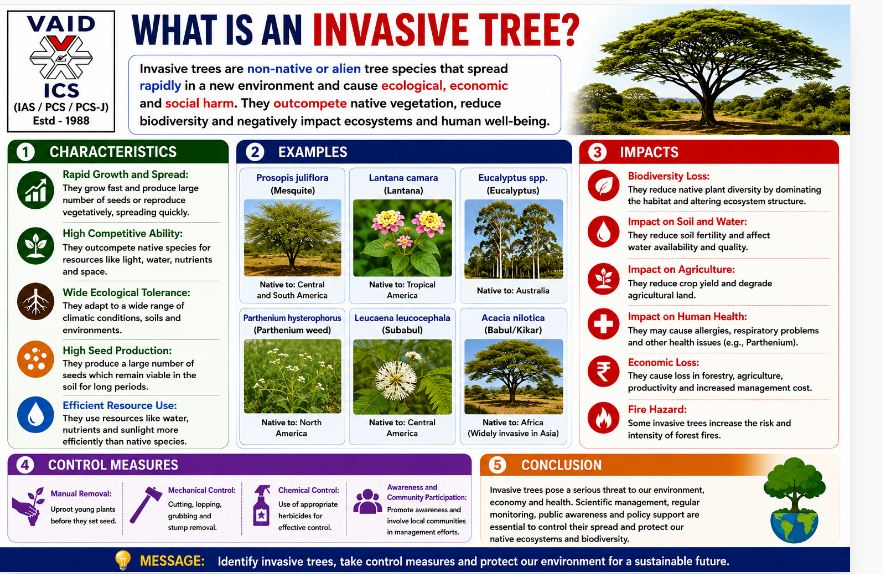
What is invasive tree?
An invasive tree is a non-native (alien) species that spreads aggressively in a new environment, causing significant ecological, economic, or environmental harm.
In the context of the Aravalli habitat and Asola Bhatti, here is why they are a major concern:
Key Characteristics:
- Rapid Proliferation: They grow and mature faster than native species, often producing thousands of seeds.
- Resource Dominance: They have deep or aggressive root systems that outcompete native plants for water and nutrients.
- Lack of Natural Predators: Because they are from different regions (like Mexico or South America), local insects, fungi, or herbivores often don’t eat them, allowing them to grow unchecked.
Why they are harmful ?
- Ecological Displacement: They create “monocultures” where only one type of tree grows. This wipes out native plants like the Dhauk (Anogeissus pendula), which local wildlife depends on for food.
- Water Depletion: Many invasive trees, such as Prosopis juliflora, are “water-guzzlers.” They can lower the local groundwater table, making it harder for other plants to survive.
- Altered Soil Chemistry: Some species change the soil pH or release chemicals (allelopathy) that prevent other seeds from germinating nearby.
- Habitat Loss: Native birds, insects, and mammals often cannot find proper food or nesting sites in invasive forests, leading to a decline in overall biodiversity.
Examples in Delhi/Aravallis:
- Prosopis juliflora (Vilayati Kikar): Introduced from Mexico. Its dense canopy and deep roots have taken over nearly 64% of the Asola Bhatti sanctuary.
- Lantana camara: While technically a shrub, it forms thick, impenetrable mats that choke the forest floor and prevent new native trees from growing.

May 19, 2026
October 17, 2025
October 16, 2025
October 6, 2025

