March 12, 2026
What is Black Rain?
Why in the news?
In early March 2026, a series of air strikes targeted major oil storage facilities and refineries in and around Tehran (including the Shahran and Aghdasieh depots).
- Beyond Military Damage: The strikes have been termed “environmental warfare” due to the massive release of toxic substances.
- The Smog Blanket: Burning crude oil and petroleum products created a “thick blanket of smoke” over a city of 10 million people.
- Global Concern: The World Health Organization (WHO) and the Iranian Red Crescent Society issued emergency warnings as the pollution reached levels that are “unbreathable” and dangerous to touch.
What is Black Rain?
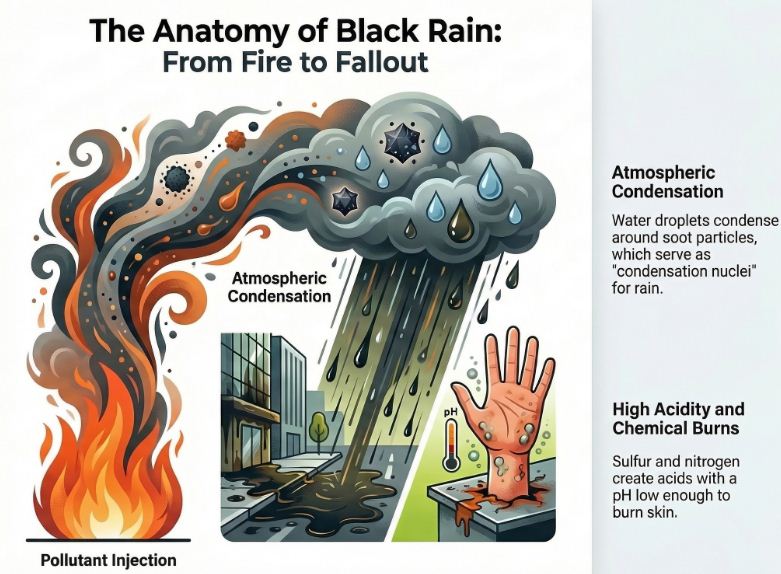
Black Rain is a rare and highly toxic atmospheric phenomenon that occurs when massive quantities of soot, ash, and unburnt oil particles mix with natural precipitation.
- The Formation: Large energetic plumes from oil fires thrust pollutants into the atmosphere. When a weather system moves in, water droplets condense around these soot particles (acting as “condensation nuclei”).
- The Fallout: The resulting rain is dark, oily, and carries a high concentration of hazardous chemicals. It leaves a black, greasy residue on buildings, vehicles, and skin.
- Acidic Nature: Because oil contains sulfur and nitrogen, the rain also becomes highly acidic (Sulfuric and Nitric acid), with a pH low enough to cause chemical burns.
How it affects Human Health?
The WHO and medical experts have identified several acute and chronic health risks associated with this toxic fallout:
A. Acute (Immediate) Effects:
- Respiratory Distress: Inhaling the smog or the mist from black rain causes immediate inflammation of the lungs, difficulty breathing, and severe asthma attacks.
- Chemical Burns: Contact with the acidic “black rain” can cause irritation and chemical burns to the skin and eyes.
- Neurological Symptoms: Residents have reported intense headaches, dizziness, and a bitter taste in the mouth due to high levels of volatile organic compounds (VOCs).
B. Chronic (Long-term) Effects:
- Particulate Matter (PM 2.5): These tiny particles are “fat-soluble,” meaning the lungs absorb them efficiently. Once in the bloodstream, they can cause cardiovascular diseases and permanent lung damage.
- Carcinogenic Risk: Burning oil releases Polycyclic Aromatic Hydrocarbons (PAHs) and benzene, which are known to increase the risk of various cancers.
- Contamination of the Food Chain: The rain deposits heavy metals and “forever chemicals” (PFAS) onto crops and into groundwater, potentially poisoning the food and water supply for years.
Administrative & Safety Guidelines:
Authorities have issued the following “Stay-at-Home” protocols:
- Seal Windows: Use damp cloths to seal gaps in windows and doors to keep out toxic vapors.
- Turn off ACs: Air conditioners can pull acidic particles and concentrated fumes from the outside into the home.
- Cover Skin: If going outdoors is unavoidable, use N95 masks and ensure all skin is covered to prevent chemical irritation.

Gist of daily Article /The Hindu 17oct 2025
October 17, 2025
Daily Gist of the Hindu/Indian Express : 16 Oct 2025
October 16, 2025
Daily Gist of The Hindu/Indian Express: 6 Oct 2025
October 6, 2025
Daily Gist of Article /The Hindu /Indian Express: 24 Sep 2025
September 24, 2025

