January 27, 2026
Daily Current Affairs for UPSC : 27 Jan 2026/Draft IT (Digital Code) Rules, 2026.
The news is about the Government of India (through the Ministry of Information and Broadcasting) proposing Draft IT (Digital Code) Rules, 2026. These rules aim to regulate obscenity and other harmful content on digital platforms like social media, OTT (streaming services like Netflix, Prime Video), online news publishers, and user-generated content.
Key Points:
- New definition of “obscene digital content”: Content is considered obscene if it is lascivious (lustful), appeals to prurient interest (sexual curiosity), or tends to deprave and corrupt people (especially minors). This borrows heavily from old Cable TV rules and Section 67 of the IT Act, 2000.
- Age-based classification (like movies): All digital content must get labels (e.g., U, U/A 13+, Adult-only).
- Higher-rated content needs parental controls.
- Adult content requires strong age verification (to stop kids from accessing it).
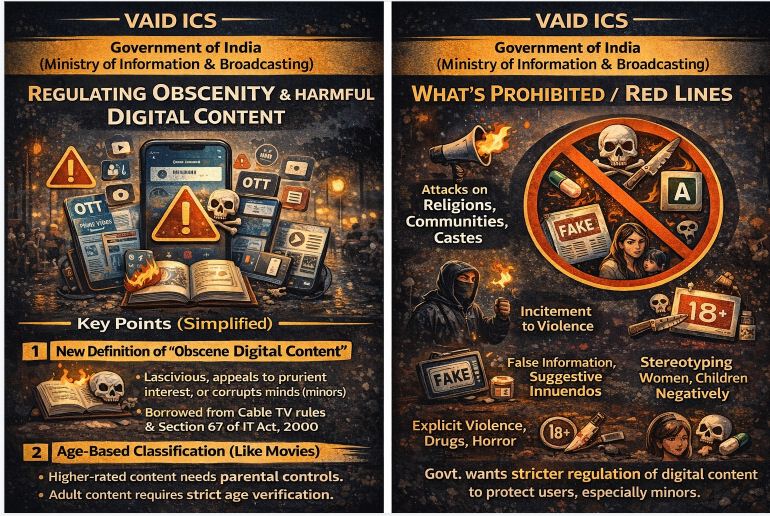
- What is prohibited / red lines:
- Attacks on religions, communities, or castes.
- Incitement to violence.
- False information, suggestive innuendos.
- Stereotyping women or children negatively.
- Explicit violence, drugs, horror in certain ways.
- Anything that offends public morality or decency.
- Why now? Triggered by recent controversies (e.g., involving influencers like Ranveer Allahbadia, Samay Raina, or AI tools like Grok generating obscene content). Also follows Supreme Court directions to frame clearer guidelines.
- Platforms affected: Social media (X, Instagram, etc.), OTT, digital news, influencers — basically almost all online content creators/publishers.
- Goal: Protect minors, maintain public morality, balance free speech with responsibility. But critics worry about over-regulation, vague definitions leading to censorship.

Gist of daily Article /The Hindu 17oct 2025
October 17, 2025
Daily Gist of the Hindu/Indian Express : 16 Oct 2025
October 16, 2025
Daily Gist of The Hindu/Indian Express: 6 Oct 2025
October 6, 2025
Daily Gist of Article /The Hindu /Indian Express: 24 Sep 2025
September 24, 2025

